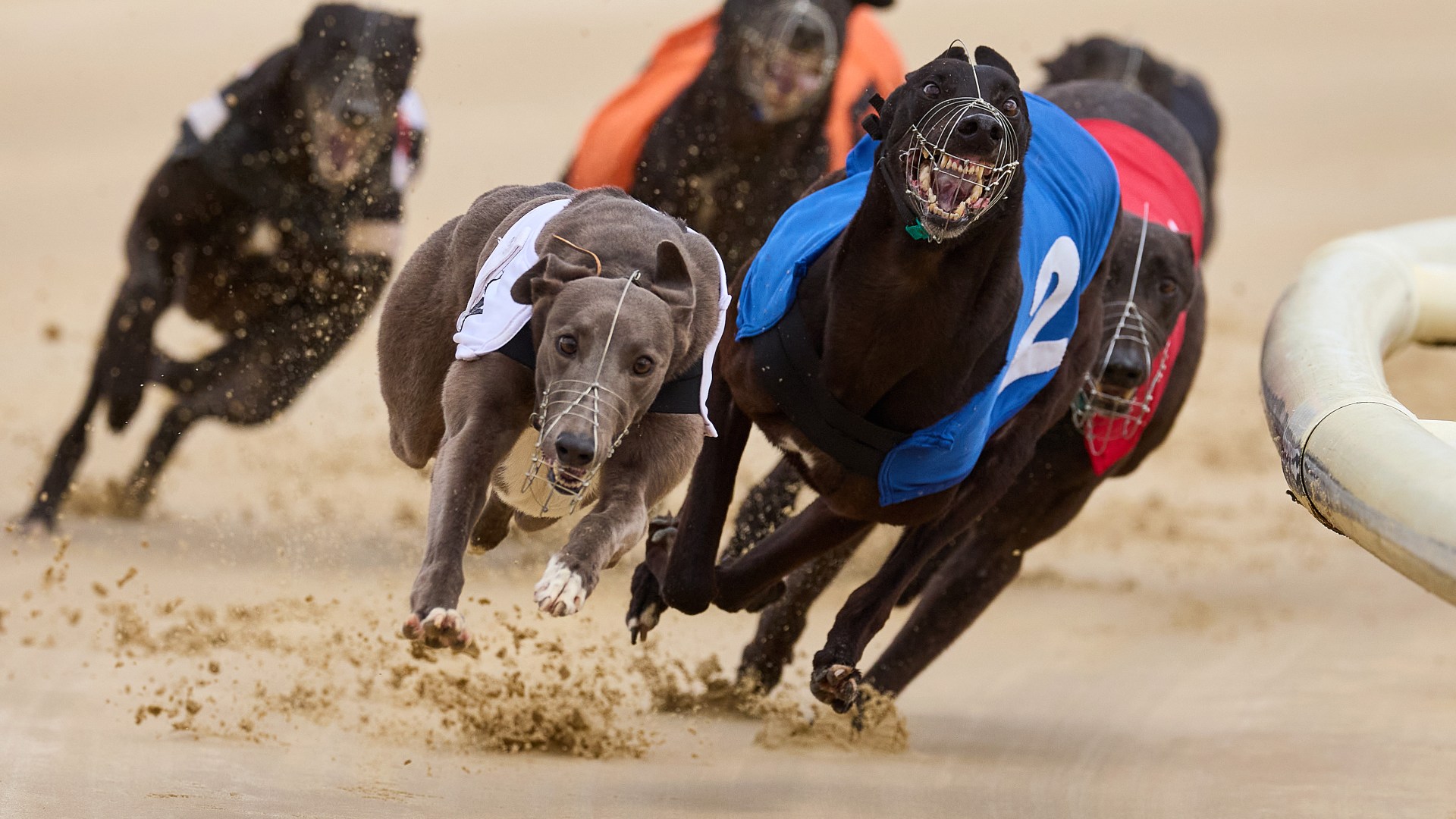
WHIMPERING trackside, a greyhound is given a lethal injection after colliding with a fence at 35mph. The pooch, which has been bred specifically for racing, has yet to reach four years old and has spent its life kenneled before being let loose to run while punters bet. Greyhounds are raced at 16 tracks across the UK but deaths have increased year on year Credit: Getty Pippa was found with a broken leg fused together as it hadn’t been treated Credit: Supplied Betty, who raced under the name Refresher, was really malnourished when she was rescued Credit: Supplied Betty was found with horrific open wounds on her legs Credit: Supplied A horrifying study by academic Mia Cobb said that deaths at the track have risen by 31 per cent in 2025 compared to the previous year. Last year 161 were euthanised trackside due to injuries. It is the highest number of deaths in the last five years, even with the number of tracks operating going down. Sign up for The Sun newsletter Thank you! The rise in trackside deaths comes as greyhound racing in the UK reaches its hundredth year on July 27th. And campaigners claim that many dogs who survive the track are left malnourished, horrifically injured and even shipped abroad. Greyhound Racing Great Britain (GBGB) have disputed the claims made by animal rescue groups and campaigners, saying they prioritise welfare and safety of their dogs. They also disagree with the findings of Mia’s report, citing that 98.9 per cent of runs took place without incidents. In 2022 GBGB launched a welfare initiative to improve conditions for dogs following a series of horrifying stories becoming public. But animal welfare charities’ claim it barely scratches the surface of the issues and the RSPCA, Blue Cross, and others are calling for England to axe the sport following in the footsteps of Wales and Scotland. Most read in The Sun Mimi Bekhechi, Senior Vice President of PETA UK, told The Sun: “In Scotland and elsewhere, this pathetic ‘sport’ – in which dogs never hear a kind word, feel a touch of love, and are kept muzzled in barren cages, then discarded like used betting slips – is banned. “Illness and injuries, including broken legs, heatstroke and heart attacks, are common on and off the track, and dogs pay with their lives for human greed.” The case of Betty, who raced under the name Refresher, was used by Greyhound Rescue Wales as an example of why greyhound racing should be banned in Wales. She was found seriously underweight, with serious untreated injuries as a stray in West Wales in 2025, and included in an evidence packet handed to the Welsh Government. Betty was found to be attached to a GBGB accredited racing trainer. Despite widespread campaigning to axe greyhound racing the English government is refusing to do so. In February last year Lisa Nandy, Secretary of State for Culture, Media and Sport, told Parliament: “We have absolutely no plans whatsoever to ban greyhound racing. We appreciate the joy that it brings to many, many people in our country and the economic contribution that it makes.” At the peak of the sport, there were 250 tracks licensed by GBGB, but as of this year there are just 16 active ones registered with the board. GBGB says greyhound racing contributes £166million to the UK economy. Campaigners say canines that survive the track are tricky to rehome after spending their lives in cages, and aren’t used to human contact. Earlier this year former racing greyhound Pippa, five, was found abandoned in west Wales, hobbling about on a broken leg that had fused back together without treatment. She was also emaciated when she was transferred to Greyhound Rescue Birmingham (GRB). It isn’t clear who caused her injuries. Her racing tattoo had been burnt out of her ear using chemicals in a bid to hide her identity but her chip revealed her racing name, which The Sun has chosen to not reveal. The rescue couldn’t find her UK racing records, but new from the microchip and tattoo that she had been owned by a GBGB approved trainer in the UK. It was who she was still registered to. Rescuer Kerri Hill said: “She was emaciated, had sores all over her body and a broken leg that had been left and fused together. “She was extremely hand-shy and would go down on her tummy and wet herself if you touched her. She especially didn’t want her face or head to be touched.” She has since had her broken leg amputated and was rehomed to live out the remainder of her days in peace. For Kerri, Pippa’s situation is sadly not unusual. “We see dogs from racing backgrounds being found in all sorts of states,” she said. “Many have injuries and are terrified of human contact. When we rehome them, we have to get them used to being in a house, not a kennel. “It’s just heartbreaking what they have been through to race for such a short amount of time at huge risk to their health.” Al was found in death row on a pound after being abandoned following his racing career Credit: Supplied He’d developed a serious skin condition from being neglected Credit: Supplied A dead dog was found during a GBGB inspection of a racing trainer, who has since been jailed Credit: SWNS Rusty was found at death’s door following a botched euthanasia attempt Credit: CAGED She has also cared for Al and Jenny who were both rescued from a ‘death row’ pound where the were set to be euthanised if not claimed. Both pooches were from the same trainer, and still registered to them at the time they came into Greyhound Rescue Birmingham’s care. Both had serious skin conditions, and developed kennel cough in the pound. Kerri says she reported both cases to GBGB. It is not known who surrendered the dogs to the pound. Over 20 years ago, the nation was horrified by the case of Rusty, a greyhound who survived a botched euthanasia attempt. He was found barely alive, with his ears hacked off to remove his racing tag, following the owner paying £10 to have him killed with a bolt gun – which failed. A vet determined the only humane thing to do was to put him to sleep. Andrew Gough, the man who fired the bolt gun, was sentenced to six months in prison after being convicted of ill-treating a dog. He was also banned for life from keeping animals. Rusty’s owner was not charged with anything as at the time it was not an offence to have your own dog shot. And in 2023, former greyhound trainer Rebecca Perkins was jailed for 36 weeks after she was found to keep 37 canines in disgraceful conditions. The abuse of her dogs came to light following a GBGB welfare inspection by a steward who said the animals were in a “disgraceful condition” and being “so thin and emaciated” the dog “could hardly walk”. Multiple extremely underweight greyhounds were found in stable blocks, along with the skeleton of a smaller dog. The inspection found a further four dead dogs on her property. Perkins, who pleaded guilty to animal cruelty, was jailed for 36 weeks and banned from keeping ainmals for life. Campaigners say that the continuing of new cases of greyhound abuse shows that the welfare of the dogs is not taken seriously. GBGB disputes the claim made by campaigners, and say welfare is at the heart of everything they do. They told The Sun that greyhounds ‘awaiting a homing space’ in trainers’ kennels are checked upon every 4-6 months, those privately homed or retained as pets are checked on at two, six and 12 months following retirement. GBGB also added any Greyhound that hasn’t raced in 10 weeks while still active is checked up on by stewards. The Sun was also told that GBGB has a “zero tolerance” for mistreatment of greyhounds and will impose sanctions on those found doing it – including a lifetime ban. Nicola Jones, Head of Rescue and Rehoming, Greyhound Rescue Wales said: “No greyhound should have to face the uncertainty of abandonment. “No greyhound should have to endure more physical pain or emotional trauma. Each and every greyhound should be treated with kindness, compassion and respect.” The vast majority of greyhounds that race in England are bred in Ireland – where GBGB has no oversight of the welfare conditions. The regulatory body says it promotes British breeding so there can be greater oversight of the dogs produced for the sport. The dogs’ lives are only tracked when they start racing in the UK – once their time on the track is over they are recorded into one of five categories: Retained by Owner, Trainer, Greyhound Trust, Charity, Rehomed by Owner, Trainer, Breeding, and other. GBGB say that traceability of retired greyhounds is at least as good as traceability of pet dogs. Since 2021, 612 greyhounds have been killed trackside, according to GBGB figures. In the same time period 380 pooches were put to sleep following vet advice away from the racecourse. In the same period, GBG recorded that 20,507 dogs have been injured across more than 1.7million races. Rebecca Perkins had allowed her dogs to become extremely underweight Credit: SWNS The treatment of the dogs was branded “disgraceful” by a GBGB steward Credit: SWNS Pippa had to have her broken leg amputated and has since found a loving home Credit: Supplied The dogs race around a circular track anti-clockwise Credit: Alamy Dr Mia, from the University of Melbourne, analysed GBGB’s data and found the increase in deaths, told The Sun: “That on-track fatality data is not covering those dogs that are injured, and then transported off-site, and then may also be euthanized. “So it would be the tip of the iceberg, but it’s equating to more than three dogs per week, on average, in the last year, were dying on the tracks in the UK. “GBGB’s greyhound welfare strategy came out in 2022, there’s certainly no evidence reflected in their data that their strategy is having a meaningful impact on reducing the number of dogs dying, even though there are fewer races and fewer tracks operating. “It’s actually gotten worse progressively over over the four years, from 2022 to the end of 2025.” GBGB have disputed Dr Mia’s findings. A spokesperson said: “The recent paper of Cobb and Coghlan contains a large number of unsubstantiated and inaccurate claims about which GBGB will be engaging with relevant stakeholders. GBGB data is independently audited; its detail meets and exceeds the requirements set by Defra.” It’s thought that as many as 16,000 greyhounds are born in Ireland every year – and this is where 83 per cent of GBGB racing dogs are sourced from. And a report has found that thousands of dogs are culled every single year as they aren’t good enough to race. Campaigner Rita James, from Campaign Against Greyhound Exploitation and Death (CAGED), said: “We know from the Irish Racing industry that at least 6,000 dogs a year aren’t good enough for racing. They’ve admitted that they cull 3,000 of those. “It’s impossible to manage the welfare of dogs when they’re over-breeding and culling them at this stage. “It’s just inherently cruel. “On top of this, the dogs are selectively bred to race, so the ones that don’t make the grade, what happens to them? “Racing in England can barely cope with rehoming the dogs that do actually race, let alone the ones that are dropped because they’re not healthy enough to race, or not fast enough, lack prey drive or any of the other reasons they can’t be winners. “Some of them have to be culled, and that’s just cruel.” Mia Cobb found that GBGB;s data showed 161 dogs had died trackside last year Credit: Getty There has been widespread protests about Greyhound racing for years Credit: Getty Mia’s analysis of GBGB’s data suggests that the most common career length is less than ten races, with most dogs staying on the tracks for under a year, and between 5,000 and 6,000 dogs leaving racing every year. GBGB confirmed that last year 5,186 dogs retired from the track, with 3,532 moving into homing centres straight away. For those that find their way into rescues, there can often be long waiting lists and the cost of preparing a former racing dog for rehoming can be in excess of £1,900 according to the RSPCA. “What we also see, if you look at GBGB’s data, is that the reliance on the rehoming sector is really high,” Dr Samantha Gaines, RSPCA’s head of companion animal science and policy, said. “If we look at last year, for example, 68 per cent of dogs who retired in 2025 were then transferred to rehoming charities. “The rehoming sector is, in effect, mopping up the dogs that leave the industry. If we then look at the cost that is incurred. “Typically, what we will see is for real rehoming costs for an average ex-racing greyhound ranging from anything from £2,200 and £2,800.” GBGB confirmed they offer a nominal fee of £420 for rescues who take the dogs, but only if the organisation is approved by them. This list does not include Blue Cross, RSPCA, DogsTrust or any other rescue organisation that has openly supported a ban on greyhound racing. GBGB said that thye’ve paid out £7milllion to 100 different centres since 2020 when they launched the Greyhound Retirement Scheme. They also claim that greyhounds start being prepared for a transition to a domestic environment in their early years and support is provided for the transition. A Dogs Trust Spokesperson said: “Beyond injuries and deaths on the track, there are longstanding concerns about the welfare of greyhounds throughout their lives, including standards of kennelling, transportation, diet and enrichment. “Our rehoming centre colleagues around the UK and Ireland have seen firsthand the harm this causes, taking in former racing dogs and working really hard to rehabilitate them.” Mark Bird, Chief Executive of the Greyhound Board of Great Britain, said: “Welfare is paramount within licensed racing and the health and wellbeing of racing greyhounds is prioritised at all times. “With over 200 Rules of Racing, registered greyhounds receive more protection than domestic pets and we are pleased to be able to show that we meet each of the British Veterinary Association’s recommendations for the use of animals in performance sport. “There will always be those who seek to undermine our high welfare standards and publicise misleading, inaccurate and unsubstantiated claims about our sport. “But these campaigners hold extreme animal rights views and are against all uses of animals in sport and wider society. “As well as a ban on greyhound and horse racing, they want to see the end of service animals and, in some cases, even people owning pets. “As we mark the sport’s centenary this month, we are proud that licensed racing continues to be one of the country’s most beloved sports. “British greyhound racing is in the top ten spectator sports with people of all ages and all walks of life regularly visiting one of our tracks across the country.” Comment now
Broken bones, emaciated pooches on ‘death row’ & ‘three dying’ weekly – the harrowing lives of racing greyhounds
Full Article
Original Source
Read the full article at Thesun →KhanList aggregates and links to publicly available news content. We do not host full articles from third-party sources. Always verify important information with original sources.