
Britons believe that the United States is more of a threat to world peace under Donald Trump's leadership than China or North Korea and are becoming more hawkish about war, a new poll suggests today.A majority of Britons now support increased defence spending, according to the latest British social attitudes survey, published on Thursday by the National Centre for Social Research (NatCen). The survey found about three-quarters of Britons (74 per cent) now perceive the US as a serious threat to global peace, compared with just 36 per cent in 2024, months before Trump's January 2025 second inauguration as president. Although the 74 per cent figure is well below the equivalent figure of 89 per cent for Russia, it is similar to that for both Israel (78 per cent) and Iran (75 per cent), and somewhat higher than that for North Korea (66 per cent) and China (62 per cent). The survey also found that Britons have 'undoubtedly become more favourable towards Europe' as a result of the changing face of US politics and war in Europe. The research found that against a backdrop of perceived geopolitical turbulence, 42 per cent believe that, in general, Britain's interests are best served by a 'closer relationship with western Europe'.However, just 9 per cent believe they are best served by a closer relationship with the US. The research was carried out before this week's midterm elections in the US in which the Trump project was humiliated as voters handed the Democrats control of Congress. The survey found about three-quarters of Britons (74 per cent) now perceive the US as a serious threat to global peace, compared with just 36 per cent in 2024The figure is well below the equivalent figure of 89 per cent for Russia but somewhat higher than that for North Korea (66 per cent) and China (62 per cent)The report's author, British foreign policy researcher Sophia Gaston, said: 'The post-Cold War peace that endured for so many years no longer shapes the country's worldview.'War in Europe, instability in the Middle East, strategic competition with China and doubts about American leadership have led to a psychological shift in Britain, putting foreign policy and national security at the heart of the collective consciousness.'Britons have undoubtedly become more favourable towards Europe. In a clear break with the post-Brexit era, people have a clearer understanding of what the EU is and value practical ties in a world shaped by conflict.'Yet it would be a mistake to conclude that the country sees defence in binary ''Europe versus America'' terms. Britons recognise the need for a diversified approach to security alliances; one built on balance, resilience and flexibility.'NatCen is an independent, not-for-profit organisation and the UK's largest centre for independent social research. When asked specifically which would be in Britain's military and defence interests, 37 per cent opted for western Europe and 14 per cent for the US, with 39 per cent saying 'both equally'.In particular, 55 per cent of Conservative and 54 per cent of Reform supporters said 'both equally', though only 19 per cent of Green supporters agree with them.When respondents were asked instead to choose between the EU and the US in regard to Britain's military and defence interests, 46 per cent picked a closer relationship with the EU, while only 10 per cent selected the US.'Britain's European orientation is seemingly more readily expressed when citizens are invited to think in institutional rather than purely geographical terms,' the report stated.The British social attitudes survey is the UK's longest-running survey of social and political attitudes, conducted annually by NatCen since 1983.Support for defence spending has reached record levels since a question was asked on the topic in the survey, but generational differences remain.The proportion supporting increased spending has doubled over the past two decades, rising from 28 per cent in 2006 to 42 per cent in 2022, and now stands at a record high of 56 per cent.Although Labour supporters (55 per cent) remain less likely than Reform UK (83 per cent) and Conservative supporters (76 per cent) to favour increased spending, the gap between them has narrowed considerably.Only supporters of the Green Party are on balance more likely to say there should be less spending (47 per cent) than to back increased spending (21 per cent), the report found.Some 62 per cent of those aged 55 and older support more defence spending, compared with 47 per cent of those aged between 35 and 54, and only 30 per cent of those aged under 35.At the same time, only 22 per cent of under-35s regard a willingness 'to serve in the military at a time of need' as important, little more than half the equivalent figure (43 per cent) among those aged 55 and over.
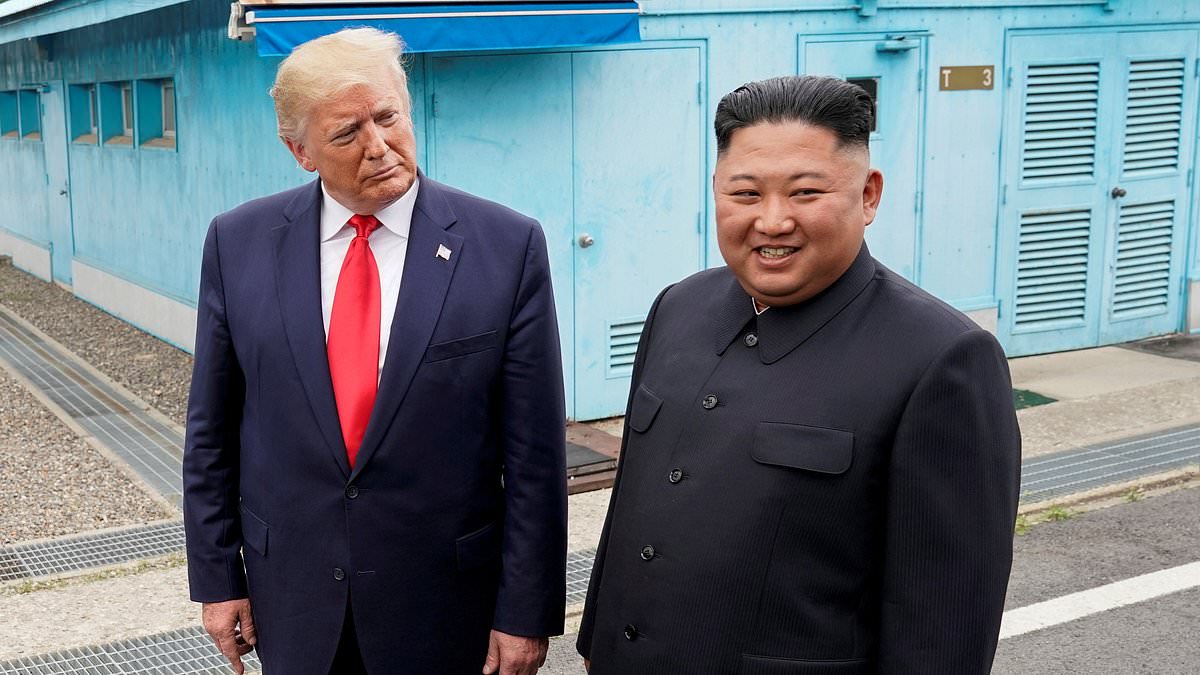
Brits believe Trump's US is bigger world peace threat than China or North Korea as support for defence spending boost and close European ties grows
Full Article
Original Source
Read the full article at Dailymail →KhanList aggregates and links to publicly available news content. We do not host full articles from third-party sources. Always verify important information with original sources.