
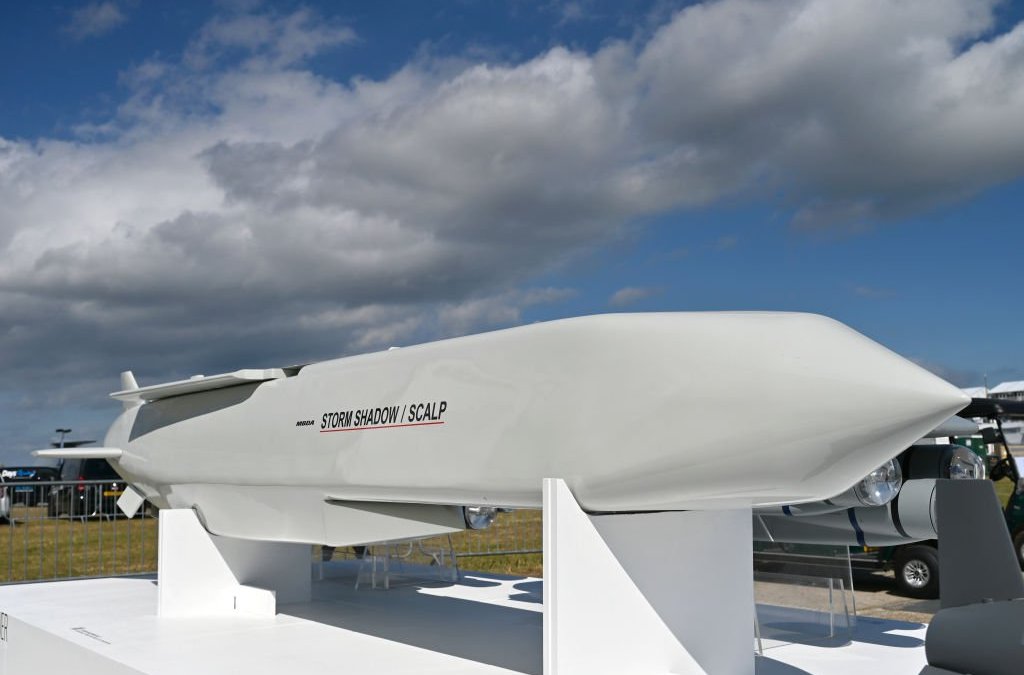
For only the second time since Russia’s invasion, the Ministry of Defence has announced the death of a British soldier on Ukraine soil. On Tuesday afternoon, in a short public statement, it said an unnamed member of the UK armed forces had “died in a road traffic incident in Ukraine on Saturday 12 September”. “The family have been informed and have requested a period of grace before further details are released,” the statement continued. “Our thoughts and our sympathies are with the individual’s loved ones at this difficult time.” Shorts The death – though apparently not a result of military action – brings renewed focus on Britain’s role in the war: the support the country is officially providing, and what more might be going on behind the scenes. The Ministry of Defence has not confirmed the role or unit of the person who was killed on Saturday, but The i Paper understands they were not a member of the British Special Forces. The news comes after a Russian drone hit a train close to the Polish border shortly after former British Prime Minister Boris Johnson and current National Security Advisor Jonathan Powell passed through the area. Ukraine’s state railway company said the drone’s intended target “could have been the diplomatic train”. Who was the first death? Nine months ago the Ministry of Defence confirmed the death of Lance Corporal George Hooley, who died in Ukraine on 9 December 2025. The 28-year-old died “following a tragic accident whilst observing Ukrainian forces test a new defensive capability, away from the front lines”. The Parachute Regiment, which is officially described as “the spearhead of the UK’s rapid intervention strategy”, later posted a tribute to Hooley featuring a letter he wrote to be opened in the event of his death, saying he was “doing what I believed in as well as loved, with people I respected, and for reasons that mattered to me, my country and democracy and freedom in this world”. The presence of paratroopers in Ukraine had not previously been confirmed. Unconfirmed reports suggested Hooley died during the testing of an armed interceptor drone. An inquest was opened into the Wallingford man’s death at Oxford Coroner’s Court in January, and is due to deliver a written report later this month. The inquest documents said he was injured by an explosion and died three days later. How does the UK officially support Ukraine? The work of British troops in Ukraine is a closely guarded secret. The UK Government has never said how many personnel are in Ukraine, but has previously acknowledged a small number are present to provide support to the Armed Forces of Ukraine and security for British diplomats. Most of the UK’s support for Ukraine has been in military hardware, and out-of-country training. The UK has been one of the leading donors to Ukraine, alongside the US and Germany – to date, it has provided £25 billion in overall support including £16 billion for military aid At the NATO summit in July 2024, then Prime Minister Keir Starmer pledged £3 billion a year in military support to Ukraine until 2030/31, or for as long as it is needed. According to a House of Commons briefing note the UK has provided both lethal and non-lethal weaponry and equipment, including tanks, air defence systems, artillery, and long-range precision strike missiles. In April the MOD announced a package of more than 120,000 drones to be delivered this year. It has also promised to deliver the blueprints for its Storm Shadow cruise missiles for manufacture on Ukraine soil It has committed to training Ukrainian fast jet pilots, part of a training programme for 63,000 Ukraine personnel. The UK is part of a Coalition of the Willing which will provide a peacekeeping force in Ukraine to “deter further Russian aggression”, but only after a ceasefire has been agreed and open hostilities end. In 2022 the then Minister for the Armed Forces, James Heappey, said there would be no“active” role for British or NATO troops in Ukraine: a position repeatedly confirmed since. In March this year the Ministry of Defence confirmed that military maintenance facilities in Ukraine were “operated under MOD contracts by UK companies with British and Ukrainian workforces, these facilities repair armoured vehicles and equipment – including UK-gifted CVR-T armoured vehicles”. And in July last year the Minister confirmed the “upcoming deployment of a RAAF E-7A Wedgetail to Europe”, jointly crewed by Australian and British service members, “to help protect vital supply lines for humanitarian aid and military assistance into Ukraine… in a live operational setting”. In November then Prime Minister Keir Starmer reaffirmed that the UK’s support to Ukraine was “always for self-defence, and it is proportionate, co-ordinated and agile. It is a response to Russia’s own actions, and it is in accordance with international law. Prime Minister Andy Burnham said that the UK would continue to stand with Ukraine, support was “unwavering” and the UK “will not backdown until we achieve long lasting and just peace for Ukraine”. How does the UK unofficially support Ukraine? In a rare public acknowledgement, in December 2002 the former head of the marines and Deputy Chief of the Defence Staff Lieutenant General Robert Magowan confirmed special forces operations in Ukraine. In addition to helping evacuated the British Embassy in Kyiv to Poland, then returning to help re-establish the diplomatic mission some months later, “the commandos supported other discreet operations in a hugely sensitive environment and with a high level of political and military risk”, he said. He described Eastern Ukraine and the Black Sea as “an environment where you need freedom to fly, communicate, see and strike” “It calls for the ability to break in, to move decisively and discreetly, to prosecute effect at range and withdraw – the so-called pulsed operation,” he said. The New York Times has reported that the US and its allies, including Britain, have “a stealthy network of commandos and spies rushing to provide weapons, intelligence and training” to Ukraine, and “commandos from these allies either remained or have gone in and out of the country since then, training and advising Ukrainian troops and providing an on-the-ground conduit for weapons and other aid”. In 2024 Russia’s state-run RT channel published an audio recording of an intercepted conversation between German air force officials, in which they discussed the possibility of supplying weapons to Ukraine. The German Defence Ministry confirmed that a “conversation related to the Air Force” had been intercepted, though the authenticity of the full recording was not confirmed. During the call, a German general talked about “delivery methods” for missiles, saying “I know how the English do it. They always transport them on Ridgback armored vehicles. They have several people on-site.” He also said “the British have been there and outfitted aircraft” to use Storm Shadow missiles. What does Russia say? Russia has repeatedly claimed that the UK’s presence in Ukraine goes further than it has publicly acknowledged, as well as complaining about its official involvement. In February the Russian Ambassador to the United Kingdom Andrey Kelin reportedly said that “Britain provides Kiev with political direction, supports it financially and with materiel, shares intelligence, arms, trains, and fights alongside the Ukrainian armed forces and other militarised structures.” In March, Russia claimed that British troops were helping Ukraine to operate high-tech military hardware. After a missile strike on Bryansk that targeted a plant making control systems for Russian missiles, using British Storm Shadow long-range cruise missiles, Russia’s foreign ministry issued a statement saying “we have repeatedly pointed out that high-tech Western weapons cannot be used without foreign specialists who ensure their operation and targeting, and without the intelligence support provided by certain NATO countries”. And in August Russia’s Foreign Ministry spokeswoman Maria Zakharova alleged the “direct involvement of Britain and its intelligence service officers in carrying out terrorist attacks against our citizens”. Why are British operations in Ukraine kept secret? Identifying British personnel in Ukraine would be a huge security risk and could give away valuable information on Ukrainian strategy and support to Russia. According to international law, states can provide weapons and other support to a state unjustly attacked by a belligerent country, to enable it to defend itself. Christoph Bluth, Professor of International Relations and Security at the University of Bradford, explains that Russia’s incursion into Ukraine has been ruled a flagrant act of aggression, so supplying Ukraine with the means to defend itself against Russia does not in itself constitute a breach of international law. But the UK wants to avoid being considered a co-combatant, which would give Russia an excuse to make it a legitimate military target. “Third-party countries would become co-combatants only if they resort to [direct] armed force against Russia,” Bluth says.
British soldiers are in Ukraine – this is why you don’t hear about it
Full Article
Original Source
Read the full article at Inews →KhanList aggregates and links to publicly available news content. We do not host full articles from third-party sources. Always verify important information with original sources.