
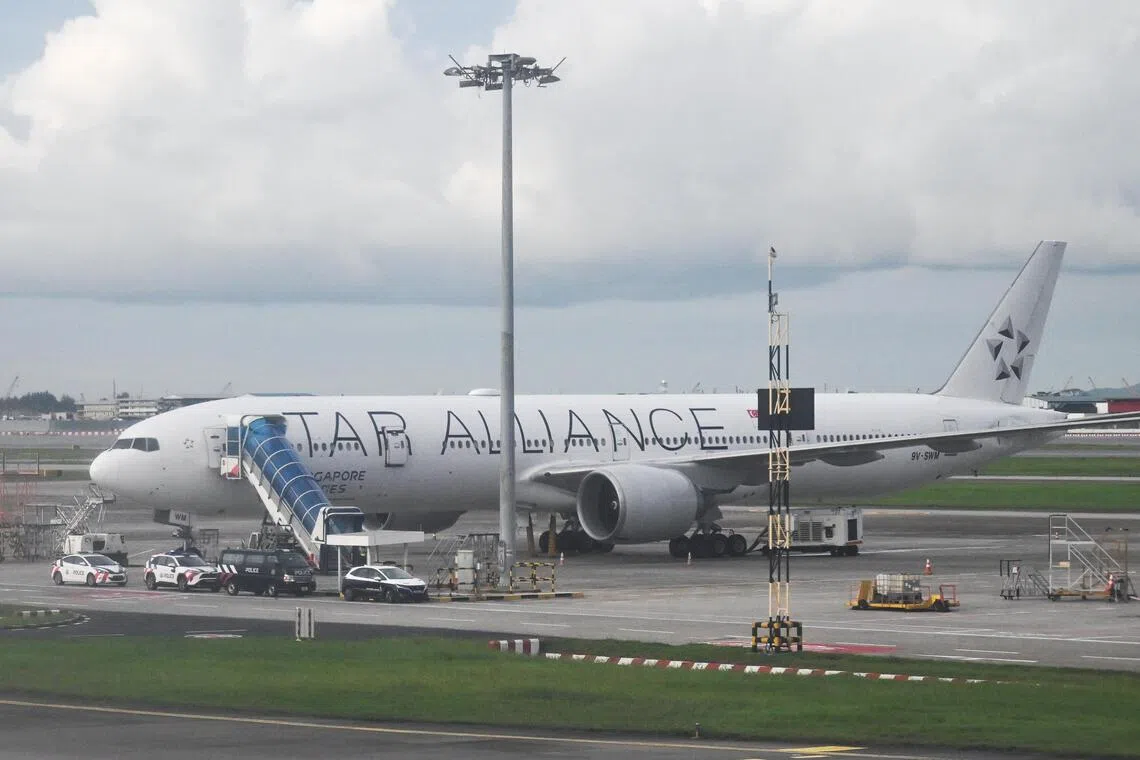
A British man who died onboard turbulence-hit Singapore Airlines (SIA) Flight SQ321 in 2024 had suffered a cardiac arrest, an inquest has been told, reported British media, after he was earlier said to have died of congestive heart failure.Geoff Kitchen, 73, was the only fatality in the turbulence, which occurred as the Singapore-bound flight from London’s Heathrow Airport flew over south-west Myanmar on May 21, 2024. The incident left 72 passengers injured, including Kitchen’s wife, Linda, who suffered spinal fractures.At an inquest at Avon Coroners’ Court on the afternoon of Sept 23, the court’s assistant coroner, Peter Harrowing, was quoted by The Independent as saying: “At first blush, one might consider natural causes being an appropriate cause of death. That does not take account of the events that occurred of the severe turbulence to which Geoff was subjected.“I shall record that Geoffrey Kitchen died of cardiac failure as a result of the aircraft for which he was a passenger encountering severe turbulence.”An initial post-mortem examination held in Thailand, where the plane had diverted for an emergency landing, found that Kitchen, a retired insurance professional, had died from congestive heart failure.While Kitchen had undergone an operation to fit stents to his right coronary artery in April 2019, Kitchen’s doctor said a review in October that year found he had returned to “normal exercise capacity”.The Independent also quoted Harrowing as saying that Kitchen was found to not be experiencing any problems, following a review in 2023 for ischemic heart disease.Dr Edward Sheffield, who performed an additional post-mortem examination in Bristol, gave Kitchen’s cause of death as cardiac failure due to coronary artery atheroma and the physiological effects of turbulence.According to the BBC, he told the inquest on Sept 23: “I am satisfied that it was the physiological effect of the aircraft turbulence which precipitated the cardiac arrest and ultimately Geoff’s demise.”The Straits Times has contacted SIA for comment.The inquest also heard a statement by Kitchen’s wife, 74, who said Kitchen had pressed her to the side during the incident, which caused injury to her back. She also suffered a head wound, which was “bleeding profusely”.She said Kitchen fell onto her lap before passengers helped move him back into his chair, where his head “flopped forward”. She was later moved across the aisle to be treated for the head wound while cardiopulmonary resuscitation was carried out on her husband.She was taken to intensive care in Bangkok before she was airlifted after 10 days back to Bristol, where she spent another week in hospital.The BBC reported in August that she was suing SIA for damages to help her access specialist support for her broken back.Anthe Korelidou, a specialist aviation lawyer representing Kitchen, said: “While it’s more than two years since Geoff’s death, Linda and the rest of her family continue to have a number of questions and concerns about what happened and if more could have been done to prevent their injuries.“All Linda wants is for the most thorough investigations to be conducted. The issuing of High Court proceedings is a major milestone in being able to provide Geoff’s loved ones with the answers they deserve.”According to the BBC, the couple had flown out of Heathrow for a six-week holiday to Singapore, Indonesia and Australia.The Transport Safety Investigation Bureau, in its final report detailing its investigation findings, said on May 19 that inclement weather had not been detected by the weather radar on board.The pilots did not observe any clouds in their immediate flight path prior to the incident either, and the bureau noted that their actions were “understandable and appropriate for the situation”.
British man on turbulence-hit SIA Flight SQ321 died of cardiac arrest, UK inquest told
Full Article
Original Source
Read the full article at Straitstimes →KhanList aggregates and links to publicly available news content. We do not host full articles from third-party sources. Always verify important information with original sources.