
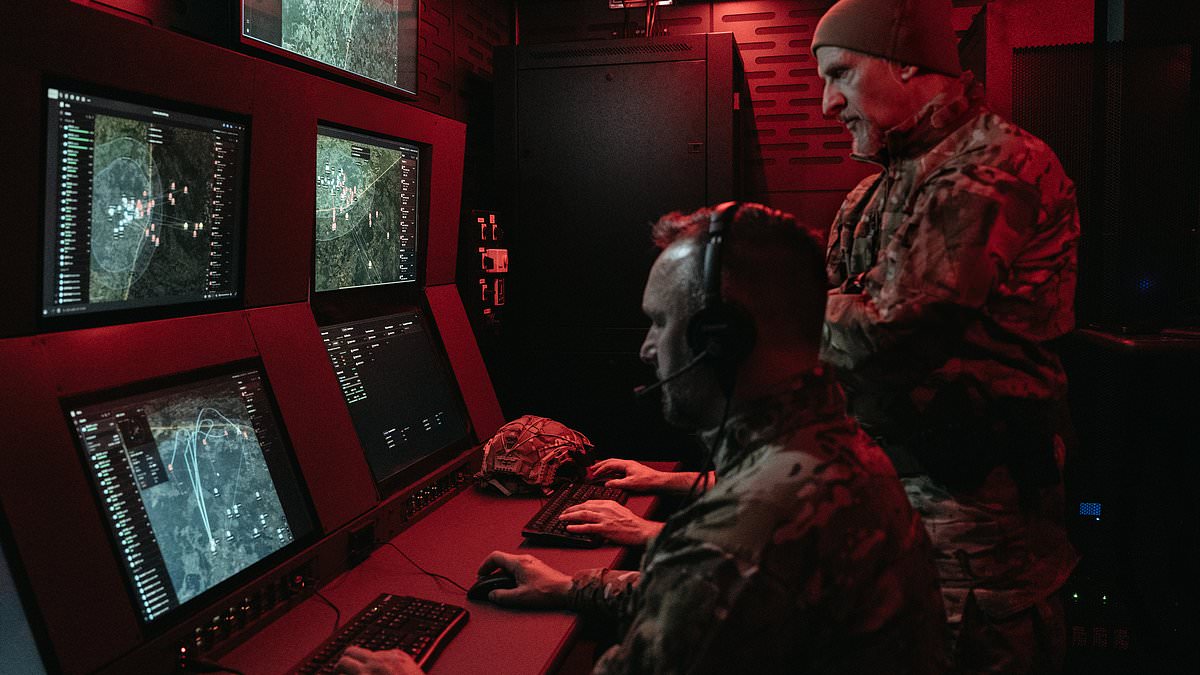
British tech gurus are designing cheap AI missiles that can create mini 'Iron Domes' to protect European cities from Russian drone attack.The weapons were unveiled for the first time on Monday by military firm Helsing, as part of its new Contra air defence system.The platform has been built in a matter of months to counter Vladimir Putin's most advanced jet-powered drones and cruise missiles, which have caused mayhem in Ukraine in recent weeks.Sophisticated Terminator-style artificial intelligence, linked to a suite of radars and sensors, can rapidly detect aerial threats by itself, before deciding whether to launch one of two new interceptor missiles, the AD-1 Inferno and AD-2 Ambush.The technology operates in a similar fashion to Israel's famed Iron Dome air defence system, creating a virtual bubble of protection over towns, cities, military bases and troops.News of the development comes amid renewed fears Russian tyrant Putin is planning a sabotage campaign across Europe that could see him using drones to attack critical infrastructure, defence firms and military bases. The Kremlin's production of Geran-4 and Geran-5 jet-powered drones has skyrocketed in recent weeks, with Moscow now able to build 4,000 units a month, intelligence reports claim.The kamikaze aircraft are significantly faster than earlier Shahed-style models and can race through the sky at speeds of between 270mph and 500mph, reaching heights of three miles. Sophisticated AI, can rapidly detect aerial threats by itself, before deciding whether to launch one of two new interceptor missiles, the AD-1 Inferno and AD-2 Ambush (both pictured) The new system could create an Iron Dome-style bubble of protection over cities from drones Russia is able to launch the aircraft in swarms of hundreds at a time to saturate Ukrainian air defences, making them increasingly challenging to stop. According to Helsing, its new system could counter this, with the AI able to detect and coordinate interceptions against hundreds or even thousands of incoming drones and cruise missiles at the same time.'Contra ends the air defence dilemma: slow fair-weather drones, or million-euro missiles fired at cheap, mass-produced targets,' said Niklas Köhler, Helsing's co-founder and president.'Our AI links existing sensors and effectors in real time and adds our interceptors, AD-1 and AD-2. With jet and rocket propulsion, a low-cost all-weather radar seeker, and two independent European supply chains, they deliver autonomous fire superiority up to ten kilometres high – affordable and at industrial scale.'Daily Mail understands major parts of the two new missiles' development have been done in the UK.The Inferno is a jet-powered interceptor built to bridge the gap between slower electric or propeller-powered drone interceptors and traditional missiles that are too expensive to fire in large numbers.It can travel at more than 400mph, has a range of 12 miles and can hit drones flying at a height of more than five miles, using cheap radars to guide them onto target.Meanwhile the supersonic Ambush missiles can travel at two-and-a-half times the speed of sound and are able to destroy stealth missiles and high-speed drones. They act as the last line of defence for aircraft that slip through the net or for missiles that are spotted late.Both of the new missiles cost less than £100,000, which is far cheaper than more hi-tech systems like American-made Patriot missiles, which cost more than £3m each but have been used to down Iranian drones over the Middle East that cost just a fraction of that. Human operators will still be kept in the loop when the new missiles are launched by the AIThey can be launched from containers placed on the back of a lorry, a ship or in a field. Helsing added it would be able to produce thousands of missiles a month, at sites across Europe.Human operators are still kept in the loop and can control the targeting priorities and decisions if they choose to, the company added.Maxwell Adams, one of Helsing's product directors, said a lot of interceptors are currently operated by humans, which can limit how effectively swarm attacks can be defended.'You could be overwhelmed and drones could leak through,' he told journalists during a press conference in Berlin. 'Autonomous interceptors are able to navigate themselves and detect using their onboard seekers, lock on and guide themselves into the targets completely autonomously… You won't be bottlenecked anymore by human operators.'The missiles are currently completing tests. They will be operational later next year.Britain will spend £790m to improve its integrated air and missile defences over the next four years. The UK is also looking to develop its own cheap missile technology.The Government has declined to say if it will adopt the new system developed by Helsing, which has a headquarters in London.
British experts design cheap AI missiles 'that can create mini "Iron Domes" to protect towns and cities from Putin attack'
Full Article
Original Source
Read the full article at Dailymail →KhanList aggregates and links to publicly available news content. We do not host full articles from third-party sources. Always verify important information with original sources.