
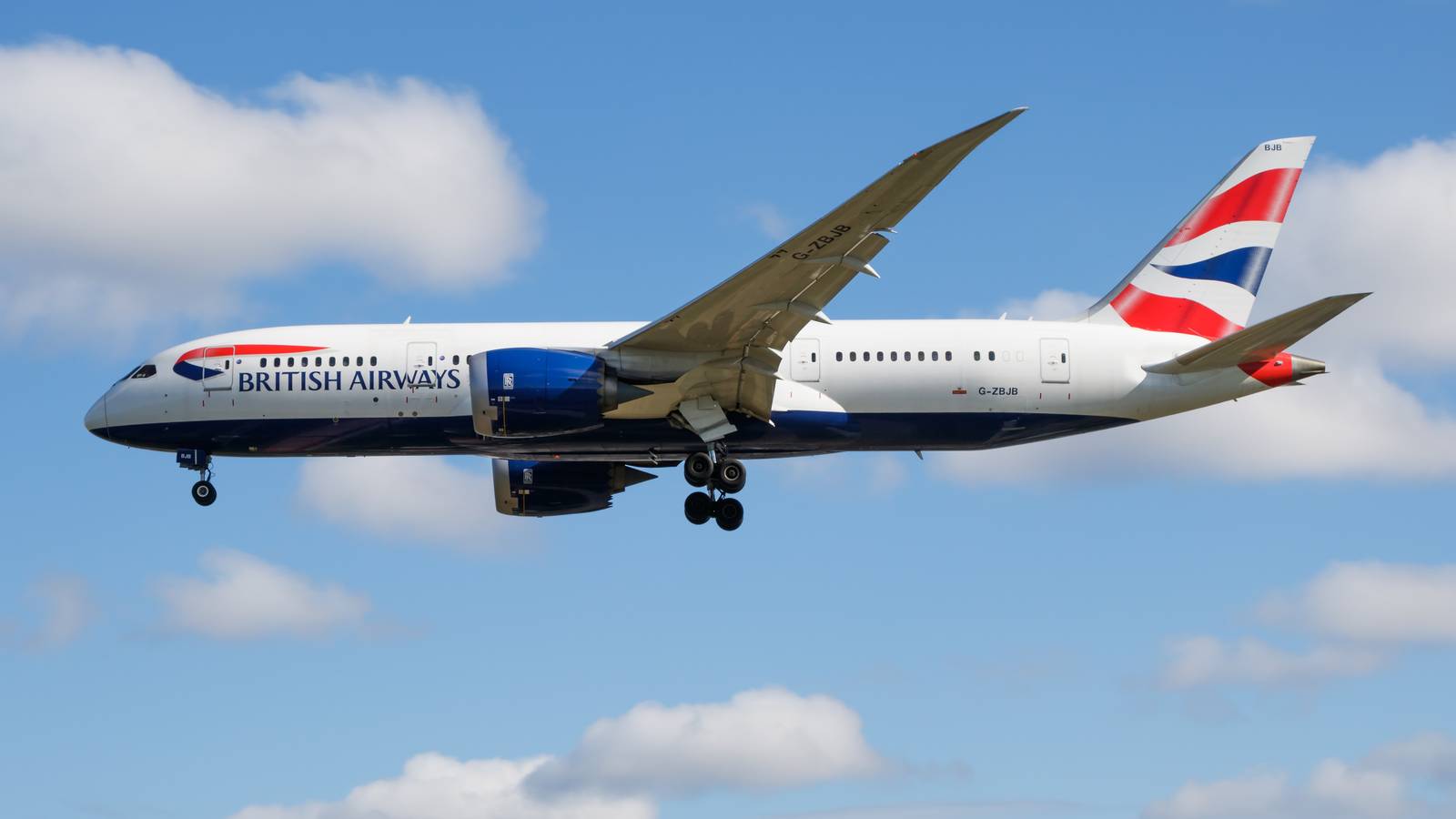
Published Nov 8, 2026, 5:33 PM EST Jasper Yu-Dawidowicz is a New York City-based aviation journalist with over seven years of journalism experience across different publications. Currently an undergradate student, Jasper is pursuing dual degrees in Professional Flight and Aviation management, completing his flight training as part of Purdue's part 141 R-ATP eligible program. A British AirwaysBoeing 787-8 Dreamliner has been stranded at Pittsburgh International Airport (PIT) in Pennsylvania for over two months after reportedly sustaining significant damage during a ground-handling incident. The aircraft, registered as G-ZBJF, arrived at PIT from London Heathrow Airport (LHR) on August 28, 2026, operating as flight BA 171. However, instead of a routine transatlantic arrival, a ground service vehicle collided with the aircraft, damaging its underside and rendering it unable to return to the skies ever since. More than 70 days later, the 12-year-old Dreamliner remains in Pittsburgh, with reports flagged by Turbine Traveller suggesting that the repair process has proven to be much more complicated than initially anticipated. As reported by several travelers, potential damage to the aircraft’s landing gear system continues to delay the maintenance repair process. Simple Flying has reached out to British Airways for comment on G-ZBJF’s extended stay in the City of Bridges and will update coverage upon receiving a response. Ground Equipment Collision Leaves British Airways 787 Stranded For 70+ Days Credit: Stuart Bailey | Shutterstock G-ZBJF arrived in Pittsburgh on August 28, 2026, after completing its roughly 3,233-nautical-mile (5,987 km) journey across the Atlantic Ocean. The aircraft had departed Heathrow five minutes early of its 4:40 PM departure time, landing in Pennsylvania at approximately 8:23 PM local time. However, the G-ZBJF never operated its return service to London later that night, with subsequent reports indicating that the 787-8 had sustained severe damage while on the ground. Flight tracking data and visual sightings of the jet confirm that the aircraft is still on the ground in Pittsburgh as of November 8, 2026. According to discussions among aviation enthusiasts on Reddit, the incident that led to G-ZBJF’s grounding involved a mobile baggage belt loader that reportedly struck the airframe underneath one of its bulk cargo doors. The belt loader, a piece of ground service equipment used by ramp personnel to load and unload luggage from the 787’s cargo hold, was raised up into position but ended up piercing the fuselage, leaving a hole in the cargo bay’s exterior. Although the exact details beyond this have not been confirmed, the continued presence of the aircraft in Pittsburgh suggests a major structural issue requiring a significant engineering solution. The repair process could be particularly challenging given the Boeing 787’s construction. Unlike older aircraft that primarily use conventional aluminum structures, about 50% of the Dreamliner’s primary structure is made from composite materials. This includes significant portions of its fuselage and wings, requiring specialized inspection and repair procedures in the event of substantial structural damage. Depending on the severity, British Airways maintenance engineers may have to construct a specialized patch to apply to the exterior of the Dreamliner. This would allow the plane to be ferried to a larger maintenance base capable and equipped to handle the 787 where more extensive work can be completed. In order to be transported to one of these locations, however, the aircraft would have to be approved by the FAA to complete a one-off ferry flight via the use of a FAA special flight permit (SFP). Landing Gear Damage Could Complicate The Repair Process Credit: Fasttailiwind | Shutterstock Since the initial damage to G-ZBJF, several people have reported the aircraft is potentially also facing damage to the landing gear system. According to a commenter on a November 8th discussion thread, a British Airways engineer who had worked on the Dreamliner said repair work was well underway on the aircraft, but technicians had encountered additional complications involving damage to the jet’s landing gear system. While this account has not been independently verified, it could help explain why the Dreamliner has remained grounded for so long. A separate report suggests that British Airways could be preparing to reposition the airplane to Cincinnati Northern Kentucky International Airport after completing temporary repairs in Pittsburgh. The reported plan would potentially allow the 787 to be moved to a larger facility operated by FEAM Aero, a maintenance services provider, where the aircraft could be more permanently repaired before returning to the United Kingdom. Ferrying the jet to Boeing’s 787 facilities in Seattle could also be another option, as Boeing would be well-equipped to handle any repairs to the aircraft’s composite structure if needed. For British Airways, getting G-ZBJF back into the skies is a high priority. Currently, the UK flag carrier operates a total of 12 Boeing 787-8 aircraft according to planespotters.net. G-ZBJF is approximately 12 years old, having first flown in April 2014 before being delivered to British Airways the following month. While it is not uncommon for airplanes to be parked for routine maintenance checks, the prolonged grounding of G-ZBJF is costing the airline not only potentially millions in repair fees, but hundreds of thousands in lost revenue potential and roughly $175,000 in gate parking charges, according to the rates published by the Allegheny County Airport Authority which runs Pittsburgh International. While British Airways likely isn’t paying this full amount given insurance coverage and the fault of the ground service operator, it goes without a doubt the airline would rather have its aircraft flying passengers than sitting on the ground in Pittsburgh. Another Extended Grounding For G-ZBJF Credit: photosounds | Shutterstock Interestingly, the Pittsburgh incident is not the first time this year G-ZBJF has spent an extended period away from flying passengers. Before its latest grounding, the Dreamliner already spent nearly eight months at Cardiff Airport (CWL) in Wales, where British Airways operates a major maintenance facility, being placed into long-term storage before D-checks were completed on the Dreamliner. Aircraft tracking records show that G-ZBJF arrived in Cardiff on December 19, 2025, and remained there until August 6, 2026. After nearly eight months in Cardiff, the aircraft returned to commercial operations on August 7, 2026, meaning it had only been back in service for approximately three weeks before being stranded in Pittsburgh. Date Description December 19, 2025 G-ZBJF ferried to Cardiff for long-term storage and maintenance checks. August 6, 2026 G-ZBJF completes D-check at Cardiff maintenance base. August 7, 2026 G-ZBJF returns to operational service after being ferried from Cardiff to London. August 28, 2026 G-ZBJF operates BA171 from LHR to PIT and is subsequently grounded in Pittsburgh after a ground service vehicle collided with the aircraft's underside. The timing makes the latest incident particularly unfortunate for British Airways. Having spent much of the previous eight months undergoing extended maintenance, G-ZBJF had only recently returned to its regular flying schedule before the incident in Pittsburgh. In the meantime, the prolonged grounding underscores the heavy logistical challenges of repairing a widebody thousands of miles away from primary maintenance facilities. Whether the 787 will be able to eventually return to service directly from Pittsburgh or first have to be repositioned to another city remains one of the biggest unanswered questions.
British Airways Boeing 787 Stranded In Pittsburgh For 2 Months Due To Complicated Repairs
Full Article
Original Source
Read the full article at Simpleflying →KhanList aggregates and links to publicly available news content. We do not host full articles from third-party sources. Always verify important information with original sources.