
It is a Tuesday morning and on my way to work I see children carrying flags.Two hooded boys wave a Jamaican flag, another a Palestinian flag. There are Turkish flags and Romanian flags, too.As the children gather around a bus stop, the Caribbean and African flags group together. So do the Eastern European flags. Two boys with Pakistani flags chat to each other in Urdu. This is not a protest. The kids are doing what their schoolteachers have asked them to: ‘Bring in your flag so we can celebrate your culture.’But almost all these children will have been born here. Some may have only visited their ‘home’ country a handful of times. Their school – which will not fly the Union Jack for fear of seeming racist – is implicitly telling them that by celebrating ‘their’ flag, the alienation suffered by minority pupils will subside.I beg to differ. At my school, Michaela Community in Wembley, north-west London – now recognised as one of the finest state schools in Britain – we fly the Union Jack. And we all sing the National Anthem.‘Isn’t it a bit colonial?’ visitors sometimes ask (progressive middle-class white people – I have never had any parents or those in the local community complain).But colonial is when you stick your flag in someone else’s country, not your own. The thing that unites the children at my very diverse and multicultural school is that they all live in Britain – and to my mind, what unites us is what we should celebrate.I believe the scene I have described, of children carrying their differing flags, is, in the long run, more divisive than is commonly understood. And the implications of such well-meaning ‘celebration’ are alarming. Britain is dividing more starkly by the day. Katharine Birbalsingh argues ‘multicultural patriotism’ is the only way to create a sense of unity among Britain's diverse populationAs I explain in my book Diversity Is Not Our Strength, multiculturalism is broken and Britain is a tinderbox. If nothing changes, particularly in our schools where a damaging sense of victimhood is being fostered in minority pupils – and an equally damaging sense of ‘white privilege’ and colonial guilt in others – I believe we are in danger of tearing ourselves to shreds with civil violence.Some people may roll their eyes on hearing that. I do not.I have been a teacher or headmistress my entire life of (mostly) ethnic minority children in London’s inner city – and spent 30 years thinking about culture, childhood, race, values and national belonging. I have seen the results of ‘diversity’. The Bengali kids sit together. The Pakistani kids sit away from them. The Black African kids sit together – sometimes divided according to whether they are Christian or Muslim.Friendships across divides might be formed but essentially the kids are bound together by the idea that they are marginalised. The unifying force is a shared sense of NOT belonging to the collective whole: The belief is that racist Britain hurts all ethnic people and that this is what they have in common.I want to change this – and I see ‘multicultural patriotism’ as our only way out of our current mess. That is a shared appreciation and knowledge of the country we inhabit. It starts in schools. If we don’t teach children about Britain’s history, traditions and values, then multicultural patriotism cannot succeed.My mother is a black Jamaican and my father is Indo-Guyanese. I was born in New Zealand, raised in Canada (with a year of my childhood spent in Nigeria and a year in France) before moving to England aged 15. I have been here ever since.My impression of what black and brown people wanted in 1980s London remains my philosophy today when it comes to thinking about race: Let me live a life of dignity; show me respect.But what’s happening in schools now is all about the need to ‘decolonise’ the curriculum and make sure the books and history we teach ‘instil pride in pupils about where they have come from and the contributions of that country around the world’. Michaela Community school in Wembley, north-west LondonIn those same books, Britain’s culture is often described as part of a system of white supremacy. This isn’t restricted to a handful of obscure texts, nor is this discomfort with the national identity an ‘inner city’ or even specifically ethnic minority problem. In 2011, three-quarters of respondents said they were proud to be a British citizen. Today fewer than half do and only 13 per cent said they were proud of Britain’s place in the world.What underpins events like a school ‘culture day’ and also the curriculum is the assumption that people are primarily defined by the colour of their skin.Imagine what it is like to be a modern child. History classes: Oppressive white man, heroic non-white victim. Or nasty rich man, suffering downtrodden poor. English: Every text taught through the lens of understanding the patriarchy, racism and classism. Schoolchildren are also repeatedly told that climate change is dooming the world because of the actions of a selfish, oppressive minority.I have been nicknamed ‘Britain’s Strictest Headmistress’, but hopefully you can see that my belief in strictness is not because I don’t love kids. Yes, the school I co-founded in 2014 is strict. Children greet their teachers and thank them for lessons; they are quiet if a teacher tells them to be. They are taught to focus on what they can control and take responsibility to improve their own life, not make excuses.Our results have been compared to elite private schools though this was never my chief aim. I am most proud of our values – particularly what I call small ‘c’ conservative values: Sacrifice, duty, gratitude, hard work, personal responsibility, among others.I am an immigrant and as such I recognise how hard it is to integrate into a country, how long it takes and how impossible it is to do this if you only hang out with those who are not British.If you are joining a country, you need to know the origin story of that country. Even if you retain ancestral ties abroad, you need to know the traditions and customs of your new home and how you intend to show it respect. We are told that ‘diversity is our strength’ but that idea is absurd and is actually part of a machine that prevents diversity from succeeding.The result can be frightening. For instance, I was in my office one evening during the summer when the England football team was playing in the World Cup. Down the hall were 400 children waving St George’s flags and cheering.This is what I wanted when I set up this school. The kids have different stories but at that moment there was one flag and one team, England.Five years ago, I would have happily posted pictures of such an event on social media but now I hesitate. I have learned that I will be inundated with people telling me that these children should be deported, that they are invaders, that they have no right to wear an England top.Vile abuse will be directed at 11-year-olds. This never used to happen. It used to be only progressives on the Left who were upset to see patriotism in the inner city. But the country has changed. And not for the better.Many of the people hurling abuse will be young: Raised in the prevailing orthodoxy of ‘white guilt’, who have then swung to the other extreme – ethnonationalism. I do not think their number is shrinking as we plough on with anti-racism.But we can make Britain work. We can have a sense of shared identity and patriotism. I believe we can have enough cultural and national confidence to not apologise for who we are.But to do this, we must reject victimhood, resentment, guilt, modern ideas of racism or obsessions over identity. Victimhood has become a form of currency, a way of gaining status in a world where many young people lack a stable sense of who they are.If you can claim victimhood status, you gain attention. Many children’s identity is now built around this sense of grievance. You do not need to be ‘ethnic’ to qualify. Mental health labels, neurodiversity and gender identity can serve the same function.As a result, children believe their task in life is not self-improvement but resistance to forces that prevent them from ‘being their true selves’.This is not liberation. It is a trap. For example, bullies who kick other pupils will say that they have ‘anger management issues’ or ‘ADHD’, as if the description of a need absolves them of responsibility for their actions.Victimhood murders an individual’s capacity to make choices of right and wrong and be held accountable for those actions.‘White guilt’ – the feeling some white people have that they are guilty because the challenges that black and brown people face today are the fault of their white ancestors – is destructive.Of course, oppression exists and power, when abused, causes harm. The problem is when this becomes the only lens through which we understand a world that is far more complex, messy and nuanced.In 2020, Harry Potter actress Emma Watson posted: ‘White supremacy is one of the systems of hierarchy and dominance, of exploitation and oppression, which is tightly stitched into society. As a white person, I have benefited from this… I’m still learning about the many ways I unconsciously support and uphold a system that is structurally racist.’Throughout history, multiple nations or people have done awful things. But there are not similar ‘guilt’ movements where the descendants of that group now view themselves collectively in need of atonement.For instance, the Mongol conquests of Genghis Khan and his successors are said to have killed 40 million people (an estimated 10 per cent of the world’s population at the time). I am not aware of ‘Mongol guilt’. Similarly, the Arab slave trade involved the enslavement of an estimated 17 million Africans and Europeans (considerably more than the total for the entire European slave trade) but there is no culture of ‘Arab guilt’. Britain's 'strictest headmistress' Katharine Birbalsingh says 'many children’s identity is now built around a sense of grievance'In schools, children are commonly told to grade their privilege and place themselves within a hierarchy based on various metrics of oppression. White children are encouraged to interrogate their conversations with non-white pupils for unconscious racism.And an over-emphasis on ‘white guilt’ leads us to make mistakes. A report into the grooming of at least 1,400 vulnerable young girls in Rotherham who were sexually exploited by men, the overwhelming majority of whom were of Asian heritage, predominantly Pakistani, stated that ‘several staff described their nervousness about identifying the ethnic origins of perpetrators for fear of being thought racist’.Axel Rudakubana, the Cardiff-born teenager of Rwandan immigrant parents who murdered three young girls at a dance class in Southport in 2024, had attracted the attention of the authorities at the age of 13 when he threatened a fellow pupil at school with a knife and explained he had taken it to school ‘to use it’. His headteacher later said that when she raised concerns, she was accused of racially profiling a black boy.I am not saying racism does not exist (it does) or even that it is super rare (it isn’t). Britain – like every country – has racism in its past and present.However, I think the argument about how to stand against racism has changed in my lifetime. This country became a better place because of the demand that all people, regardless of race, should be treated with dignity and respect.But we have taken a wrong turn by moving away from this position into the modern politics of anti-racism – to the extent that we now have a multi-billion- pound industry advising the private and public sectors how to become ‘less racist’ and become more ‘inclusive’, ‘diverse’ and ‘equitable’.When I go to London theatres, I often cringe. For one friend, such trips have become a running joke with her son (who happens to be black). ‘How many black, disabled or trans actors will we have today?’ he jokes before the performance begins. In one recent show, Shakespeare’s Much Ado About Nothing, half the cast were black or brown. The performances have also changed to seem ‘blacker’.In Much Ado, they had black actors twerking around the stage. I wanted the ground to swallow me up.The same boy, on the Tube home, pointed to three different adverts, observing that each one featured either a mixed-race couple or just ethnic minorities. (Research for Channel 4 showed black people feature in more than 50 per cent of adverts and are the ‘lead role’ in 23 per cent, while making up 4 per cent of the UK population.)All this embeds race in even the smallest decisions, allegedly in the name of combating how prevalent racism is in our culture. In short, it is reprogramming our unconscious biases.I have been asked to be on boards where it is quite explicit that an ‘ethnic minority’ face is needed. Get lost, I tend to say. But there’s nothing I can do about the lingering suspicion others will feel in the back of their heads when I am put forward: Is this because she is a woman? Is this because she is black? The whole thing is toxic. Here is what the diversity industry does not understand: Ethnic minorities want to be rewarded on merit, like everyone else. Anti-racism is a racism machine that undermines any sense that we live in a fair society.Of course, different identities must exist within a wider national identity. But multiculturalism only works if everybody believes in putting the country, and not their identity or themselves or their demands, first. In our schools, teachers currently do the opposite. This is why I believe so strongly in multicultural patriotism.I love that we all have our different stories and deep ties to other parts of the world.But that isn’t what binds us together. We all want to belong to something – and if that isn’t a nation, then it might be a tribe, a physical gang, an online ‘community’, an activist group or a sexual identity. But it will always be something that gives a sense of belonging (and very often one that defines itself against the majority).We need bravery to reject both the modern anti-racist progressivism and the shallow victimhood and rage of Right-wing identity politics.We need to grow a spine. We need to find some courage and some honesty. And we need to find a way to forgive each other while remembering who we are.I would ask ethnic minorities to forgive old wounds without pretending those wounds never existed. I would ask those on the Right who are angry and feel their country has been harmed, to forgive, too, whoever they feel is responsible and to build with the neighbours they have.Forgiveness does not mean surrender. But forgiveness is essential if we are ever to have a shared future together.I believe that liberal multiculturalism has failed us – whatever your race or religion – by selling a lie.The lie is that it does not take effort for people to get along. The lie is that one does not require certain values to make community work, namely service of the whole instead of your tribe or interest. The lie is that there is no ‘Britain’ that people are joining, bringing with it obligations as well as privileges.Our school has a great atmosphere precisely because we don’t choose to divide the children according to race and religion.We unite them under our patriotism. We unite them under the only flag that can possibly unite them all and remind them of the country that we all, by virtue of living here, owe something to: Britain.Adapted from Diversity Is Not Our Strength by Katharine Birbalsingh (Constable, £25), to be published November 12. © Katharine Birbalsingh 2026. To order a copy for £22.50 (offer valid to 21/11/26; UK P&P free on orders over £25) go to mailshop.co.uk/books or call 020 3176 2937.
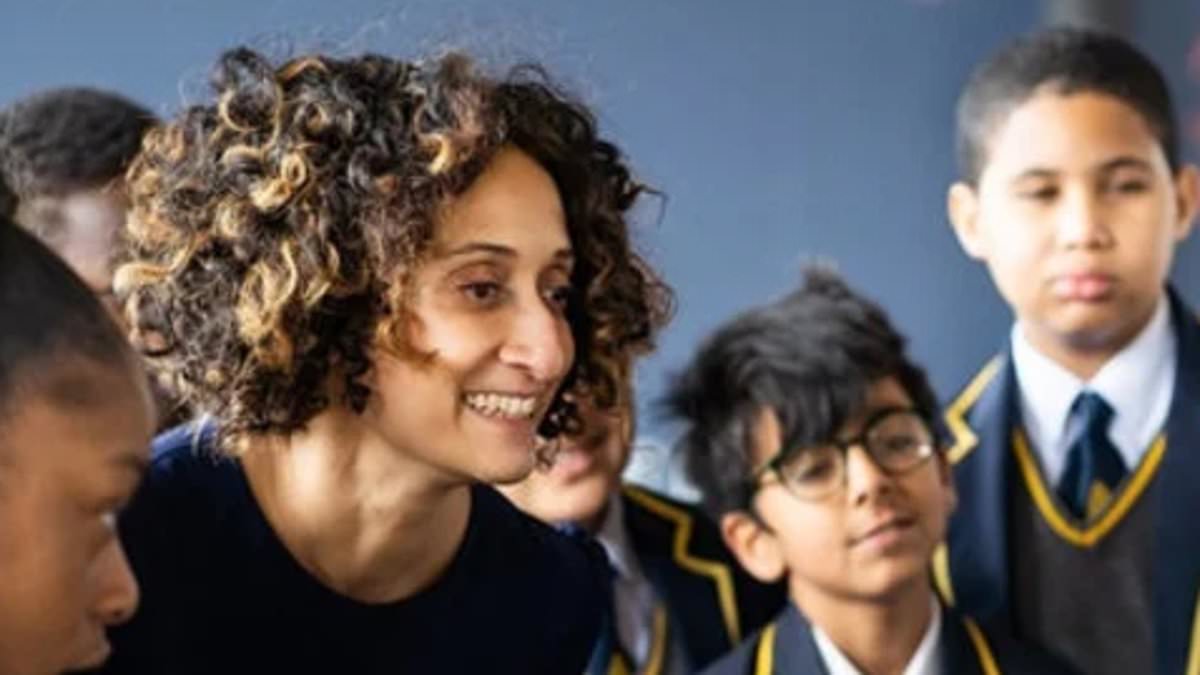
Britain's 'strictest headmistress' KATHARINE BIRBALSINGH says our obsession with celebrating the ethnic heritage of children - while feeling shame at Britain's history - is wrong, divisive and may end in civil unrest
Full Article
Original Source
Read the full article at Dailymail →KhanList aggregates and links to publicly available news content. We do not host full articles from third-party sources. Always verify important information with original sources.