
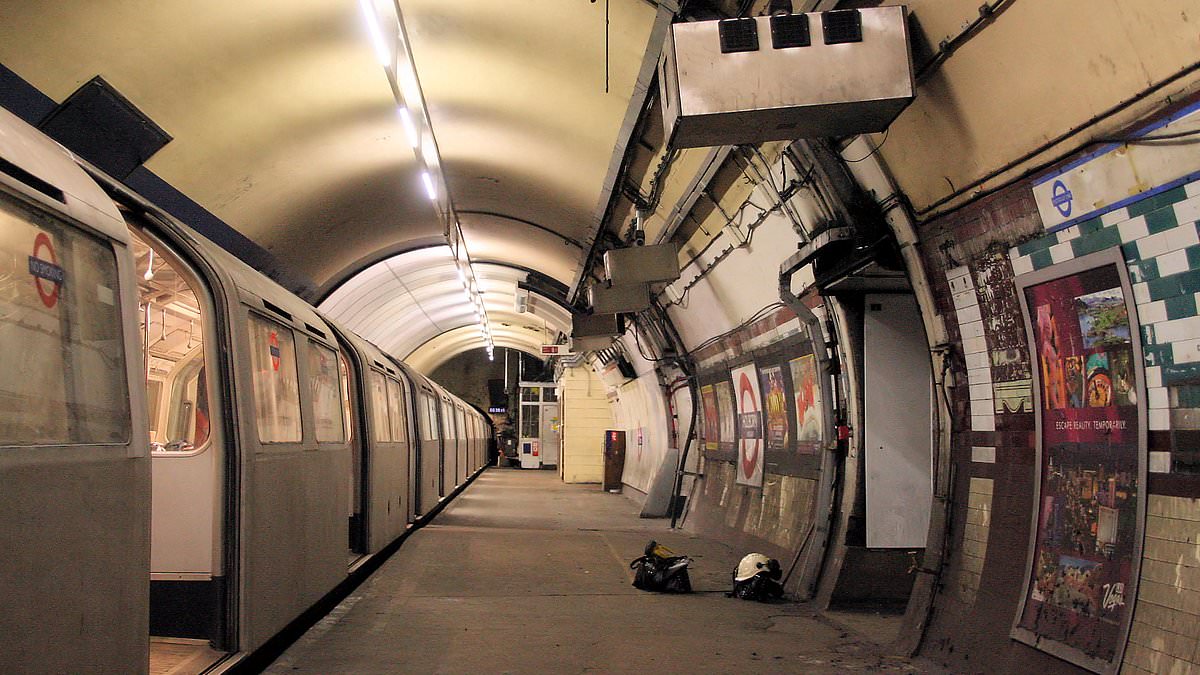
In the early 1960s, the UK's train stations underwent significant upheaval.Dr Richard Beeching, former chairman of the British Railways Board, was tasked with overhauling the system, which led to the closure of over 2,300 stations across the country – in what came to be known as the 'Beeching Axe'.Sixty years on, many of the stations affected are still closed – with several others lost along the way.In fact, the UK is home to what is thought to be the world's oldest railway station and it now sits as an empty listed building. In London, an abandoned tube station lies untouched and is open for tours, completely frozen in time. Elsewhere across the country, disused railway lines dating back centuries have been transformed into walking or cycling routes through the countryside. Read on to discover some of Britain's 'lost' railways and the intriguing history behind them. Manchester Central Manchester Central was once a major train station in the North WestManchester Central Station went on to become a major hub in the North West after it opened in 1880.However, it closed down in 1969 after passengers increasingly began using cars instead, and changes to the rail network meant it was no longer needed. It stood empty for years, until it was purchased by Greater Manchester County Council in 1978 and transformed into an exhibition centre, opened by the late Queen Elizabeth II in 1986. The site has hosted lots of concerts over the years, including the likes of Oasis and Take That. Following a refurbishment in 2009, it remains a conference and events space today. Aldwych Tube station Aldwych Tube station was once a terminus for the Piccadilly line It originally opened in 1907 but closed its doors in 1994. Visitors can now tour the station Once an active Tube station and terminus for the Piccadilly line, Aldwych Station opened in 1907. It closed down in 1994, leaving two platforms, a ticket hall and interconnecting tunnels barren of passengers and trains. The site has officially reopened again – but not for its originally intended use. Intrigued visitors can step back inside the station's doors and tour its abandoned walkways with the London Transport Museum.Original advertising posters have been left behind frozen in time, and guests can even step inside the original 1907 lifts. Rugby Station's Lias Line The Lias line is now used as a scenic cycling and walking route in WarwickshireThe Lias Line operated in Warwickshire from 1851 to 1985, Avanti West Coast explains. Since 2022, it has been used as a cycling and walking route, starting from Rugby Station. With 7km (four miles) of traffic-free pathways, it offers a safe and scenic trek through the countryside. Heighington Station Heighington Station is said to be the oldest railway station in the worldThought to be the first railway station in the world, Heighington Station dates back to 1826.Once part of the Stockton and Darlington railway line, the building was shut down completely in 2017, the BBC reports. In 2025, the building was bought by Friends of the Stockton and Darlington Railway who hope to restore the station 'to represent its origins as a Georgian railway tavern' using 'period correct techniques and materials'.Heighington's original purpose was to function as a tavern and to provide shelter and refreshment for workers and customers at the adjacent coal and goods depot.However, a newspaper report from September 1827 shows how the building was fulfilling the main functions of a railway station.As well as being a stopping point for trains, it provided shelter to passengers and was used to store unaccompanied parcels and goods being transported by rail.The station was given Grade II* status in 2023, meaning it is considered 'particularly important'.Walham Green Walham Green Wetherspoons once served as the entrance building and ticket hall for Fulham Broadway Tube station Inside, diners will find nods to its train-related pastWhat now stands as Walham Green Wetherspoons was once the entrance building and ticket hall for Fulham Broadway Tube station.The Tube stop was called Walham Green, before its name was officially changed in 1952.Built in 1910, the Edwardian building features a baroque-style entrance, and now serves hundreds of customers every day. Instead of rushing in to catch the next train however, many who pass through its doors nowadays enter for pub grub and a pint. Cheddar Valley Line A train operating on the Cheddar Valley line which first opened in 1858 Nowadays, it serves as a walking trail known as the Strawberry LineNow known as the Strawberry Line, referring to the fruit mostly carried on the tracks to markets in London and Birmingham, the Cheddar Valley line route from Yatton to Shepton Mallet is now a walking trail.Passengers travelled along the line between 1858 and 1963, the Telegraph reports. It played an important role linking Cheddar and Wells onto the rail network, but closed down during the Beeching cuts. North Cornwall Railway The North Cornwall Railway line is now partly used as a popular cycling route known as the Camel TrailThe North Cornwall Railway line opened in 1886 and, despite its name, started in the Devonshire village of Halwill. The line ran all the way to Padstow, though was never a huge success and its goods traffic never met original expectations, according to northcornwallrailway.co.uk. Fish were transported along the line as well as slate, and some holidaymakers used the line, but traffic dwindled over the years. It eventually closed down in 1967, and nowadays part of it is used by the Launceston Steam Railway.Some 18 miles of the line is used as a popular cycling route known as the Camel Trail. Cyclists can pass through woodlands and countryside views as they make their way through Padstow, Wadebridge and Bodmin along a fully pedestrianised route. Tidenham Tunnel Tidenham Tunnel was constructed back in 1874 by local minersLocated in south-west England, Tidenham Tunnel was constructed back in 1874 by local miners, who completed the structure in less than 20 months using Ingersoll rock drills. Many were injured, and some even died during the build. When eventually finished, it stretched across 1,129 yards and was eventually joined with a separate second tunnel to make a singular, longer route. The tunnel closed down for passenger services in 1959, and continued to be a track for goods trains until 1964. Carriages for Tintern Quarry used the tunnel until the end of 1981, and the track was removed completely in 2019. It's now covered with tarmac and opens between April and September, for pedestrians to pass through on foot or by bike. The tunnel is mentioned in Railway Wonders, by Graeme Bickerdike, which was published on March 15.Conisbrough Viaduct Conisbrough Viaduct was built by Dearne Valley Railway in 1909Described as an 'immense structure' by Mr Bickerdike, Conisbrough Viaduct was built by Dearne Valley Railway in 1909.Located in South Yorkshire, it took 250 men and 15 million bricks to build, as well as 2,000 tons of cement. Conisbrough Viaduct stands 116ft above the River Don and all railway services across it were suspended by 1966. It has never been demolished because of the high cost to do so, and is instead looked after by Railway Paths charity.
Britain's 'lost' railways: From a perfectly preserved Tube station to Cornish lines reborn as cycle trails, we lift the lid on the UK's abandoned stops and tracks
Full Article
Original Source
Read the full article at Dailymail →KhanList aggregates and links to publicly available news content. We do not host full articles from third-party sources. Always verify important information with original sources.