
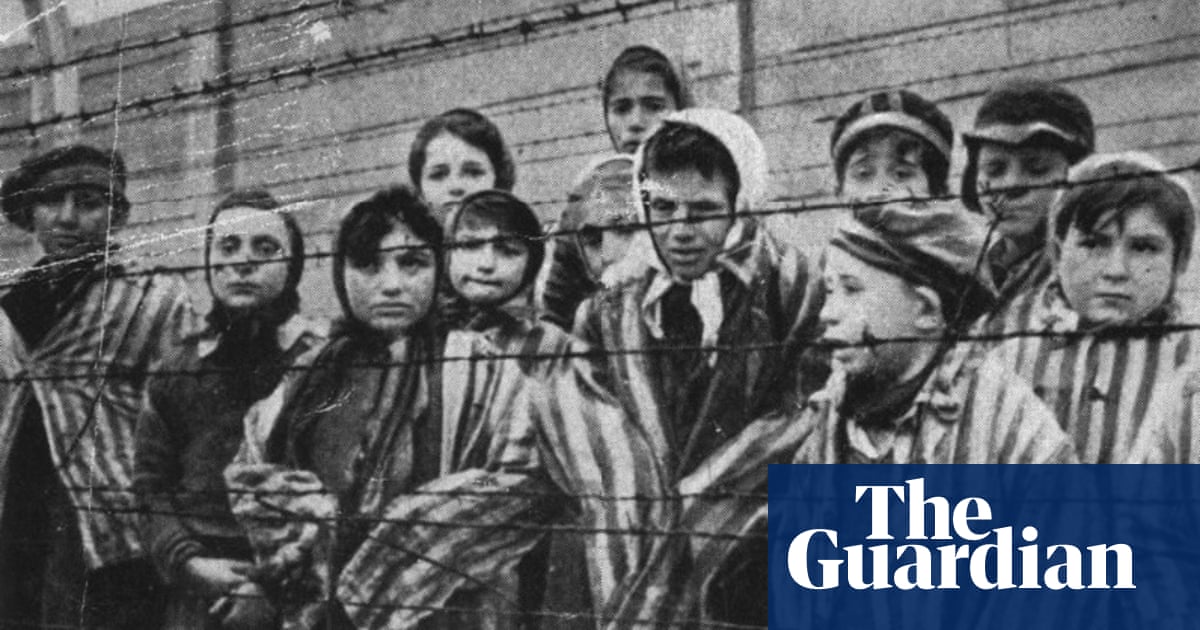
The “complex and unsettling” story of what Britain knew during the Holocaust is being explored amid plans to create a new permanent national memorial.An exhibition highlighting how news of the atrocity reached Britain much earlier than is commonly understood will tour the country after being viewed privately by MPs at Portcullis House on the parliamentary estate at Westminster in September.The research draws upon newspaper reporting, broadcasts, academic scholarship, witness testimony and government archives. The exhibition is a sample of a more extensive, permanent exhibition for the national Holocaust Memorial and Learning Centre, which is planned for a site in London.Adjaye Associates and Ron Arad won the design competition for the Holocaust memorial in London.Martin Winstone, the senior historical adviser to the Holocaust Educational Trust, said: “There’s a feeling today that Britain really only found out about the Holocaust at the end of the war. But in 1942, the year in which most victims of the Holocaust were murdered, you couldn’t really escape this information in Britain. It was in every newspaper. It was on the BBC.“The Manchester Guardian was the newspaper that reported most extensively on the Holocaust, taking a crusading position that there was more the British government and allied governments could be doing.”For years, the Manchester Guardian, which was banned from Germany in 1933 for highlighting Adolf Hitler’s antisemitism, called for immigration restrictions to be lifted for Jews, lobbied for pressure to be applied to neutral nations to open their borders to refugees and for special rescue measures, realising that “the Nazis were aiming at the complete elimination of an entire group of people”.Much of the information about the Holocaust, including the locations of death camps, was smuggled out of Poland – where the murders were “happening in plain sight” – by couriers to the London-based Polish government-in-exile.Winstone said: “It was a challenging situation. There were lots of things the government had to deal with. And for much of that war, Britain was on the defensive.“On one level, the government’s response was always, ‘we’ll win the war, that’s how we stop this’; while critics said, ‘there’ll be nobody left to save, if that’s what you’re waiting for’.”During the second world war, the government commissioned reports on antisemitism in Britain, with agents opening people’s mail and recording conversations overheard in air raid shelters to gauge public opinion.In what Winstone described as a “complex and unsettling story”, Ministry of Information bulletins revealed that while there was mass public sympathy for Jews in occupied Europe, it contended with anti-migration and antisemitic sentiment.Winstone added: “Nearly everybody in Britain was disgusted about these mass murders, but at the same time you start getting more antisemitic discourse about Jews in Britain – that Jews were running the black market, avoiding military service and spreading panic.“Even before the mass murder began, during the 1930s, there was a significant body of opinion which felt Britain should not be admitting refugees.”skip past newsletter promotionafter newsletter promotionWinstone said UK immigration laws in the 1930s were highly restrictive, in part because of antisemitism earlier in the 20th century. But after the Kristallnacht pogrom of 1938, Britain relaxed restrictions to some extent, allowing Jewish children to come from Europe without visas. The Manchester Guardian reported how Jewish communities and Quakers in the city set up organisations to support refugees.British women – from MP Eleanor Rathbone, to grassroots fundraisers and those who found themselves interned alongside Jews in France – were at the forefront of humanitarian efforts, Winstone said.The independent MP Eleanor Rathbone was at the forefront of humanitarian efforts. Photograph: Hulton Deutsch/Corbis/Getty ImagesA 2021 survey by Claims Conference found 21% of the British public knew the UK government was aware of the mass murder of Jews as early as 1941.UK Holocaust Memorial Foundation is co-chaired by the broadcaster and former Labour politician Ed Balls and the Tory peer Eric Pickles, who said the exhibition would give an early insight into the work being developed for the forthcoming memorial.The exhibition will be at the Northern Ireland assembly from 30 October until 13 November; the Scottish parliament from 7 to 10 December; before travelling to Cardiff from 16 January to 4 February 2027, coinciding with Holocaust Memorial Day on 27 January. It is also expected to visit Manchester, with a date and venue yet to be confirmed.The UK Holocaust Memorial and Learning Centre, which would be at Victoria Tower Gardens, Westminster, does not have a confirmed opening date yet, as a planning application is being redetermined by the Ministry of Housing, Communities and Local Government. The Holocaust Memorial Act 2026 received royal assent this year, granting legal clearance and government funding for the project.
Britain knew about the Holocaust as it happened. A new exhibition reckons with that truth
Full Article
Original Source
Read the full article at Theguardian →KhanList aggregates and links to publicly available news content. We do not host full articles from third-party sources. Always verify important information with original sources.