
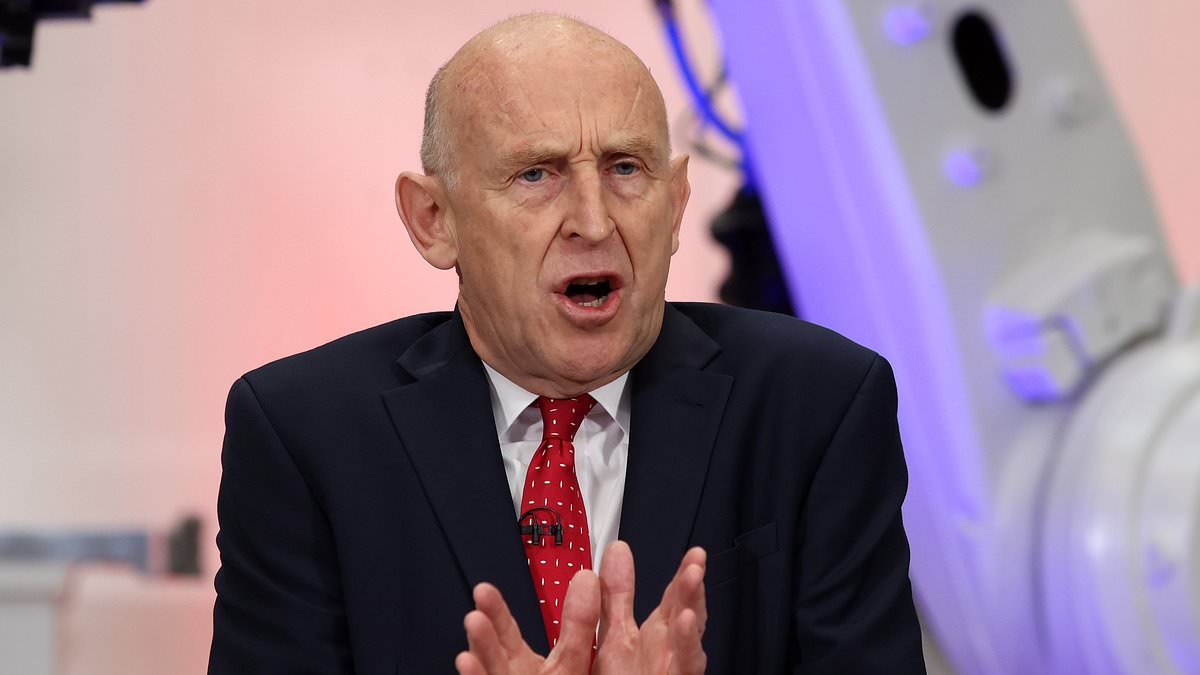
Britain risks becoming trapped in an ‘increasingly expensive doom loop’ as it pays out more than £300million a day servicing the ballooning national debt.Official figures show the interest bill on the UK’s near-£3trillion debt pile totalled £8.8billion last month alone – the highest August figure on record.It took debt interest payments to £50billion over the first five months of the fiscal year – some £327million a day.With spending on welfare also soaring under Labour, borrowing totalled £77.3billion between April and August, £8.1billion more than forecast by the Office for Budget Responsibility (OBR).The figures underlined how debt interest payments – which are being driven higher by elevated inflation and soaring borrowing costs on global bond markets – are themselves punching a hole in the Chancellor’s plans ahead of the Budget next month. Daniela Hathorn, senior market analyst at Capital.com, said that while the government ‘still has choices over taxation, spending and borrowing’, the situation ‘risks becoming an increasingly expensive doom loop’ that could leave Britain in ‘an irreversible debt spiral’ unless action is taken. Chancellor John Healey faces tough choices in next month's BudgetShe said: ‘The worrying part of today’s borrowing figures is the feedback loop between inflation, interest rates and the public finances. Debt interest reached £8.8billion in August, meaning more government revenue is being absorbed simply servicing existing liabilities at precisely the moment growth is weakening.‘That significantly complicates the October Budget as the government needs to demonstrate fiscal discipline without tightening policy so aggressively that it further damages growth. For gilt investors, credibility will therefore be crucial, markets will want evidence that any new spending commitments come with a convincing plan for how they are financed.’Shadow Chancellor Andrew Griffith said: 'Labour have lost control of the public finances.’Fears are mounting that John Healey will be forced to increase taxes again on October 28 as he struggles to bring spending under control amid opposition from Labour MPs and unions.'Another round of tax rises in October now looks inevitable,' said Thomas Pugh, chief economist at RSM UK.UK government borrowing costs have soared in recent weeks as a fresh inflation shock from the Iran war pushes up interest rates globally and investors fret about Labour’s spending plans under Andy Burnham and John Healey.The yield on 30-year gilts – a key measure of how much it costs the UK state to borrow – hit a 28-year high close to 6 per cent last week and remains elevated at around 5.7 per cent.The ten-year gilt yield remains close to last week’s 19-year highs just shy of 5.5 per cent and it costs the UK government more to borrow than any other country in the G7. Reform UK shadow chancellor Robert Jenrick described the latest borrowing figures as ‘a national embarrassment’.He said: ‘It has never been more urgent to make savings. Britain needs proper spending control, not more of the same failed approach.’Lale Akoner, global market strategist at Etoro, said: ‘Britain is taking in more tax and still borrowing too much. This is the uncomfortable message we get from today’s public-finance figures. Revenues are rising strongly, but spending is rising faster, leaving borrowing around £8billion ahead of forecast. With debt already close to £3trillion, the UK is increasingly exposed to inflation and higher bond yields.‘The risk is a difficult feedback loop. Higher inflation pushes up welfare bills and debt-interest costs. Weaker public finances can then make investors demand higher gilt yields, which in turn raises the cost of servicing the debt.‘For investors, this makes the October 28 Budget as much a bond-market event as a tax event. The government needs to show it can bring borrowing under control without putting further pressure on growth.’Neil Wilson, an investor strategist at Saxo Markets, said: ‘Rising debt interest costs mean less headroom for the Chancellor and forces the Burnham leadership to confront the dismal fiscal arithmetic head on way earlier than he had hoped. The question is whether they can solve the equation while keeping his party and markets happy – an election may not be far away.’Susannah Streeter, chief investment strategist at Wealth Club, said: ‘The Burnham fiscal bind has wound even tighter, giving him very little room for manoeuvre at the Budget. Borrowing vastly overshot expectations again in August.‘Signs of being too flash with government cash are likely to get a strong reprimand from bond markets, and given that it’s mainly interest on public sector debt, which has meant the government has spent more than expected, there will be nervousness about setting off another spike higher in gilt yields.’DIY INVESTING PLATFORMSAJ BellAJ BellEasy investing and ready-made portfoliosHargreaves LansdownHargreaves LansdownFree fund dealing and investment ideasinteractive investorinteractive investorFlat-fee investing from £4.99 per monthFreetradeFreetradeInvesting Isa now free on basic planTrading 212Trading 212Free share dealing and no account feeAffiliate links: If you take out a product This is Money may earn a commission. These deals are chosen by our editorial team, as we think they are worth highlighting. This does not affect our editorial independence.Compare the best investing account for you
Britain faces 'increasingly expensive doom loop' as cost of servicing near-£3trillion national debt tops £300million a day
Full Article
Original Source
Read the full article at Dailymail →KhanList aggregates and links to publicly available news content. We do not host full articles from third-party sources. Always verify important information with original sources.