
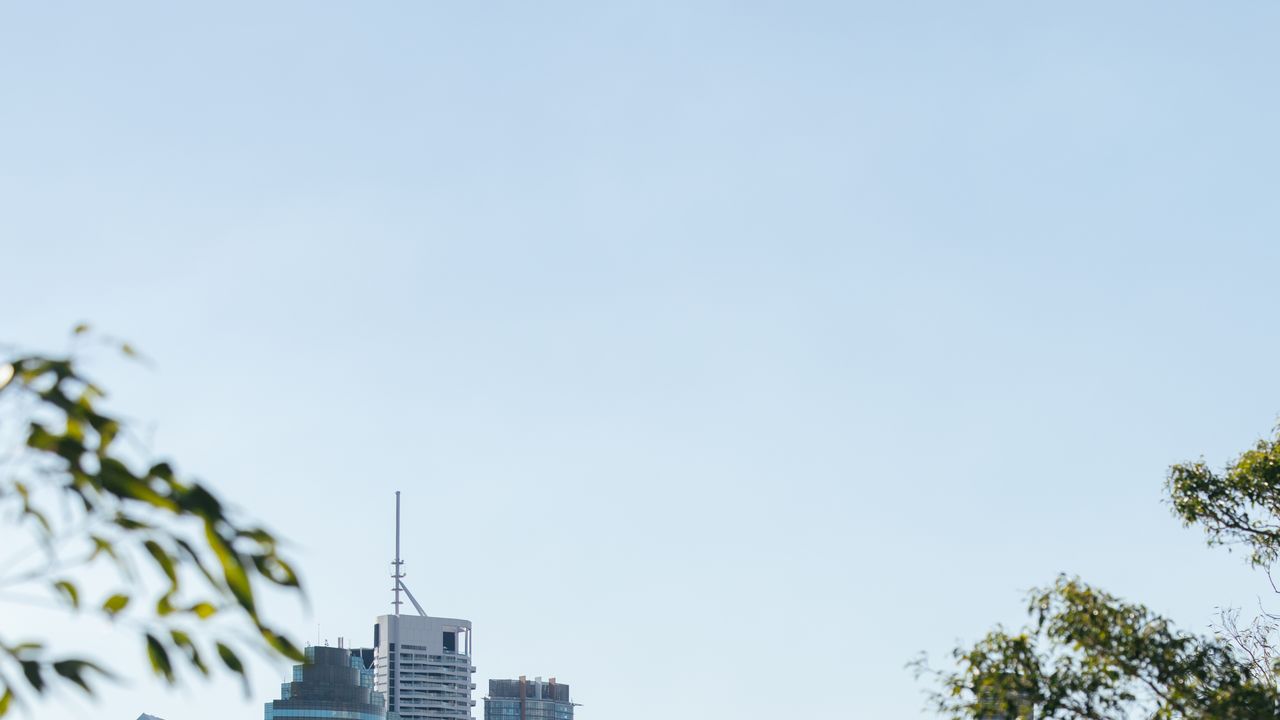
Late one afternoon last November, Ty Simon works the room at Golden Avenue. He laughs with a pair of men in suits, tops off the glasses for a table of women in flower-patterned dresses, squeezes shoulders, and nods and smiles his way across the rest of the floor. Waiters ferry wine and coffee and platters of hummus and salads between the kitchen and the split-level dining space. Sheets of bright Queensland sun pour in through the open walls. It's Tuesday, it's lunch, and the place is full, unrushed, and lovely; it feels good to be here. Golden Avenue opened in the middle of last year as the ninth restaurant from Simon and his wife, Milan-born Biànca Marchi-Simon, through their Anyday hospitality group, which started with the Asian-inflected Longtime and went on to include Agnes, a dimly lit open-flame spot that won Australia's Restaurant of the Year in 2023. When Simon returns to our table, I remark on the hospitality that I've just seen. “Here we take a community approach,” he says. “My goal has always been to make sure that the people who like us, love us.”The community approach may be the key to his city's success. Brisbane—Australia's perpetually distant-third city—has long been reduced by the Aussies to a “big country town.” (Their words—not mine!) Though a good-natured and happy place, it lacked the natural beauty and trendsetting of Sydney and the cultish urban creativity of Melbourne. For decades Brisbane seemed to succumb to the belief that it could never compete. It lacked personality in its Central Business District (CBD) and had pretty much no public transport. Even geography worked against it: In a state prized for its coastline, Brisbane is nearly 50 miles from a surf beach. Locals would often zip overseas or migrate south, perhaps on the assumption that their ambition could never be realized at home. The big country town endured.The astounding Kith and Kin, from Queensland artist Archie Moore, which won the Golden Lion at Venice’s 60th biennale, on display at GOMA Elise HasseyThen a shift began. The city council embarked on an ambitious rebranding in 2010 to position Brisbane as globally connected and dynamic, giving it the nickname of New World City (“It was about shedding the idea of being the poor cousin,” Simon says). The magnificent Gallery of Modern Art (GOMA) had opened just a few years before, attracting world-class works from the Pacific and beyond. The council leveraged the city's billion-dollar location, just north of the booming Gold Coast, with its high-rises and killer beaches, and south of the covetable Sunshine Coast, with the Great Barrier Reef just off its shores. Millions traveled in from all over each year for what lay on either side of Brisbane, so why not make the city bait for some of their money and time? Many Brisbanites, Simon included, began to grow this place together, creating a city that reflected their own ambitions—and themselves. In the 2010s the city developed sharply designed precincts filled with glamour shopping and higher-level dining, all under year-round sunshine and with Brisbane's noticeable good cheer and friendliness. In 2021 the IOC announced that Brisbane would host the summer Olympics in 2032, following Los Angeles.And right around that same time, COVID hit. While the rest of Australia struggled with lockdown and tight regulations that dragged on, Queensland fared generally well, with looser rules and relatively low numbers of cases after the initial shutdowns. “We had Melburnians coming into Brisbane just to feel normal again,” says entrepreneur and developer Catherine Malouf.Malouf may be the most recognizable face of Brisbane's new chapter. Her family is one of the key forces behind the James Street precinct, a fig-tree-studded melange of open-air coffee houses, Champagne bars, and high-end restaurants strung together with designer shops selling top local labels. “I wanted to create somewhere where we could have a good lunch, a glass of wine, and go shopping in a place that felt like the best of Australia,” she says as we eat grilled chicken and salads at her Hellenika restaurant. Stylish and elegant, Malouf exudes the kind of sophistication you may more often associate with the places she formerly called home, like Italy and California, but her good nature and easy friendliness is all Brisbane. In a sense she personifies the version of Brisbane she is invested in creating: global and chic but anchored in hometown charm. “It took me 20 years to come back and realize that this is the place I want to live in, and a lot of people have realized that too,” she says. “It is comfortable. It is easy.”The precinct's architecture is heavy, concrete, and borderline Brutalist, but not at all ugly. It creates an aura of strength and permanence that's almost symbolic for the next chapter of a city whose heritage architecture was mostly knocked down and whose locals have often fled elsewhere for opportunity. And amid it all is the anchor of the precinct, The Calile, an urban resort hotel whose execution feels Aussie but whose ambition and hospitality would work in any major global city. Its opening—along with its smartly designed rooms and mezzanine-level pool, bars, and restaurants that spill over into the general precinct sidewalks—catapulted the James Street precinct onto the radars of international travelers. “We are very much an Aussie hotel, but we are increasingly hosting people from around the world,” Malouf says.Designer Heidi Middleton inside her atelier, Artclub Elise HasseyThe James Street precinct serves as a gateway to Australia. The stores here, high-end and, for the most part, independent, are nearly all Australian brands such as P. Johnson, St. Agni, and Brisbane's own Gail Sorronda. A centerpiece is Artclub, from fashion designer Heidi Middleton, which launched here last year. Like many of her fellow Brisbanites, Middleton left to start and grow a business whose ambitions, she felt, would never flourish in Brisbane. After spending decades in Europe and selling her globally renowned Sass & Bide, she alleviated her homesickness and moved back. Artclub is a sustainably minded fashion brand that focuses on small production and renewable materials. Middleton remarks that the key to the precinct's success is the curation: high-end and never high street. “They have created a genre that is all their own,” she says.Brisbane is called the River City for the coffee-hued eponymous waterway that snakes through it. Like the James Street precinct, the river, too, has been a focus for a lot of redevelopment. The work here—walkways, bridges, cycling and jogging lanes, dining districts, and green spaces—has pulled the city together and been a catalyst for a revamped relationship between people and place. On the banks near the James Street precinct, where a once industrial wasteland lay abandoned and uninspired, now sits the reimagined Howard Smith Wharves, alive with breweries, green parks, and restaurants. It's located on the Brisbane Riverwalk, a network of overwater walkways that are dotted with bright red royal poinciana flame trees, which didn't exist 10 years ago. Along the walk sits Stanley, an excellent Chinese spot that conjures a Hong Kong evening parlor and was opened by Louis Tikaram, who made a name on the global culinary stage as executive chef of EP & LP in West Hollywood. A 15-minute stroll away is Supernormal, the only sister restaurant to the hit Melbourne joint of the same name, whose 2024 opening unofficially announced Brisbane as a serious foodie city.Moreton Bay bug toast at Supernormal Elise HasseyA signature steamed dumpling basket from Stanley Elise HasseyFour new pedestrian bridges have opened to decrease car traffic, promote sustainable living, and solve some of the city's connectivity issues. The latest, Kangaroo Point Bridge, connects the suburb of Kangaroo Point to the CBD, and it's bookended with coffee bars and has green spaces so that pedestrians can relax while looking out over the water. Zigzagging underneath them all is the beloved CityCat ferry, which zips from bank to bank, chartering passengers throughout town and beyond. Stops include the wonderful South Bank cultural district, where you'll find GOMA and the Queensland Art Gallery (QAG). It chugs its way to West End, Brisbane's perennial counterculture neighborhood, which has a funky retro cinema, indie shops selling Japanese crafts and fashion, and solid food.Take the ferry north and you'll arrive at Brisbane Powerhouse. A hulking industrial building that powered the city starting in the 1920s, it was reborn in 2000 as the city's contemporary art center, complete with sprawling grounds, rooftop areas, bars, restaurants, and untouched industrial spaces that can host interactive exhibitions. It's raw and cool, and its scale is enormous. When I meet Louise Bezzina there, she is in her second week as the Powerhouse's artistic director and CEO. Kind and unassuming, she is the type of person you might casually meet at a mutual friend's birthday dinner and, 15 minutes into the conversation, realize you are sitting next to someone brilliant. “As Australia develops it allows for more cities to grow—it is not just Sydney and Melbourne,” she says. “Brisbane has long been an untapped city of opportunity.”She is part of the cohort of local leaders drilling into its potential. Prior to the Powerhouse, Bezzina was the creative director of Brisbane Festival, the largest international festival in Australia by attendance numbers, for which she secured the Jean Paul Gaultier show over creative capitals like Melbourne in 2024. “My edgy style suits Brisbane,” she believes. For her first project at the Powerhouse, she launched “Swingers: The Art of Minigolf,” an interactive statement on female empowerment in a male-dominated world, pegged to the origin story of the putting game, which was founded in the 19th century by Scottish women who had been banned from 18-hole golf on account of their gender; each of the nine holes here was designed by a different female-identifying artist. Bezzina has begun ideating plans to partner with Los Angeles and Pacific dance groups in the lead-up to (and handoff of) the Summer Olympic Games.Inside the Queensland Art Gallery Elise HasseyBut to suggest that creativity is new to Brisbane would be misleading. Designer Lydia Pearson is a local loyalist who has long believed in the power of her hometown. “It used to be that if you wanted to be successful, you had to either leave or create it yourself,” she says. She chose the latter. In 1989 Pearson cofounded the fashion brand Easton Pearson with fellow designer Pamela Easton, which focused on circular fashion through textiles and hand embroidery. It took off, showing during Paris Fashion Week in 1999 and selling in 20 countries before the label closed in 2016. The following year the Museum of Brisbane acquired more than 3,000 pieces from the Easton Pearson archive and has put some of the items on permanent display. “The hard part was getting people to believe you could make a brand in Brisbane that wasn't simply a hibiscus-patterned dress,” Pearson says.We meet in the leafy suburb of Red Hill, where she and her current partner, the artist Shilo Engelbrecht, work diligently to upcycle old fabrics into a new life through their label, ShiloLydia. This could mean turning an antique tablecloth into a sheer, soft dress, or reworking discarded linens into sharp shirts whose silhouettes could compete with any on a global catwalk. The work is slow, careful, and considered—a preservation effort as much as it is a creative one. The results are delicate and beautiful, a quiet and enduring counter to the louder creativity happening across the city.Their studio sits inside a Queenslander, an old, iconic style of house that started to appear in Brisbane in the mid-1800s. The structures are wood, often colorful but always fragile, with large verandas designed to catch and route cooling breezes through the home. Queenslanders are delightful and charming, and have become recognizable to millions of viewers around the world who tune into Brisbane's most famous export, Bluey. The beloved animated show about Bluey, a blue heeler dog, who is likely known to more people around the world than her real-life fellow Brisbanite Jacob Elordi, is the creation of animator Joe Brumm. The show airs in 28 languages and more than 140 countries. For several years it was the most streamed show in the United States of any genre, and it has an empire worth $2 billion. Brisbane is a main character, and the city is unmistakable via the iconic Queenslander wood homes, the ibis birds pecking around, the sun and steep hills, the hours of imaginative outdoor play that Brumm says is modeled after his own upbringing in Queensland. Bluey resonates with parents and children of the world due to the heart and the humor at the show's core, something Brumm says defines Brisbane. “It is about the cheer that I feel when I come back,” he says. A good reminder, then, that a place's most resonant selling point is often something that can't be built.Where to stayTrue urban resort The Calile Hotel helped put Brisbane on the traveler map. The hotel has a phenomenal pool and fitness space; even if you're not staying here, swing by for its Lobby Bar and excellent restaurants, including Hellenika, which serves Greek favorites.Inside a restored heritage Queenslander, the intimate Spicers Balfour Brisbane is well-located in New Farm: It's walking distance from the James Street precinct, the Howard Smith Wharves, and Brisbane Powerhouse.Where to eatThe dimly lit, decidedly grown-up restaurant Agnes, which was named Australia's Best in 2023, is known for its exceptional wood-fired cooking of duck, steak, and more.Housed inside a former church in West End, August is a nod to the reverence of Sunday lunch, with considerately prepared plates of Noosa snapper and Jerusalem artichoke risotto.Sleek and light-flooded, the 15-month-old Middle Eastern spot Golden Avenue has great eggplant and grilled meats.Do an outdoor table and load it up with all the dumplings and noodles you can order at superb riverside restaurant Stanley that feels like high-end Hong Kong parlor dining.The Brisbane outpost of the hot Melbourne restaurant Supernormal has a glamorous dining room with large water-facing windows and a fun, Asian-inflected menu that leads with local produce and protein.Located near the funky Fish Lane, Southside is the spot for dumplings and siu mai after strolling the museums of South Bank.The French Exit, the newest venture from Ty and Biànca at Anyday, has Parisian-style interiors by star designer Tamsin Johnson and cool bars and dining rooms spread over multiple floors in a heritage building.What to doBrisbane's cultural hub is South Bank, with Gallery of Modern Art (GOMA) and other institutions featuring Indigenous, Australian, and Pacific Island artists. The riverfront Brisbane Powerhouse has ambitious and edgy festivals, exhibitions, and events throughout the year.For the best Australian labels, head to the James Street precinct for objects from Dinosaur Designs; stylish dresses from St. Agni; and sustainable, one-off fashions from Heidi Middleton's atelier, Artclub. Over in Red Hill, drop into ShiloLydia as well as the other ateliers that share space in the same Queenslander. Shilo Engelbrecht also hosts collage and meditation workshops in her studio out back by appointment.The best way to see (and travel) Brisbane is the CityCat ferry, which bounces between 22 stops along the river. But the city has made walking easier too. Stroll the overwater footpaths on the waterfront up to the gorgeous City Botanic Gardens. If you‘re keen for a longer walk after checking out the exhibitions at GOMA, find your way to West End for funky vintage shopping and phenomenal food.Quick escapeThere is no shortage of worthy weekend getaways from Brisbane, including the Gold Coast and Noosa on the Sunshine Coast. But drive an hour inland to the artsy, beautiful Tamborine Mountain for a lovely look at a lesser-explored side of Queensland. Stay at the chic, two-year-old Tamborine Boutique Hotel, where a pantry and bar stock local snacks. Have lunch at the petite Picnic Real Food Bar, and don't worry if it's already run out of the plump and delicious pies (everything is worth trying). Then head around the corner for local amaro tastings at Loborn. Restore yourself after mountain hikes at the floating Sol Elements spa, whose soaking baths and salt room all seem to hover over a lake.This article appeared in the December 2026 issue of Condé Nast Traveler. Subscribe to the magazine here.
Brisbane Gets Its Moment in the Sun
Full Article
Original Source
Read the full article at Cntraveler →KhanList aggregates and links to publicly available news content. We do not host full articles from third-party sources. Always verify important information with original sources.