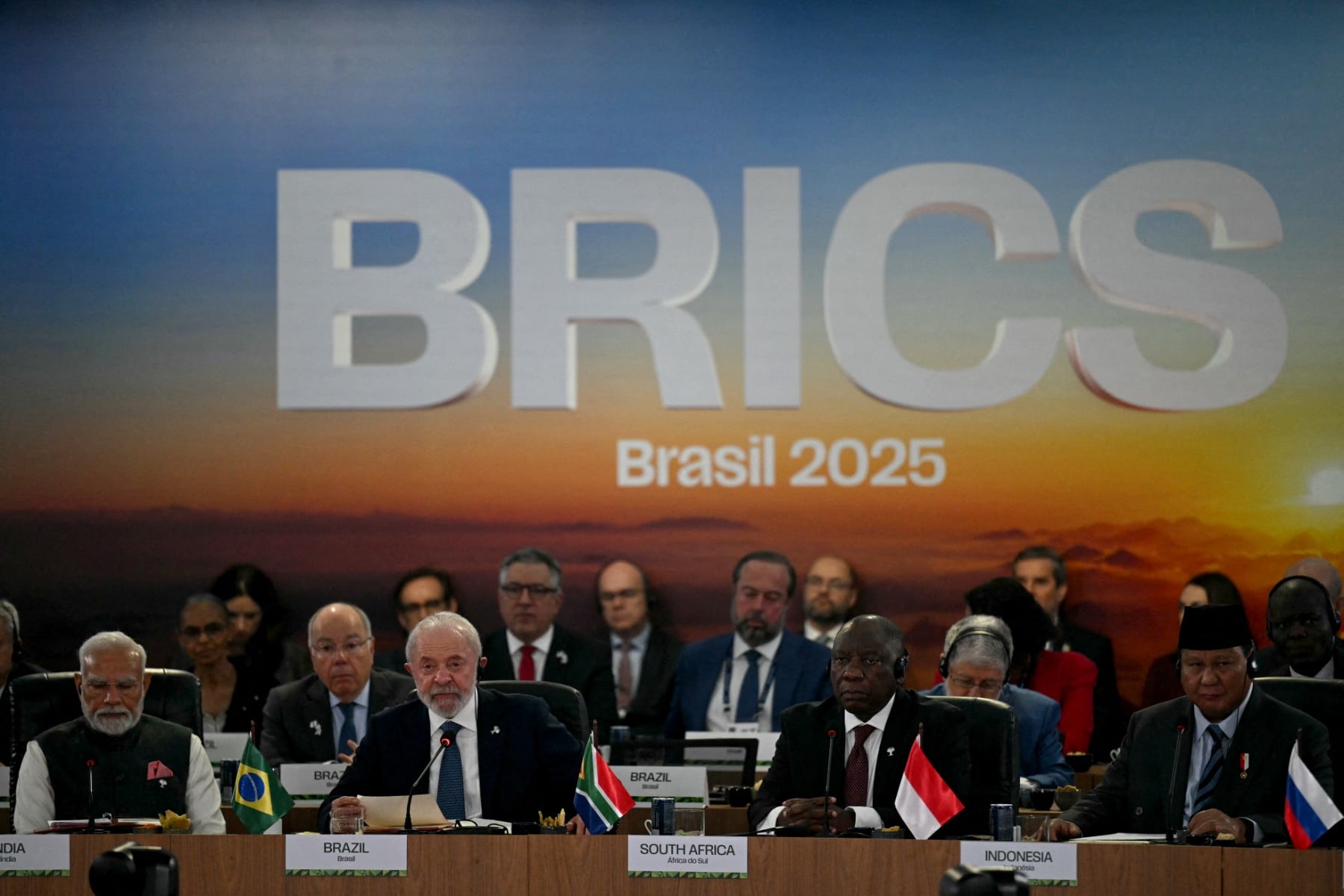
Brics meeting highlights how cybercrime funds terror weak governance fuels migration and climate change deepens inequality across member states. Traditionally, national security was defined in terms of military conflict and armed aggression. But in an era of globalisation, digital connectivity and rapid technological change, countries are confronting a far broader range of non-traditional security threats, from climate change and cyberattacks to pandemics, terrorism and the misuse of artificial intelligence. Unlike conventional military threats, these emerging challenges are often interconnected, transnational and difficult to contain. Cybercrime, for example, can finance terrorist networks operating across borders, making it both a criminal and national security concern. Weak governance and economic instability in one country can also spill across borders, fuelling migration, social unrest and regional instability. Given the scale and complexity of these evolving threats, few countries – particularly in the developing world – can address them alone. There is a growing need for stronger regional and multilateral cooperation to develop collective responses to challenges such as terrorism, infectious diseases, energy insecurity, cybercrime and climate-related disasters. The urgency of such cooperation was underscored at the 16th Brics meeting of high representatives responsible for security matters. The meeting saw both India and South Africa call for deeper collaboration among member states to confront these shared challenges. Ajit Doval, national security advisor to Indian Prime Minister Narendra Modi, warned that the global security environment was becoming increasingly volatile as military conflicts, geopolitical uncertainty, economic pressures and rapidly evolving technologies combined to threaten the stability of Brics member states. He said disruptive technologies and cyberattacks transcend national borders, making conventional defence and security responses increasingly inadequate. “We are meeting at a very tumultuous time,” he said, adding that international institutions were struggling to respond effectively to increasingly complex challenges at a time when multilateral cooperation itself was under strain. SA Minister in the Presidency Khumbudzo Ntshavheni said the burden of these new security threats falls disproportionately on the world’s most vulnerable populations. “The most vulnerable are those most severely affected by climate change, global pandemics and the misuse of emerging technologies to drive national instability,” she said. Ntshavheni pointed to Covid, recurring Ebola outbreaks in Central Africa and other infectious diseases as reminders of how rapidly health emergencies can undermine stability, reverse years of development and evolve into national and global security threats. Delegates also emphasised the need for stronger intelligence-sharing mechanisms to combat increasingly sophisticated and cross-border forms of terrorism and violent extremism. They said Brics should strengthen collective action to address geopolitical instability, military conflicts and disrupted global supply chains that continue to place pressure on developing economies. With global energy supplies disrupted by tensions surrounding the conflict in the Middle East, delegates highlighted the protection of critical infrastructure, maritime security and key international energy routes as strategic priorities. The growing threat posed by AI-driven disinformation campaigns was also identified as an area where enhanced Brics cooperation could make a significant difference. Climate change emerged as another major non-traditional security challenge, with delegates calling for coordinated action to mitigate the economic and humanitarian consequences of more frequent droughts, floods and extreme weather events. Ntshavheni said the destruction of crops, damage to infrastructure, displacement of communities and loss of life caused by climate change deepen inequality and create conditions that fuel insecurity. “Under these conditions, Brics has a responsibility to coordinate effective climate resilience. Climate security is directly linked to food security and global security.” There was broad consensus among the security officials that Brics was uniquely positioned to coordinate responses to these emerging threats. Bringing together major food and energy producers, large emerging markets and countries with significant technological, scientific and environmental capabilities, the bloc has the resources and influence to contribute meaningfully to global stability. Delegates agreed Brics can play an important role in addressing a rapidly evolving security landscape where conventional threats coexist with newer challenges such as cybercrime, organised criminal syndicates targeting critical infrastructure, social media disinformation and cross-border terrorism. The meeting ended with a shared commitment to strengthen cooperation against terrorism, cyber threats and geopolitical instability. It also called for greater resilience, stronger governance of emerging technologies and closer collaboration to advance a more secure, stable and cooperative international order.
Brics warns new security threats are outpacing old defences
Full Article
Original Source
Read the full article at Citizen →KhanList aggregates and links to publicly available news content. We do not host full articles from third-party sources. Always verify important information with original sources.