
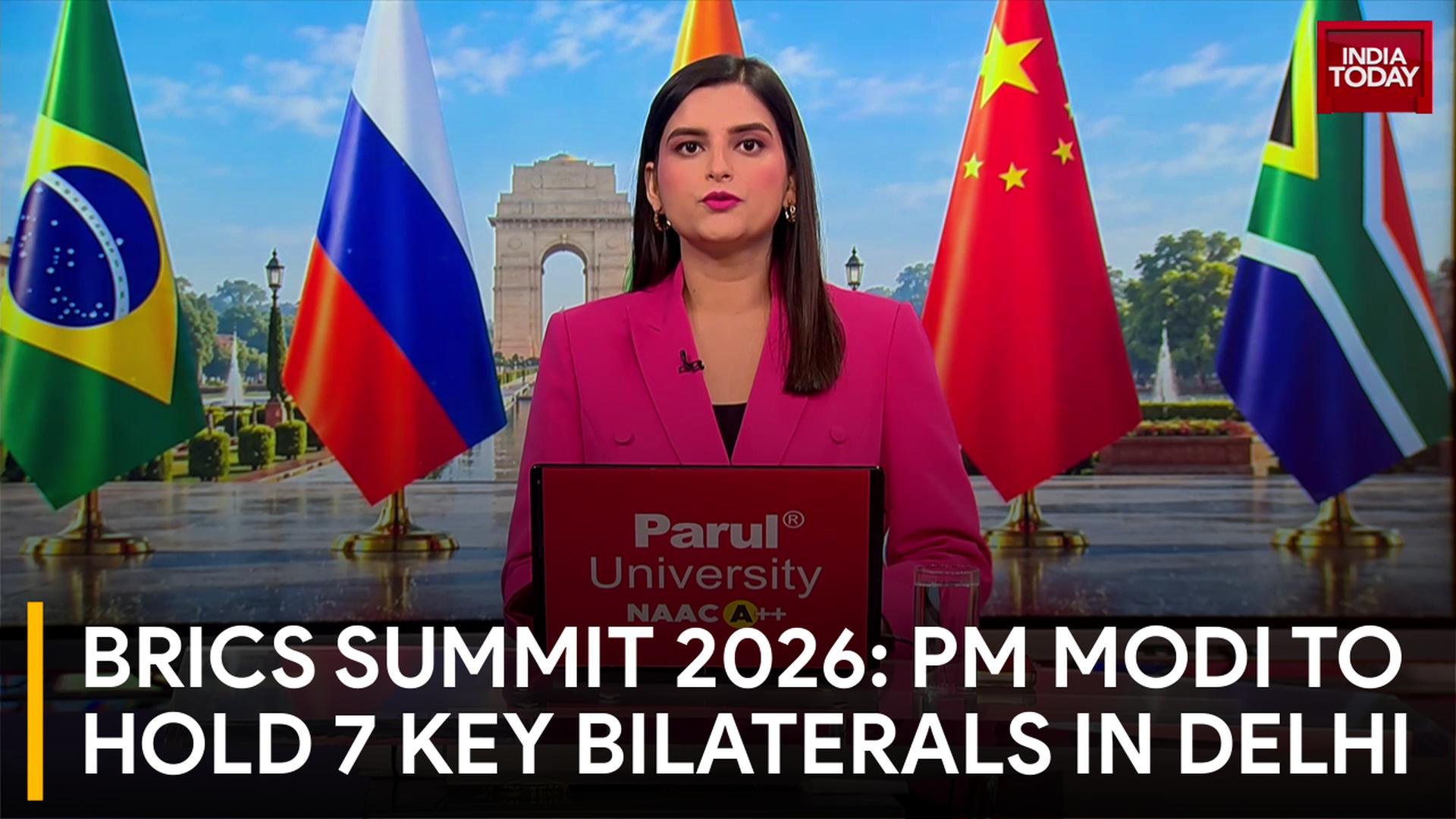
UPDATED: Sep 13, 2026 07:28 ISTOn the second and final day of the BRICS Summit 2026 in New Delhi, Prime Minister Narendra Modi is scheduled to hold seven bilateral meetings with leaders from countries including Kazakhstan, South Africa, and Egypt. Following an open session on resilience and inclusive growth at Bharat Mandapam, the Prime Minister will deliver his closing remarks and officially hand over the BRICS chair to China. The summit reached a major diplomatic milestone with the unanimous adoption of a 45-page joint declaration. The declaration condemns terrorism, including the Pahalgam attack, addresses the West Asia conflict, and rejects unilateral tariffs while advocating for dialogue over escalation. Amid ongoing global conflicts such as the Russia-Ukraine war, the Delhi declaration reflects India's diplomatic efforts to foster consensus among diverse member nations and partner states, promoting multilateralism, trade cooperation, and inclusive economic growth across the Global South. Read MoreVIDEOS FROM OTHER SECTIONSLATEST VIDEOS'We have to approach China in a very hard-headed manner': Ashok KanthaIn an interview with India Today, former Indian Ambassador to China Ashok Kantha analyzed the state of India-China relations following the meeting between Prime Minister Narendra Modi and President Xi Jinping on the margins of the BRICS summit in New Delhi. Kantha characterized the diplomatic interaction as an incremental and calibrated process, stating, "we cannot rush into any kind of reset in relations." He emphasized that any continued progress toward normalization remains dependent on maintaining peace and tranquility along the border areas. Kantha highlighted critical structural issues between both nations, including trade deficits, terms of economic engagement, Chinese support to Pakistan during Operation Sindoor, and the mega hydropower project at Medog in Tibet. He noted that summit diplomacy alone cannot serve as a panacea, asserting that India must approach Beijing in a realistic and hard-headed manner while addressing core bilateral disputes through perseverance.Rajdeep Sardesai Debate: How Will America View The India-China Relationship Reset At BRICS 2026?A panel of strategic experts debates the state of bilateral relations between India and China following recent high-level engagements. Brahma Chellaney questions the excessive focus on diplomatic handshakes and argues that New Delhi has steadily lost ground, stating, 'India is moving to normalize relations with Beijing largely on China\'s terms.' He highlights the ballooning trade deficit, ongoing Chinese export controls on critical technologies, and the shift from demanding status quo ante to mere peace and tranquility along the Line of Actual Control. Zorawar Daulet Singh contends that sustained contact and detente remain essential for India to safeguard strategic autonomy, manage border friction, and leverage Asia\'s dominant manufacturing powerhouse amidst global fragmentation. Ross Feingold provides perspective from Taiwan on the regional security implications of a potential Sino-Indian rapprochement. The discussion examines whether structural economic asymmetries and unresolved frontier disputes outweigh high-level bilateral summits.Amitabh Kant Exclusive Interview: Decoding The New Delhi Declaration At BRICS 2026| NewsTodayIn an interview with India Today, former NITI Aayog CEO and ex-G20 Sherpa Amitabh Kant analyzed the outcomes of the unanimously adopted BRICS Delhi Declaration. He highlighted that reaching consensus sends a strong message against unilateral tariffs, non-tariff barriers, and coercive secondary economic sanctions, which severely impact India and the Global South. Addressing the absence of specific country names in the declaration, Kant noted that multilateral communiqués traditionally maintain diplomatic phrasing while delivering clear signals regarding unpredictable US trade policies. Furthermore, he emphasized that post-World War II global governance institutions like the United Nations, the Security Council, and the World Trade Organization have become irrelevant for emerging economies, necessitating comprehensive reforms. Addressing China's role, Kant observed, "China weaponizes technology," explaining how Beijing dominates clean energy processing and battery manufacturing. He asserted that China must open up and share manufacturing opportunities with fellow BRICS members to build long-term trust and ensure collective economic growth.Malda Floods: Villages Inundated, NDRF Rescues Residents, Doctors Brave SnakesA ground report from Malda district in West Bengal reveals severe inundation caused by swelling waters in the River Ganga and Mahananda. Excess water flowing downstream from Uttar Pradesh and Bihar has completely submerged villages along the riverbanks, including Ratanpur in the Ratua gram panchayat, for over ten days. While National Disaster Response Force teams, civil defence units, and Malda police carry out rescue operations using boats, several families and livestock remain stranded amid severe bank erosion. At the Mahananda Tola Swastha Kendra primary health centre, floodwaters have risen over five feet, leaving outdoor facilities submerged and the power supply completely disconnected. Despite pitch darkness and the threat of venomous snakes entering the building at night, medical officer Dr Arijit Sutradhar and health staff remain stationed round the clock to run emergency services, attending to patients who arrive on local country boats.
BRICS Summit 2026: PM Modi's 7 Bilaterals, Delhi Declaration & Chair Handover
Full Article
Original Source
Read the full article at Indiatoday →KhanList aggregates and links to publicly available news content. We do not host full articles from third-party sources. Always verify important information with original sources.