
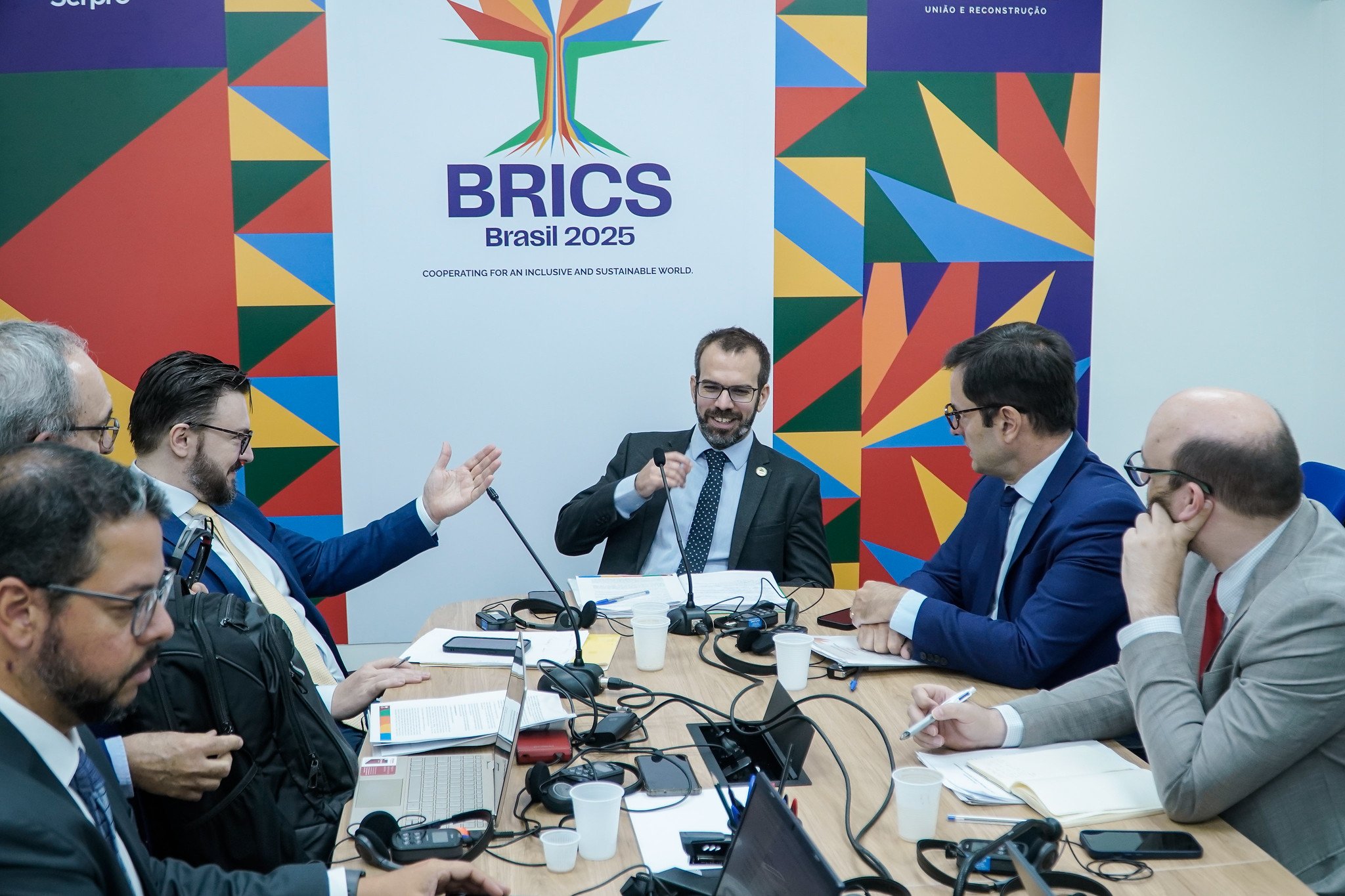
The BRICS group of countries has doubled down on its critique of the EU’s new carbon tax describing it as “unilateral, punitive, discriminatory and protectionist”. The statement, which followed a meeting of environment ministers of the BRICS nations, including India, China, Russia, South Africa and Brazil on Tuesday (18 August), also included demands for more financial support for developing countries to cope with the effects of dangerous climate change. The carbon levy, which came into force in December, requires importers to pay a carbon price equivalent to that paid by European producers under the EU Emissions Trading System. The EU maintains that CBAM complies with WTO rules by creating a level playing field without creating trade barriers and breaching the WTO’s non-discrimination principle. As poorer states have fewer resources to cut carbon emissions, the levy could weaken their terms of trade. India, South Africa and China have complained that CBAM will increase costs for their steel and aluminium industries. One of their criticisms of CBAM is that EU officials say that the €10bn per year that they expect the levy to raise by full implementation in 2030 will become an ‘own resource’ for the bloc’s budget. The BRICS group has struggled to act as a cohesive bloc on trade and regulation, despite the fact that the BRICS countries account for 26 percent of world trade. But it has expanded its membership since 2024 to bring in Egypt, Ethiopia, Iran, the United Arab Emirates, Saudi Arabia Indonesia, with another nine partner countries. It has also been a consistent critic of CBAM. In July, the BRICS group agreed a declaration on climate finance in which they expressed "concern that such measures, as well as unilateral economic and financial sanctions, may undermine BRICS countries' capacities to invest in their own just transitions and development priorities and risk diverting away critical resources at a time when developing countries face a financial gap to pursue climate action and sustainable development." China has raised concerns within the World Trade Organization about CBAM but filed no official complaint. BRICS leaders have repeatedly condemned unilateral climate-linked trade measures as discriminatory protectionism. Despite their opposition to the carbon levy, India and Brazil have agreed trade deals with the EU in the past year, while talks on improved trade terms between the EU and South Africa are ongoing.
BRICS countries condemn EU carbon tax as ‘punitive and protectionist’
Full Article
Original Source
Read the full article at Euobserver →KhanList aggregates and links to publicly available news content. We do not host full articles from third-party sources. Always verify important information with original sources.