
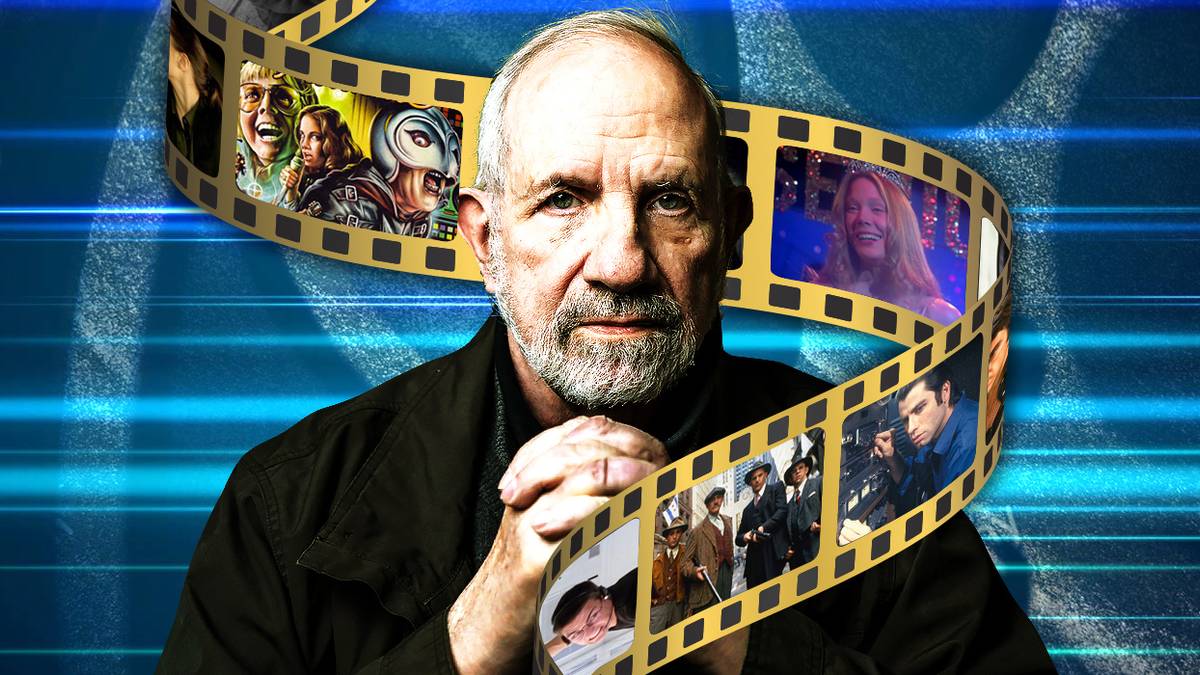
Published Jul 19, 2026, 4:56 PM EDT In addition to being a contributor for Collider, Rance Collins has also written for Variety, IndieWire, Los Angeles Magazine, Turner Classic Movies and The Huffington Post. His news coverage has earned him multiple honors from the California News Publishers Association, while his film and theater criticism made him a two-time Southern California Journalism Award winner. He also was recognized with 2024’s Excellence in Journalism Award by the California 51st Assembly District. Before committing to journalism as a career, the Texas native lived many lives in Los Angeles – including as a Warner Bros. and Universal Studios tour guide, a political organizer, a marketing writer and producer, a leasing consultant, an occasional indie filmmaker, a Postmates driver and the personal assistant to TCM host Ben Mankiewicz. He holds a BFA in mass communications from Ouachita University and an MFA in screenwriting from Emerson College. Other interests include ‘90s sitcoms, Hollywood backlots, true crime, record stores, Linda Ronstadt, two cats named Charlotte and Flynn, game nights, advocating for an expanded “Hacks” universe, his AMC A List entourage (aka Jorge), the daily NYT Connections, his Barbra Strikesand bowling team, and making his educator mom and author dad proud. The 1970s brought a landscape of film disciples into prominence, delivering the now much-celebrated New Hollywood era. Martin Scorsese. Francis Ford Coppola. Steven Spielberg. They all made their first incredible impression on movies during this era. One of the most heralded of their directorial saints was Alfred Hitchcock, who had been a master auteur before those in the director's chair were truly thought of as auteurs at all. Hitchcock’s most devoted student was likely Brian De Palma, whose fascination with the macabre was evident from his early work, Sisters. His keen eye for visual language was quickly appreciated by studio heads, and he crafted Oscar-nominated gold out of Stephen King’s first novel, Carrie, a film that also managed to put many of his own signature moves on full, grotesque display. That movie’s much-celebrated climactic scene, where the titular character (Sissy Spacek), soaked in pig’s blood, uses telekinesis to burn down her high school prom, features innovative uses of gore, sound effects, and, most significantly in De Palma’s filmography, split screens. His use of a wandering camera, striking framing, and point-of-view shots harkened back to his mentor, Hitchcock, and he would further emulate the Master of Suspense with 1976’s Obsession, which evenfeatures one of Bernard Herrmann's final film scores. Further parallels can be found in subsequent works, including Home Movies and especially Dressed to Kill, which features an elevator murder that plays out similarly to Psycho’s shower scene. It was another film that same year, however, that perhaps best took De Palma’s fascination with Hitchcock and crafted something wholly unique amongst the director’s own storied filmography 'Blow Out' Rounds Out a Series of Paranoid Thrillers Blow Out is often grouped with Blow Up and The Conversation as an unofficial trilogy of paranoid thrillers. In a way, they act in tandem as a kind of trilogy, with each dealing with the unwitting recording of a potential murder plot, though in different locations and with their own unique technology. Blow Out and The Conversation are to audio recording what Blow Up is to photography, although photography also figures into the Blow Out plot. In the movie, John Travolta plays a B-movie sound effects guy working on slasher pictures. In a brilliantly subversive opening sequence, it seems the viewer is in a very, very stereotypical horror movie, as a POV steadicam shot roams around a sorority house. The killer lands on a showering girl, who lets out a comical scream. Cut. It turns out the audience is watching an editing session for a slasher flick, and Travolta and company discuss the need to find a much, much better scream for the scene. Later, Travolta goes out near a lonely stretch of highway to catch ambient noise. While there, he picks up a deadly car crashing into a lake. He manages to rescue a female passenger, but the male driver — a prominent politician — dies. Travolta and the female passenger (Nancy Allen), who is revealed to be a sex worker, are pressured into silence about the affair. When reviewing his recording, Travolta notices a sound: a gunshotbeforethe tire blowout that caused the crash.He makes copies of the recording, matches it to found video footage, enlists Allen's help, and tries to convince anyone who will listen. It not only doesn’t work, but it appears a vast conspiracy is at play to suppress Travolta’s evidence. What transpires next is a twisted tale full of twists, turns, murder, and extended suspense sequences played out at inspired set pieces. Brian De Palma Weaves Masterful Suspense Scenes There’s a lot to love for a movie fan in Blow Out. Obviously, any film involving any aspect of making movies is bound to be chock-full of the meta references that make nerds salivate. But what really puts this one over the top is the perfect execution and continuation of techniques that were largely introduced by Hitchcock. In one scene, for instance, (SPOILER) a Nancy Allen lookalike is murdered in a large train station. It moves slowly as we watch the killer follow her. She doesn’t know what’s going to happen, but we do. And the anticipation is truly divine cinematic genius. There are some truly artful moments throughout. It’s tough to forget the revolving, tragic shot of Travolta and Allen (you’ll know when it happens). It’s impossible not to feel the tension as a split screen contrasts news coverage of the politician’s death with Travolta cutting together audio footage. The symbiotic ending is a gut punch, and adds a new layer of poignancy to the first shot, which was previously something schlocky. Hitchcock Himself Was Skeptical of De Palma, but 'Blow Out' Might've Changed His Mind Image via Filmways Pictures Whereas Hitchcock reportedly was not too big a fan of De Palma’s earlier work, and took particular issue with Dressed to Kill (released the year he died) being described as Hitchcockian (according to fellow director John Landis) — something that Hitchcock might have understood as a successor to his style, rather than derivative. As Pauline Kael wrote, "Blow Out begins with a joke; by the end, the joke has been turned inside out. In a way, the movie is about accomplishing the one task set for the sound effects man at the start: he has found a better scream. It’s a great movie." De Palma would have some big successes later, including several films that strayed from typical Hitchcock-adjacent genres such as Mission: Impossible and Scarface. Certainly, the Master’s influence could still be felt, again and again, through De Palma’s productions. But in a series — which also includes the latter, much less successful Body Double — of suspense thrillers, Blow Out is De Palma’s Hitchcockian masterpiece. Release Date July 24, 1981 Runtime 108 Minutes Director Brian De Palma Writers Brian De Palma, Bill Mesce Jr.
Brian De Palma's Most Hitchcockian Thriller Is Hiding in Plain Sight
Full Article
Original Source
Read the full article at Collider →KhanList aggregates and links to publicly available news content. We do not host full articles from third-party sources. Always verify important information with original sources.