
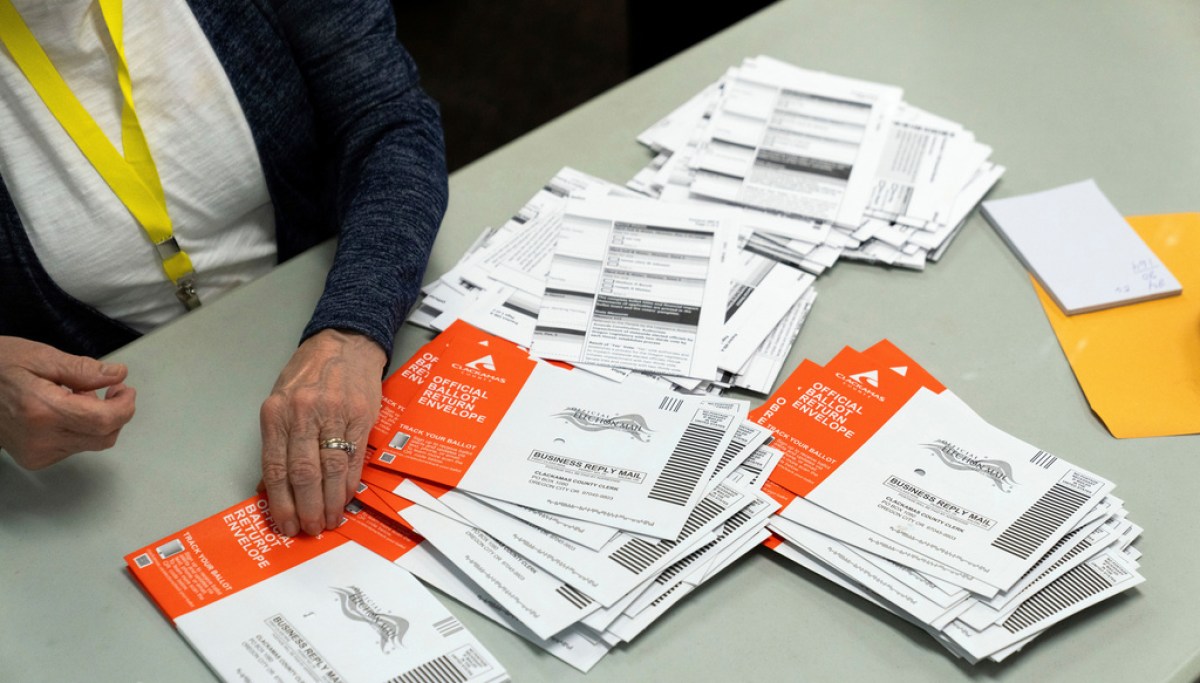
North Carolina began mailing ballots to voters two weeks ago, and the deadline for states to transmit requested ballots to overseas military voters is tomorrow. So the Supreme Court had ample reason to conclude that there is not enough time for states to comply with President Donald Trump’s new mail-in ballot regulations this year.But the timing question is separate from the underlying legal one: Does the U.S. Postal Service have authority to regulate the marking, preparation, and tracking of mail-in ballots? Justice Brett Kavanaugh’s concurrence shows he believes that it does.Trump issued his election-integrity executive order on March 31, directing USPS to develop new safeguards intended to prevent fraud, improve ballot tracking, and protect the integrity of mail-in voting in federal elections. Democratic state attorneys general and voting groups sued, delaying implementation while the order was litigated.USPS finally published its rule on Aug. 26. It requires state and local election officials who mail federal ballots to use prescribed Election Mail markings, automation-compatible envelopes, and unique barcodes on outgoing and return envelopes.Additionally, before each batch is presented to USPS, an authorized election official must also upload each voter’s name and mailing address to a federal portal, together with the barcodes assigned to that voter’s outgoing and return envelopes. USPS would then use that information to verify the outgoing ballot mail before accepting it.The rule expressly leaves voter eligibility to the states. USPS will not decide who may vote by mail, maintain voter rolls, open ballots, count votes, or know how anyone voted.Democratic states sued again, and a lower court blocked the rule for this election. On Monday, the Supreme Court declined to lift that injunction.In his concurrence, Kavanaugh agreed that imposing the requirements this late would violate the Administrative Procedure Act because election officials lacked sufficient time to implement them. But he separately wrote that the regulation may fall within USPS’s statutory authority.It certainly should. The Constitution gives states significant authority over elections. Article I’s elections clause says that state legislatures prescribe the “times, places and manner” of congressional elections. But it also provides that Congress may “at any time by law make or alter such regulations.”States thus have the initial authority to administer congressional elections, but Congress may supersede their rules. Congress has exercised that power repeatedly, including by setting a uniform Election Day and, for example, enacting the National Voter Registration Act.Congress has also given USPS broad authority over the mail. Under 39 U.S.C. § 401, the agency may adopt regulations necessary to carry out its functions. Section 404 authorizes it to regulate the “collection, handling, transportation, delivery, forwarding, returning, and holding of mail.”USPS already uses those powers to guard against fraud and identity theft. People submitting change-of-address requests may be required to verify their identity. Private mailbox services must collect identifying information and comply with USPS recordkeeping requirements. Service may be refused or terminated when the required information is false or missing.That makes the ballot regulations less novel than critics suggest. Requiring users of the federal mail system to provide information, use specified markings, or employ tracking technology is already part of postal regulation.The ballot rules follow the same basic model. States still decide who can vote and who receives a ballot. USPS requires ballots entering its system to use standardized envelopes and individualized tracking information so election mail can be identified and followed.Those requirements have straightforward purposes. Automation-compatible envelopes reduce handling errors. Election mail markings identify sensitive election mail. Unique barcodes make individual ballot mailpieces trackable. Electronic records allow election officials and USPS to determine whether a particular ballot mail entered and moved through the system.None of those requirements determines voter eligibility or whether a ballot counts. They regulate how a particular category of mail enters and moves through the federal postal system.EDITORIAL: IMMIGRANTS SHOULD BE SELF-SUFFICIENTFor 2026, the timing problem was decisive. With ballots already moving through the mail, Kavanaugh concluded that election officials lacked sufficient time to implement the rule reasonably.But that does not settle the underlying statutory question. Congress gave USPS broad authority to regulate mail entrusted to it. Mail fraud is a crime. Ballot mail does not cease to be mail merely because it contains a ballot. That issue remains for further litigation after November’s election.
Brett Kavanaugh gets Trump’s mail ballot rules right
Full Article
Original Source
Read the full article at Washingtonexaminer →KhanList aggregates and links to publicly available news content. We do not host full articles from third-party sources. Always verify important information with original sources.