
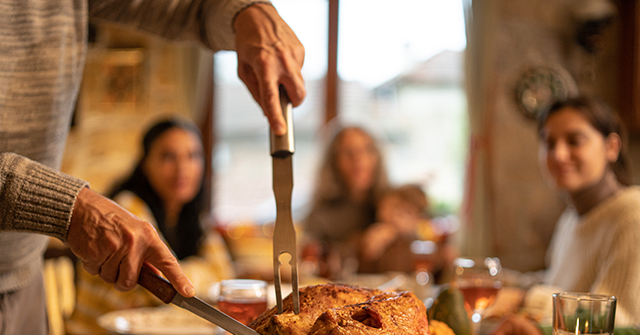
How the Thanksgiving Holiday Solves a Coordination Problem Why do Americans all celebrate a feast of gratitude on the same day? We are a country of people who can’t agree on what temperature to set the thermostat. We live in different time zones. Politics deeply divides us. We came here from different parts of the world and brought different ideas about what constitutes dinner. Our economy is extremely diverse, and our careers pull us in extraordinarily different directions. And yet on the fourth Thursday of November, a remarkable number of us will sit down to eat a large bird that most of us will go another year without roasting. We owe an explanation for this to Ronald Coase. In his 1937 essay “The Nature of the Firm,” Coase asked why firms exist. Economists had a perfectly good explanation for how prices could coordinate production. So why did so much production take place inside companies, where people spend their days doing what a manager tells them to do? Coase’s answer was that relying on prices to coordinate production was itself costly. You have to find someone who can do the work, agree on a price, and write a contract. Then you have to do it again for the next job. At some point it’s cheaper to hire somebody and tell him what you need done. And, similarly, the search for employment is costly. We don’t all want to be gig workers, finding new employment for each project or each day. A Coasian Theory of Thanksgiving It’s pretty obvious that this applies to putting together a big feast. Anyone who has tried to get six adults together for dinner can see the application to Thanksgiving. One person can do Saturday but would prefer Sunday. Another person can do Sunday if it’s early. Somebody starts a group text. A week later, the only thing everyone has agreed on is that it would be nice to get together more often. Extrapolate this across generations, to two sets of in-laws, several children, and a brother who has to fly in from Texas. You could start negotiations in August and still wind up eating with the people you already live with. So just as economic production is made more efficient by the presence of firms, our feast is efficient because we can simply say: “See you at Thanksgiving.” Thanksgiving is the firm of feasts. The date is settled. You know you are unlikely to be given a work deadline on Thanksgiving. Your kids have off from school. There are no conference calls. No one expects you to answer your emails (unless you work for a corporate law firm or a Wall Street investment bank). No one will say that the earlier Thursday would work better for their schedule or that they want to push it back to December. Then there’s the turkey. Turkey Is Egalitarian and Efficient If Thanksgiving is the firm of feasts, turkey is the firm of foods. Put one person in charge of a large bird, and you have white meat for the people who want white meat, dark meat for the people who know better, drippings for the gravy, and enough left over to feed the house on Friday. You can get a surprising amount of work out of one turkey. What’s more, turkey is an equalizer. While it is possible to ruin your turkey by overcooking it, it’s not really possible to make a turkey much better than a standard well-cooked turkey. You can cover it with mayonnaise to crisp the skin—you really should do this—but it’s still going to taste like most of the other turkeys you have had at Thanksgiving. There are different kinds of turkeys, raised in different ways on different feeds, but the quality difference is far smaller than you get with fish or beef or even vegetables. In a country that often seems obsessed with status markers, especially around food, the egalitarianism of turkey is a welcome respite. It also gives everybody else enough information to get on with their jobs. If you’re bringing potatoes, you don’t have to ask what the main course is. The person bringing cranberry sauce can proceed with even greater confidence. And the person who wants to make her grandmother’s tamales can bring them without first circulating a proposed menu for approval. A meal with a fixed date and a predictable main course can accommodate a great deal of improvisation. All of this also makes the psychic burden of planning for Thanksgiving easier. You don’t have to spend much time deciding what you’ll serve or which side dishes will go with your main dish. The meal is basically already planned out. You aren’t expected to one-up your neighbor or surpass last year’s Thanksgiving. Every firm has a limit, of course. At some point, it stops making sense to bring work in-house. The great conglomerates of the past often went too far in trying to use organization to coordinate rather than prices. Thanksgiving hosts make the same calculation. So it makes sense to roast the bird and make the gravy. But maybe not a third pie made from scratch. It makes sense to get families together. But we don’t try to bring the whole neighborhood around the table. And that’s how a country of more than 300 million people manages, once a year, to do something extraordinary. We get together for dinner. That in itself is something to be grateful for. Happy Thanksgiving. Bring a pie. Or better yet, a bottle of wine.
Breitbart Business Digest: The Nature of the Thanksgiving Feast
Full Article
Original Source
Read the full article at Breitbart →KhanList aggregates and links to publicly available news content. We do not host full articles from third-party sources. Always verify important information with original sources.