
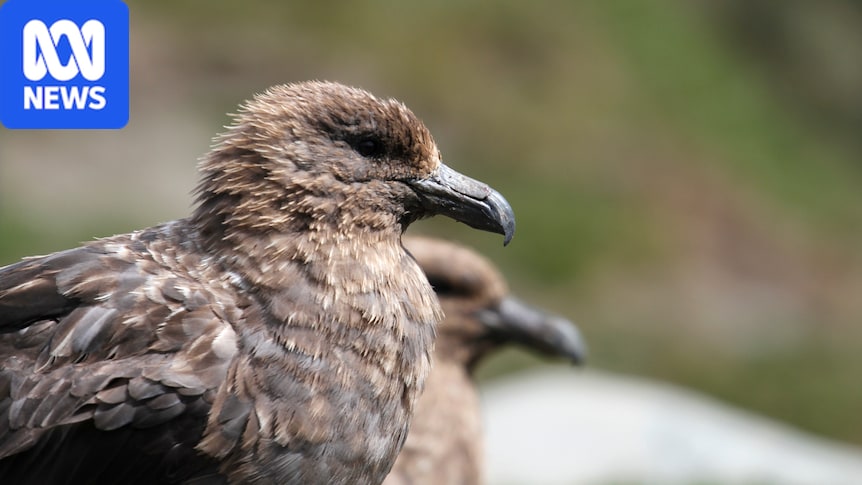
Tasmania has confirmed its first case of the deadly H5N1 bird flu that has impacted wildlife across five other Australian states.Following testing which was completed overnight, a brown skua was confirmed to have had the virus.The single bird was found at Burgess Cove at Rocky Cape, on the north-west coast of Tasmania.The Department of Natural Resources and Environment Tasmania (NRE) said it was alerted to the carcass of the bird by staff from the Parks and Wildlife Service, who have been undertaking active surveillance of coastal areas.The government said the first detection was a single case, and was not considered an outbreak.The avian influenza was detected in the carcass of a brown skua, a migratory Antarctic and sub-Antarctic seabird. (Steve B, Brown Skua, CC0 1.0 DEED)Minister for Primary Industries and Water Gavin Pearce said Tasmania was "prepared to respond" and would enact its bird flu response plan.Department secretary Jason Jacobi said it was "inevitable" that the virus would arrive in the state.He said infected brown skuas had been found in other Australian states."It's not unexpected that we would find a confirmed brown skua," Mr Jacobi said.Brown skuas are large predatory seabirds native to Tasmania that breed on Antarctic and sub-Antarctic islands.The birds are often found in coastal areas and are known to feed in large flocks on carcasses.The first detected case of H5 bird flu in Australia, found in WA, was also a brown skua. (iNaturalist: Simon Plat, Brown skua, CC BY-NC 4.0)The state's Minister for Environment and Climate Change, Guy Barnett, said this strain of H5N1 bird flu could impact many of Tasmania's endemic species, including the endangered orange-bellied parrot.He listed the Tasmanian devil, the shy albatross, the short-tailed shearwater, the Furneaux white-fronted tern, the fairy and little turn Australian and long-nosed, first seal and Australasian gannet as being vulnerable to the virus."H5 bird flu poses a significant threat to the orange-bellied parrot species," he said."We cannot eliminate the risk entirely, but we're taking action to give our orange-bellied parrots the best possible chance in the event of an outbreak."
Breaking: Tasmania confirms first case of deadly bird flu strain H5N1
Full Article
Original Source
Read the full article at Abc →KhanList aggregates and links to publicly available news content. We do not host full articles from third-party sources. Always verify important information with original sources.