
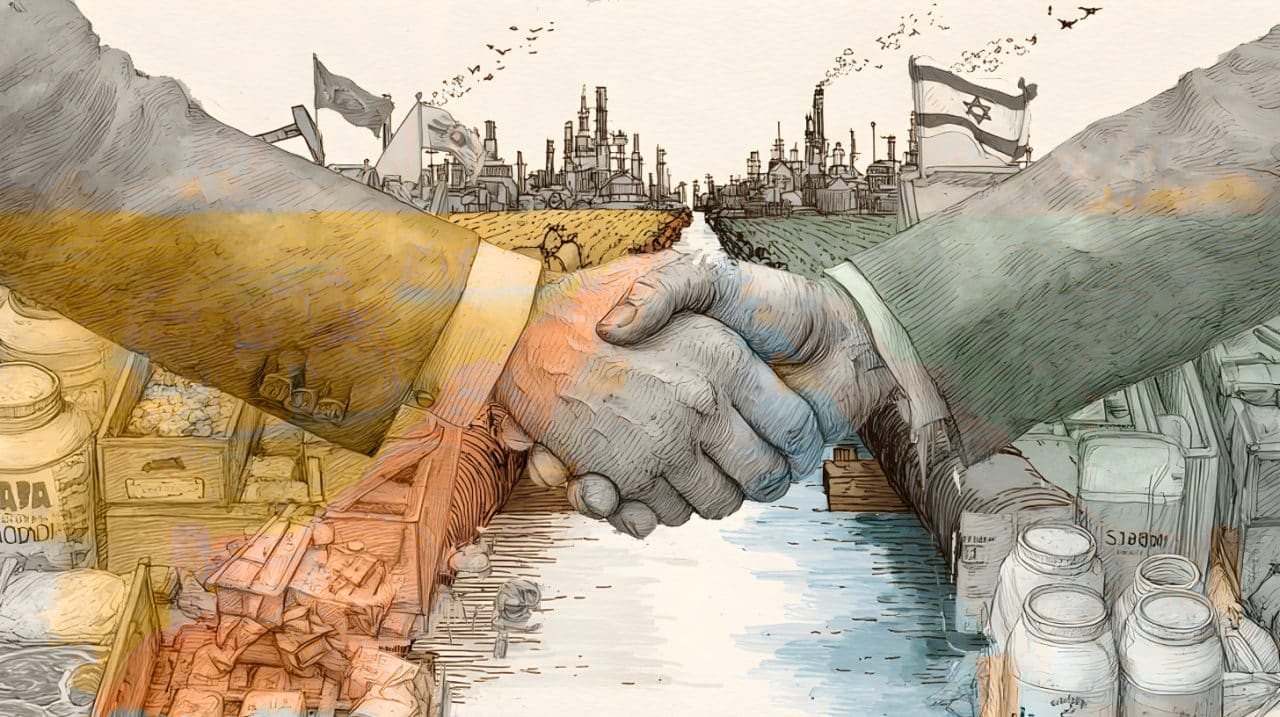
As Brazilians gear up to head to the polls to elect their next President, flags dot the streets of the capital, São Paulo. The flags, however, are not just Brazilian flags. They are Israeli and Palestinian flags — each representing opposing politics with consequences reaching from Latin America to the Middle East. Brazil represents the final hurdle in a region that has swung drastically to the right over the last 12 months. In a country that accounts for 31% of Latin America’s population and 33% of its economy, the choice between the incumbent Luiz Inácio ‘Lula’ da Silva on the left and Flávio Bolsonaro on the right is instrumental to the broader politics of a region where U.S. dominance is palpable and Zionist allegiances are increasingly audacious. Across Latin America, Palestine and Israel have become signifiers of opposing politics, reflecting domestic concerns about national sovereignty and domestic security. So as Brazilians prepare for the second round of a highly consequential presidential election on Sunday October 25, voting on issues such as public safety, affordability and corruption, genocide is also on the ballot. On the one hand, “left-wing organizations today are more aware that Palestine has been turned by Israel—a military enclave of Imperialism—into a global laboratory, where technologies of death are tested and subsequently sold to the rest of the world,” said Soraya Misleh, a Palestinian-Brazilian journalist whose father, Abder Raouf Misleh, was expelled from Palestine during the Nakba. Simultaneously, Israel has become an exemplar of how to tackle alleged terrorism threats, unbridled by international law. From Nasry Asfura in Honduras to Abelardo de la Espriella in Colombia, Latin America has ushered in a succession of iron-fisted presidents pledging allegiance to the US hegemony while ramping up trade, diplomacy and security coordination with Israel – and Brazil could be next. Will it be Lula, a persona non grata in Israel who fervently condemns the genocide in Gaza or Bolsonaro, a Christian Zionist who plans to ramp up relations with the apartheid state if elected? The choice is stark. That is why it is “natural” to see Palestinian flags raised by the left and Israeli flags by the far right, Misleh told Mondoweiss, adding that the display of Israeli flags in Brazil “leaves no doubt as to just how racist, subservient to foreign interests, and violent the far right is.” Opposing ideologies Flávio Bolsonaro is the mirror image of his father, former president and self-professed Israel lover, Jair Bolsonaro. He has plainly affirmed that, under his leadership, Brazil “will always defend the right of Israel to survive, the right of Israel to fight for its territory, and to defend its people.” During a visit to the West Bank in January, he confirmed “full support” for Israeli settlers in the West Bank and pledged to relocate the Brazilian embassy from Tel Aviv to Jerusalem. Following a slim victory in the first round of the election on October 5, Bolsonaro even received premature congratulations from Israeli Prime Minister Benjamin Netanyahu. Bolsonaro’s policies are expected to mirror those of Argentina’s chainsaw-wielding Javier Milei, El Salvador’s millennial dictator Nayib Bukele, and U.S. President Donald Trump, whose approach to interventionism in the Americas has been dubbed the “Donroe Doctrine”. Unsurprisingly, he also plans to join Trump’s Shield of the Americas, a so-called “counter-cartel coalition”, promising to revive a “mano dura” approach to law enforcement, from building maximum-security prisons to designating organized crime groups as narco-terrorists. This shared enemy narrative also extends to Israel, with whom he has described a sense of “unity” among nations “that want to combat organized crime and terrorism.” Lula, on the other hand, recalled the Brazilian ambassador to Israel in February 2024 and, speaking at the African Union Summit a few months later, compared Israel’s genocide in Gaza to the Holocaust. In response, Netanyahu called him a “virulent antisemite” and, days later, Foreign Minister Israel Katz declared him a “persona non grata.” Brazil also joined South Africa’s case against Israel at the International Court of Justice in September 2025 and Lula has accused Israel of genocide on multiple occasions, although he has specifically condemned the Netanyahu government rather than the Zionist project itself. Trade and contracts Beyond the rhetoric, under Lula’s leadership, Brazil has taken significant strides towards breaking material ties with Israel. In May 2024, Defense Minister José Múcio Monteiro postponed the signing of a $145 million contract with Elbit Systems for the purchase of 36 armored howitzers. Arms exports to Israel were suspended one year later and, according to official data from the National Petroleum Agency and the Ministry of Development, Industry, Trade and Services, Brazil registered zero direct oil exports to Israel in 2025 despite having been its fifth largest supplier between October 2023 and July 2024. Yet Lula’s government has fallen short of implementing a full arms embargo and, as a signatory of the Mercosur-Israel Free Trade Agreement (FTA) since December 2007, Brazil has continued to trade with Israel in various sectors. According to Brazil’s official foreign trade statistics, the import of Israeli fertilizers ranked higher than any other product, valued at over $500 billion in 2025 – approximately one third of Israel’s total global exports in this sector. These products constitute a core component of Israel’s agribusiness sector, which, as UN Special Rapporteur Francesca Albanese reported, “has thrived on Israel-led extractivism and land-grabbing – producing goods and technologies serving Israeli settler-colonial interests, expanding market dominance and attracting global investment – while erasing Palestinian food systems and accelerating displacement.” Lula’s opponent, however, has proposed expanding relations with Israel, pinpointing the importance of “cooperation in the technological sphere” and suggesting “massive historic agreements – unprecedented in scale.” Bolsonaro has also promised to sign the Isaac Accords, a series of agreements initiated by Israel and Argentina to increase cooperation in trade, technology and counterterrorism. So far, the initiative has focused mainly on Costa Rica, Panama, and Uruguay, three countries “primed for enhanced cooperation with Israel”. However, in June, Bolsonaro joined 11 other Latin American legislators at a conference in Buenos Aires where they signed a resolution supporting the expansion of the Accords. If Lula is reelected, “we will continue to demand a complete rupture of economic, military, and diplomatic relations with Israel,” Misleh told Mondoweiss. But Flávio Bolsonaro’s plan to intensify agreements with Israel represents a quantifiably greater threat: “the criminalization and silencing of voices for Palestine in Brazil is set to intensify, amid threats to democratic freedoms. With him, things could get worse. Much worse,” she said. Christian Zionism in Brazil Although functionally pragmatic, the rhetoric underpinning the Isaac Accords is rooted in the aforementioned shared-enemy narrative. Even the reference to “Isaac” is part of a manufactured paradigm in which the conflict between Israelis and Palestinians represents a feud between Isaac and Ishmael, Abraham’s sons. “The issue of Christian Zionism in Brazil has been linked to political developments for much longer than in other countries in the region,” said Nicolás Panotto, an Argentine theologian based in Chile. Under Bolsonaro Sr., “Christian Zionism served as a bridge, what some might call a ‘strategic ecumenism’ between Catholics and evangelicals, to support and promote the far-right in Brazil,” he told Mondoweiss. Nowadays, “there is clearly a more evangelical vision or perspective.” After all, evangelicals constitute approximately 26.9% of the electorate, including Bolsonaro Jr. himself. It is “precisely because I am an evangelical” that relations between Brazil and Israel will improve, he has said. In evangelical spaces, Misleh told Mondoweiss, it is common to see Israeli flags and symbols: “an instrumentalization of faith that fuels a false religious rhetoric in support of a colonial, supremacist political project,” she said. The Temple of Solomon in São Paulo, for instance, built by the Universal Church of the Kingdom of God in 2014, features limestone—valued at $8 million—imported directly from Jerusalem. This attempt to manufacture loyalty to Israel is spearheaded by megachurches, parachurches, U.S. missionaries, and, of course, the Evangelical Caucus, a powerful, cross-party group of protestant and evangelical lawmakers in the Brazilian National Congress. After all, “faith-based diplomacy is what has helped nations move their embassies to Jerusalem and stand up against antisemitism,” said Bolsonaro Jr. at the Isaac Accords conference in June. “He is attempting to consolidate his standing within the evangelical camp in a much more targeted way than his father, who didn’t engage in the same kind of symbolic gestures, such as getting baptized in Jerusalem,” Panotto told Mondoweiss. And it’s blatantly strategic. During a speech at the Assemblies of God, Brazil’s largest Pentecostal denomination, he even described the current political divide in Brazil as “a spiritual war” in which the left “uses the devil’s weapons.”
Brazil’s election is a referendum on Israel, and the last hurdle for Latin America’s pro-Israel right
Full Article
Original Source
Read the full article at Mondoweiss →KhanList aggregates and links to publicly available news content. We do not host full articles from third-party sources. Always verify important information with original sources.