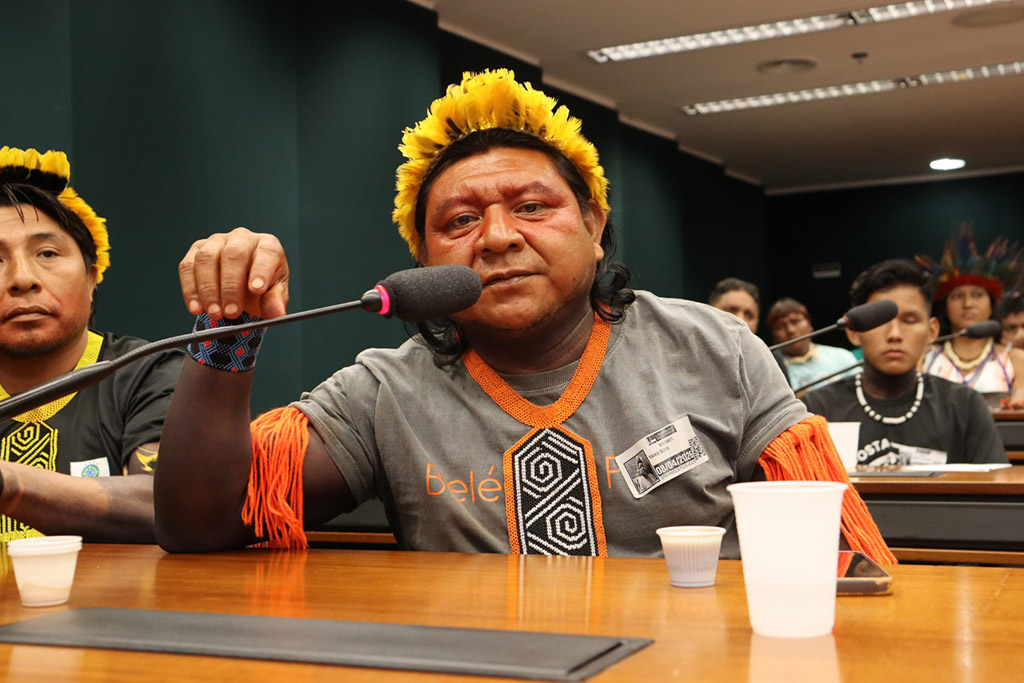
A federal judge in Brazil has given the country’s government 24 months to recognize the traditional territory of the Kajkwakratxi-Tapayuna Indigenous people in the northwestern state of Mato Grosso. The court accepted evidence from federal prosecutors that detailed decades of government inaction following massacres, forced displacement and other human rights violations against the Kajkwakratxi-Tapayuna people. The ruling, issued on June 11 by Federal Judge Pablo Kipper Aguilar in Diamantino, Mato Grosso, also orders the federal government to issue a public apology and pay 10 million reais ($2 million) in collective moral damages. “It has been a very difficult journey,” Yaiku Suya Tapayuna, a leader of the Kajkwakratxi-Tapayuna people, told Operação Amazônia Nativa (OPAN). “It is a decision we have dreamed about, and we are now celebrating this victory.” In his decision, the judge drew upon decades of evidence of violence against the Kajkwakratxi-Tapayuna, beginning with a massacre in 1953 involving armed attacks and deliberate poisoning. A dictatorship-era report published in 1967 documented that a nearby rubber tapping business left a sack of sugar laced with arsenic on a riverbank in the Tapayuna area for the Indigenous community to consume. Another poisoning attack occurred in the 1960s with meat laced with tick poison. In 1969, a “poorly planned” official visit organized by the federal Indigenous affairs agency brought in the influenza virus, contaminating the Kajkwakratxi-Tapayuna people. An account given to national media at the time described, “Indigenous corpses decimated by the flu across the forest, and children nursing from the breasts of their dead mothers.” Survivors of the attacks and influenza virus were forcibly removed from their territory by the government Indigenous agency. According to an account by 13 Indigenous individuals presented as evidence in the case, the Kajkwakratxi-Tapayuna survivors were transported to the city of Cuiabá in trucks typically used for animals and then put on a plane to the Xingu Indigenous Park, about 400 kilometers (250 miles) east. In their account, the group said they were falsely promised that the removal would be temporary: “They told us we could go because we would soon come back to get our things and return to our land. But they deceived us.” In 1976, the state stopped recognizing the Tapayuna reserve as Indigenous land, claiming that the territory had been abandoned. Shortly after, the state-level Mato Grosso Land Institute began issuing private land titles for the same land. Federal Judge Aguilar cited a parliamentary inquiry commission that described the violence against the Kajkwakratxi-Tapayuna people as a genocide. Aguilar said the historical record documented a premeditated campaign to expel them from their traditional territory. “It gives me great joy to see this trajectory … of our people, with generations fighting for our traditional territory and its demarcation, hoping to live once again on the land where our relatives were left,” Wetaktxi Tapayuna, president of the Tapayuna Indigenous Association, told OTAN. Banner image: Kajkwakratxi-Tapayuna leader Yaiku Suya at an April 2026 public hearing. Image courtesy of Larissa Silva/Rede Juruena Vivo. Credits Topics
Brazil court orders recognition of Indigenous land and apology for historic atrocities
Full Article
Original Source
Read the full article at News →KhanList aggregates and links to publicly available news content. We do not host full articles from third-party sources. Always verify important information with original sources.