
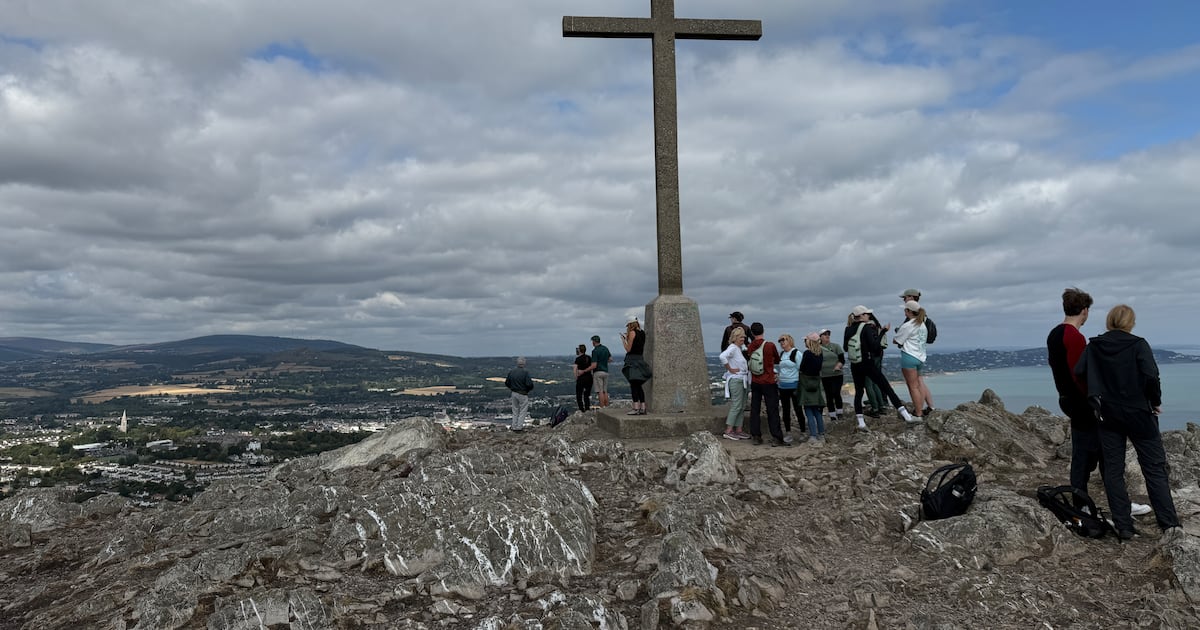
A recreational feasibility study has said the Bray Head climb from the town’s seafront to a large concrete cross near the summit of the Co Wicklow hill should be reinstated. However, the study is critical of unmanaged, informal trails on the head. It says these should be controlled to protect biodiversity and aid habitat conservation. The study contains a number of recommendations to control unmanaged walking and mountain biking, which it says is damaging to the local environment and biodiversity.The reopening of the Bray to Greystones cliff walk, which is the subject of a local campaign, is not among the study’s listed priorities. READ MORECommissioned by Wicklow County Council from consultants Outscape, the Bray Head Recreational Feasibility Study was delivered in May. Bray Head offers sweeping views across the Irish Sea to Howth Head and south to Wicklow Head. Submitted photograph Among its recommendations, the study says efforts should be made to curtail walkers from straying from designated paths, creating a feature known as “braiding”. In the context of land management, outdoor recreation and environmental conservation, “path braiding” or “trail braiding” refers to a phenomenon where a single path or trail fractures into multiple parallel paths that split off and then rejoin the main route further ahead.The report said Bray Head was a popular destination for visitors, leading to significant environmental impacts such as erosion, habitat damage and trail braiding. Bray Head rises to 241 metres and offers sweeping views across the Irish Sea to Howth Head and south to Wicklow Head. It also offers views inland to the Great Sugarloaf uplands. The Dart line runs along the edge of Bray Head at an elevation of roughly 21 metres above sea level. The cliff walk that follows the Dart line from Bray to Greystones is about 30 metres above the Dart line. Referring to the Bray Head climb, the study said the trail was severely eroded and unsafe. The study listed a hierarchy of five priorities, the first being the restoration of the Bray Head climb from Bray seafront to the cross. The second was to control and manage walking-led recreation where it was damaging the protected biodiversity of the head. The third priority was to use signage as a “management tool” to keep people on defined routes. The fourth one was to “actively manage” recreation, moving from a surfaced trail network and signage to regular inspections and early intervention to address unwanted behaviours. The study recommended the development of a recreational management plan. The fifth was for “evidence-led, incremental intervention” to introduce change and monitoring to inform future decision-making. The study noted the place was a Special Area of Conservation and Special Amenity Area, meaning there were legal and ecological constraints on development and use.
Bray Head climb ‘must be reinstated with designated trail to combat erosion’
Full Article
Original Source
Read the full article at Irishtimes →KhanList aggregates and links to publicly available news content. We do not host full articles from third-party sources. Always verify important information with original sources.