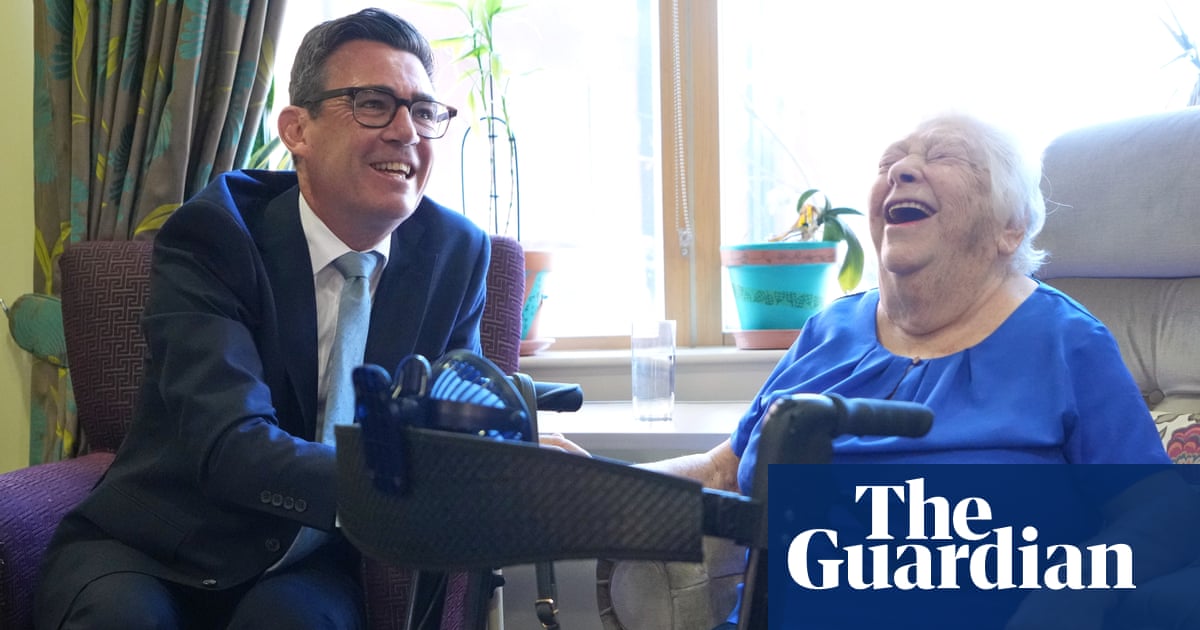
For campaigners perpetually disappointed by the failure of England’s political classes to fix England’s creaking adult social care system, the fear was that Andy Burnham’s long-trailed speech would be less Brave New World, more Groundhog Day.Burnham acknowledged he had been here before. Back in 2010, as health and social care secretary, he unveiled extensive proposals to overhaul social care, only for them to collapse amid right-wing media hostility and furious political rows about “death taxes”.The new PM might talk a good game about expending political capital on an issue close to his heart, but recent history suggests that social care reform invariably ends up in what the King’s Fund thinktank calls the “Westminster graveyard of good intentions” – 22 official reviews in the past 30 years, all come to nothingBurnham sketched out his broad ambitions for social care reform in a brisk, partly off-the-cuff speech at a Jewish care home in north London on Wednesday. There was, as expected, little policy detail, but enough to show a clear direction of travel.He would be accelerating Louise Casey’s review of social care, which under Keir Starmer had been slated for 2028, effectively pushing it back into a putative Labour second term. Baroness Casey’s recommendations for a National Care Service would be published within 12 months. He would back Casey “100%”, he promised.He was dropping no clues as to what it might look like. It could be “fully fledged or lesser options or something in between”, he said vaguely. Casey would come up with funding options. But it wasn’t just about money: the quality of social care had to improve, work more closely with the NHS, be built around the needs of care users.There would be investment and focus on the social care workforce, boosting pay and training. He wasn’t opposed to private providers (which currently provide most care in England) but he wouldn’t put up with “profiteering” by care firms. There needed to be more support for unpaid carers, too often broken by their sacrifices.The key message, however, was about politics. Blame for the dire state of English social care lay with his generation of politicians, he said. They had serially ducked the challenge of reform, put point-scoring before fixing injustices, fomented a political culture of risk aversion and inertia.“How have we got to a position where it’s too difficult to fix the basic care that we give to each other, that fellow human beings receive?” he asked.He arrived at No 10 promising he would do politics differently, but this was a challenge to the other main political parties to do the same. He wouldn’t be drawn on whether he’d raise tax to reform social care, but it felt like he was prepared to test the very idea that a government might raise taxes to fix a glaring social injustice.“If everybody, on the NHS principle, contributed a little, it would mean everyone could protect the majority of what they’d worked for,” he said at one point. “Now I know the Mail and probably the Telegraph doesn’t support that. But I don’t know – do people support that?”skip past newsletter promotionafter newsletter promotionThe consensus in the social care world was that this was an impressive start. “There was a sense of excitement in the room,” one veteran campaigner said. “He had every opportunity to downplay expectations but he didn’t.”Burnham showed passion, humanity, and a grasp of detail. He framed the injustices simply. He strikingly compared the inequity of social care in England with the privatised US healthcare system: “The vulnerable pay with everything and it can completely leave them with nothing.”For once, some observers said, with a flicker of amazement, there was clear political will, from the very top, to break the entrenched consensus that fixing social care is impossible. It’s early days, but for now there is the rare whiff of hope and optimism.
Brave New World or Groundhog Day? Burnham revisits old ground in speech on social care
Full Article
Original Source
Read the full article at Theguardian →KhanList aggregates and links to publicly available news content. We do not host full articles from third-party sources. Always verify important information with original sources.