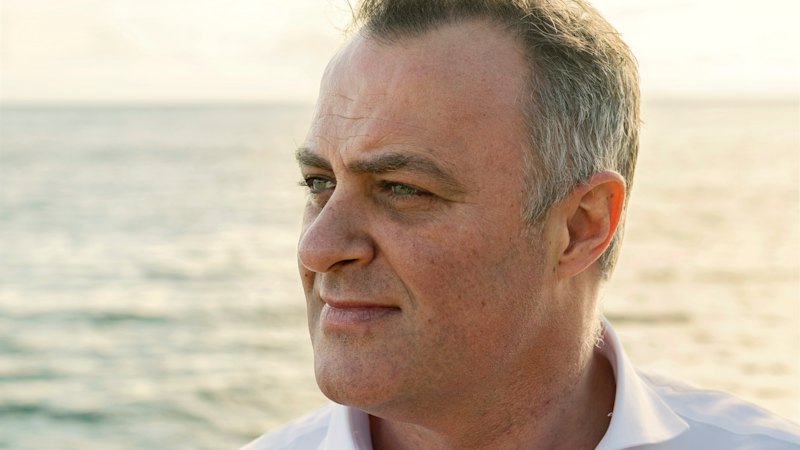
Tim Wilson is in a boisterous, one might even say bumptious, mood. “Tigger’s got to do what Tiggers do!” the shadow treasurer blurts out suddenly, as he bustles around his parliament house office. “And what do Tiggers do best? They bounce!”It’s late May, and the 46-year-old has just returned from the National Press Club, where he’s been hammering Labor’s controversial capital gains tax changes, unveiled in the budget a week earlier. Now in full flight, he’s telling me a story about once visiting Cambridge University and being invited to examine an early portfolio of Shakespeare’s works. To his hosts’ surprise, he was far more interested in an early edition of Winnie the Pooh, by British children’s author, A. A. Milne. Tigger, of course, is the most hyperactive of Pooh’s friends, a stripy, tigerish creature with boundless energy, and unshakeable self-confidence. A chaos agent.Some days later, as we’re driving around Wilson’s Melbourne electorate in his bright blue campaign van, I ask if he identifies with this strange, fictional creature. “Exactly. I like Tigger, Tigger’s the best character,” he replies. “Energy, fun, [and] not to be too serious. There are too many people in these jobs that take themselves too seriously.”Wilson is brash, colourful and determined to stand out. A man who wears eye-catching blue socks every day in parliament because every other male wears black. A man who, far from hiding his eccentricities, seems keen to highlight them. “I am idiosyncratic – I do accept that,” he says. “I openly accept I am unconventional.”Wilson had been the Liberal MP for the well-heeled Melbourne electorate of Goldstein for six years before losing to independent Zoe Daniel in May 2022, succumbing to the “teal” tidal wave that swept the Liberals out of their most prized metropolitan seats. But in last year’s federal election, he wrenched the seat back on a wafer-thin margin of 175 votes, even as the party elsewhere endured its worst defeat on record. If former prime minister John Howard had once been “Lazarus with a triple bypass” (to quote Howard’s own words before reclaiming the Liberal leadership in 1995), Wilson’s return to parliament was seen, among colleagues, as an equally miraculous recovery. He dubbed it his “journey from oblivion to resurrection”.It made him the only candidate to defeat a teal incumbent, the only Liberal to reclaim a metropolitan seat for the party last year, and the first Liberal in 100 or so years, he believes, to defeat an independent who’d been elected at a general election.“Tim’s victory was just phenomenal, really the only bright spot … in a deeply depressing and dark election,” says Trent Zimmerman, the urbane former Liberal MP for North Sydney who, like Wilson, is gay, and for years campaigned alongside him in the federal parliament for marriage equality. “I think it made Tim a hero within the otherwise pretty depressed rank and file of the Liberal Party.”In February this year, Angus Taylor – who’d rolled Sussan Ley for the party leadership – promoted him into the shadow treasurer’s post, arguably the second-most-critical job in opposition. “Tim was chosen as shadow treasurer because of his incredible drive, his energy, his great cut-through and because he has a very good grasp of economics,” says Liberal senator and shadow defence minister James Paterson. “He has serious thoughts to contribute to the future of tax and economic policy and he’s passionate – and I admire that about him.”“Tim’s victory [in 2025] was just phenomenal, really the only bright spot … in a deeply depressing and dark election,” says a former Liberal MP.Adam FergusonBut Wilson can also be erratic, with a reputation for occasional errors and curious lapses of judgment. He’s now pitted against Labor’s most consequential, and polarising, budget in decades, while a resurgent One Nation tears at the Liberals’ right flank. Whether he can muster and maintain the political maturity to successfully navigate these challenges – at such a critical time – remains an open question along the parliamentary corridors. Sentiment among his colleagues is divided, with a number put off by his cockiness, his insistent self-promotion, and the ambition he takes little pains to hide.His fellow Victorian federal Liberal MP and close friend from university days, Mary Aldred, acknowledges that Wilson’s brusque self-confidence “can irk some people, particularly some of his detractors, who are less sure of their own abilities”. But she insists that’s “different to arrogance. There’s an urbane manner about him, and an unflappability which annoys his opponents … because they can’t get under his skin.”A harsher assessment comes from one party insider, who immediately opines that Wilson is “a figjam” (as in “f--- I’m good, just ask me”) who “grates people the wrong way” and indulges in “too much childish language and behaviour and stunts”. A senior banking executive says Wilson is intelligent and hard-working, but needs to remember he’s “meant to be the alternative economic brains of the country”, and to act accordingly.Colleagues were startled earlier this year when Wilson burst into song on the floor of parliament, mangling a version of Billy Joel’s We Didn’t Start the Fire. His intent was to lampoon his opposite number, Treasurer Jim Chalmers, for tipping “petrol” onto the “inflation fire” but the tuneless performance fell flat. The next day Chalmers shot back: “Every three-ring circus needs a clown – and Tim is a clown.”In late May, Wilson had to apologise to the Speaker of the House, Milton Dick, for a snarky comment on X after he’d been booted from the chamber in question time. The incident triggered a scolding from The Australian’s national editor Dennis Shanahan in the usually Coalition-friendly broadsheet, urging the shadow treasurer to “grow up if he wants to be treated as a serious politician”.Not long afterwards, Wilson got caught up in a fiery exchange on breakfast TV with Employment Minister Amanda Rishworth, when he told her to “get a breathalyser” after she raised the subject of his 2020 book, The New Social Contract.Labor has used the book to mercilessly taunt Wilson because it presses the case for a fairer go for young people on housing, and more even-handed treatment of earnings from labour and capital – precisely the arguments, the government maintains, that support its tax changes. But an indignant Wilson argues that his position was to have all taxes come down, not for some to go up.He defends his propensity for questionable stunts, maintaining that politics has become “very boring ... full of very conventional characters who were very scripted” and that “authenticity now is king”.Even among detractors, there’s admiration for his campaigning skills. Wilson proved to be a devastatingly effective force in the lead-up to the 2019 federal election campaign, when he whipped pensioners into a panic over then Labor leader Bill Shorten’s plan to curb franking credit rebates.Wilson rebranded it a “retiree tax” and leveraged his position as chair of the powerful parliamentary economics committee to amplify the attack, working in co-operation with his distant relative, fund manager Geoff Wilson, whose organisation at the time had $3 billion in funds under management. This use of the parliamentary committee system outraged Labor, and drew a strong rebuke from then speaker, Tony Smith. But it paid off for the Coalition. Former Liberal attorney-general George Brandis believes Wilson’s retiree tax campaign was “emphatically one of the main things that got [Scott] Morrison over the line”.Wilson would later say that he applied tactics that “I learnt from the ACTU’s [anti] WorkChoices campaign that toppled John Howard”.The contest with Chalmers, one of the government’s most effective communicators, will be key to Wilson’s future. Chalmers is now into his fifth year as treasurer, while Wilson has limited ministerial experience: seven months as assistant industry and energy minister in the dying days of the Morrison government. Apart from that, his economic credentials rest on his six years as an ardent free-marketeer at the right-wing Institute of Public Affairs, his time as chair of the parliament’s economics committee, a slew of articles and media appearances, and a post in the shadow ministry under Ley in the small business and industrial relations portfolios.Wilson is being more forcefully targeted by Labor than his predecessor as shadow treasurer, Ted O’Brien, because, a colleague claims, “they know Tim could do damage if he finds his feet”. Privately, Labor scoffs at this, though a government insider adds, “we are careful not to write him off”.Taylor, whose own performance as leader is now under scrutiny, praises Wilson as “serious, diligent and relentless”, telling Good Weekend: “Tim has brought energy to one of the hardest jobs in the opposition [and] has been like a dog with a bone in prosecuting the case against Labor’s toxic taxes.”Brandis also comes to Wilson’s defence, saying: “There are no concerns about Tim Wilson being an intellectually serious person. He combines a technical understanding of policy with a capacity to deliver powerful political lines. That’s what Angus Taylor was looking for.”“There would have been safer and greyer options to put up against Chalmers,” confides another senior Liberal colleague. “But I think Angus recognised that we just couldn’t persist with boring options. We needed to take a few risks.”On a Saturday morning, under clear autumn skies, we’re on a brisk tour of Wilson’s electorate before heading to the first of seven local events he’s scheduled for the weekend. Servicing an ultra-marginal seat is relentless work, and Wilson is in constant campaigning mode, his electric blue Toyota HiAce (dubbed “Polly the Victory Van”) doubling as a mobile advertising board to “remove any doubt about where I am at any given time”.Goldstein is an electorate cocooned in suburban comfort, more new Melbourne money than old, particularly along its western edge, which is bounded by Port Phillip Bay’s most picturesque stretches. Wilson points out the beach at Sandringham where Kylie Minogue shot a video to lure British tourists here. Over there lies Black Rock and Half Moon Bay, where the artists of the Heidelberg school sometimes came to paint. Further along the bay we’re at Brighton, where the famous brightly coloured bathing sheds have become a magnet for Chinese tourists, and the streets behind the beach are lined with generous suburban estates sheltering behind manicured hedges and ornate fences.Wilson with his electric blue Toyota HiAce dubbed “Polly the Victory Van”, which doubles as a mobile advertising board.Deborah SnowIn Wilson’s view, Goldstein is awash with self-starting types, exactly his kind of people. “There’s a value set that runs along Port Phillip, which is very ‘live and let live’, and that’s my mindset,” he declares, jauntily. “I need to be with ‘live and let live’ people; I want to be surrounded by them, I want to represent them.”At the monthly farmers’ market near the Sandringham Yacht Club, he’s on first-name terms with many of the stall-holders, stopping to chat with Caroline, a smartly groomed woman in her late 50s who makes perfumed soy wax candles, and Brad, an eager young entrepreneur who is developing a new soft drink from finger limes. (With constituents, Wilson is an attentive listener, though if you’re stuck on the receiving end of one of his monologues, it can be hard work getting a word in edgeways.)Labor’s broken promises on negative gearing for property investors, coupled with sweeping changes to capital gains tax, have handed Wilson what should be a golden opportunity. He was quick to latch onto the viral social media campaign kickstarted by a group of entrepreneurs immediately after the budget, which mocked Prime Minister Anthony Albanese as the new silent partner in their businesses. (The government subsequently announced carve-outs for start-ups.)“We needed to be the party of small business and self-starters and the biggest challenge was getting them to pay attention to the political process. Lo and behold! The government’s done that for us,” Wilson declares gleefully, accusing Labor of acting in a “deeply immoral” fashion. “They’ve driven a bulldozer through the economic structures of the nation without any sense of nuance.”At the Bayside Community Sports Centre, his next stop, the air is alive with the shouts of hundreds of teenage girls playing netball across a dozen courts. He’s chatting courtside with coach Kristy Durston when I bring up the subject of that morning’s Redbridge poll, splashed across the front page of The Australian Financial Review. It’s the first of a series in coming weeks that will show One Nation surging ahead of the Coalition and, at one point, overtaking Labor as well. Wilson has taken to habitually referring to One Nation as “the orange paddock of despair” and, on this morning at least, seems almost blasé about the poll warning. “Two years out from an election ... you can’t draw massive conclusions,” he says. “In 2020, at this point in the electoral cycle we were going to win in a landslide and then of course it turned completely to poo.”Nevertheless, he’s choosing his words carefully with constituents who raise the One Nation insurgency with him: “I don’t believe there’s hope or opportunity there – only resentment and despair and I’m not interested in that.” Australians, he asserts, “don’t want to be led through fear”.Asked about vanquished arch-rival Zoe Daniel (who may or may not run again), he affects casual disinterest. I inquire whether it’s true, as rumoured, that he and Daniel privately loathe one another. “I don’t really think about the former member that much, so I’m afraid that’s a mischaracterisation from my part,” he responds coolly. (Daniel did not want to comment for this profile.)In his electorate of Goldstein, Wilson is blasé about poll warnings: “Two years out from an election ... you can’t draw massive conclusions.”Deborah SnowWilson was shattered when he lost his seat in 2022 and his old friend Mary Aldred recalls him going through “all the stages of grief”. Others urged him to seek psychological help. “It’s a devastating thing for a person to lose their seat,” observes Brandis, “particularly if they have had the possibility of a very big political career ahead of them.”The day after the loss, Wilson broke down in front of the cameras, thanking his schoolteacher husband Ryan Bolger – a tall, strikingly handsome man four years his junior – for the sacrifices Bolger had made. Then Wilson flew to Canberra to pack up his office. “I wasn’t in a good place,” he recalls. “There’s a sense of purpose – then you just get smashed, and you stop.”He describes taking comfort that day from the large, framed image hanging on the wall next to his desk, commemorating the historic vote for marriage equality in December 2017. The photo captures the landmark moment when the bill went to a final division, and an overwhelming majority of MPs sat shoulder-to-shoulder on one side of the house in support. That day was the culmination of “one of the four significant social movements in Australian political history”, he recalls, “and I wasn’t just in that, I was one of the leaders in it ... I [still] look up at that every day and go, ‘That was f---ing amazing.’ ”“Twenty years ago it wasn’t necessarily easy to come out as a public figure,” reflects his friend Alex Greenwich, the progressive independent MP in the NSW parliament and former co-convenor of Australian Marriage Equality. In the early days, the campaign for same-sex marriage was driven by the Greens and the left, he points out, “but Tim really provided a leading voice on the conservative side of politics ... I respect his grit and his courage.”He also praises Wilson’s later advocacy for LGBTQ people when Brandis appointed him to the Human Rights Commission in 2013. (Brandis had controversially placed him there to dilute the body’s anti-discrimination focus and steer it more towards individual rights, such as free speech. The appointment earned Wilson the satirical moniker “Freedom Boy” – plus a lucrative salary of $320,000 a year.)After winning Goldstein at the 2016 federal election, Wilson, on December 4, 2017, tearfully proposed to Ryan Bolger from the floor of parliament during the final stages of the marriage equality debate. The theatrical gesture made international headlines and, three months later, Greenwich would sign the couple’s marriage certificate at a ceremony inside Melbourne’s botanic gardens. “I would not underestimate how important Ryan is to the whole operation,” reflects someone who knows the couple well. “It’s a genuinely loving marriage. But because Ryan is more flamboyant, people assume Tim is the more grounded one. In fact, it’s quite the opposite.”Wilson attributes his determination – and his inherited “darkened, recessed eyes” – to his Armenian maternal grandfather, Ruthufus Adamyan, who arrived here as a merchant seaman. Soon afterwards, Ruthufus became Ronald and married Winifred. The couple ran a clothing factory in Gardenvale, in Wilson’s electorate. “They were an interracial couple in one of the most white-bread parts of Australia,” he recalls.Wilson’s parents, Linda and Robert, pulled beers and ran pubs before splitting up when Wilson was seven. After the separation, Wilson moved to the Mornington Peninsula with his mother, older brother Simon and younger sister Carolyn. The siblings became self-reliant at an early age as Linda often worked “[late] at golf clubs and various things”, he remembers. (Linda later married one-time Victorian state Liberal MP David Morris.)Wilson declined to make family members available for interview. When I press him for a childhood anecdote, he describes braving the brambles at a nearby estuary to collect blackberries and selling them to local caterers for extra cash. In the school holidays, he and his brother mowed lawns and did other jobs on worksites for his father’s small businesses.Long-time friend Philip Starkins says he and Wilson were both outliers at high school, “neither in the cool-kid nor the alpha-male-type category – we played hockey. But Tim had this amazing creative streak, still does.” He recalls Wilson pouring intense effort into painting sets for the school production of Evita one year, and thinks he “found peace in it”.Starkins sees another side to Wilson in private: “this warm, complicated, thoughtful man in there, that is also part of him”. Wilson had struggled silently with his sexuality all through his teenage years at a private school, then known as the Peninsula School (now Peninsula Grammar), at Mount Eliza on the picturesque Mornington Peninsula. He compares coming out at university to what the army used to call “resistance to interrogation” training.“There was a series of moments where you have to push through fear,” Wilson explains. “You know when they train certain intelligence officers? They take them to the point of maximum fear because it teaches you to understand that feeling, so it’s not foreign. What I’m trying to express is, I’ve been taken to multiple points of fear in my life [when coming out] and pushed through it. I’m familiar with it.”Wilson at the Bayside monthly farmers’ market in his Goldstein electorate. The MP is on first-name terms with many of the stall-holders.Wayne TaylorWilson told The Age and Sydney Morning Herald’s Inside Politics podcast late last year that people find it “pretty off-putting … that I’m just not kind of afraid”. (One afternoon, he texts me a link to an article about himself that he’s pleased with. Tellingly, it carries the headline: “His superpower is shamelessness”.)Soon after his loss to Zoe Daniel in 2022, Wilson went to London to console himself. He visited Winston Churchill’s residences. He planned to go dancing and drinking. But instead he found himself sitting under the trees in Hyde Park, reading Leadership in Turbulent Times by American historian Doris Kearns Goodwin. The book explored the journeys of four giants of US political history who overcame setbacks to ultimately gain the presidency, among them Teddy Roosevelt.“There was a lot of the young Teddy Roosevelt that I recognised … before he went on to the presidency,” Wilson confesses. “It’s the character, his character I recognised in me.”What did he recognise, I ask? There’s a long pause before Wilson replies. “I think, at the time, it was the extent of the abrasiveness,” he says. “I just recognised a lot of his behavioural traits and went, ‘That’s interesting.’ ” (Goodwin writes of Roosevelt that he had an “abrasive and manic energy”; Wilson says the book showed him the “necessity of failure”.)By Christmas 2022, Wilson had resolved to attempt a parliamentary comeback, though feeling “terrified I was potentially at risk of throwing away a year of my life for an impossible task”. He discussed the prospect with Brandis, among others, who deemed it “very revealing of Tim’s character, that he ... threw everything at it for at least two years, despite a great deal of doubt about whether he would win the seat back”.But first Wilson had to secure the formal endorsement of his party through another preselection, and raise funds to do it. “I approached it like a start-up,” he recalls. “I went to the donors and said, ‘I need you to provide start-up capital to get me into the race.’ ”By the time of the preselection in March 2024, Wilson had amassed a war chest of $200,000, raised through a company called Bayside Forum Ltd, a local fundraising vehicle for the Liberal cause. At the time, it had a three-member board comprising Wilson, his husband and his former manager, Shaun Levin. This caused some consternation among those who felt other potential candidates for the preselection contest should also have access to the money and the research it funded, but Wilson says “it was not my right to allocate money raised for my campaign to go to another candidate without [donors’] permission. Anyone who wanted to raise funds and hold them in the Bayside Forum was welcome to do so. I did. Others did not.”On the day of the contest, Wilson reminded Liberal preselectors of the “political earthquake” in 2022 that had delivered six of the party’s metropolitan seats to the teals. In a grandiloquent call to arms, he declared: “We are at a ‘Menziean’ moment. We are being called to break a cycle and make history.”He prevailed over two female candidates, backed by a personal reference from then leader Peter Dutton, which he’d taken pains to secure months earlier. Long before the preselection, Wilson had decided to abandon the conventional Liberal Party playbook for a political campaign. He’d commissioned research to convince himself, and others, that gender would not be the deciding factor. He also abandoned the traditional dark blue colour for Liberal branding and selected his own, a kind of azure. “My conclusion was that we were fighting teals like we would fight Labor, and I realised that that wasn’t going to work.”Wilson took back the seat of Goldstein from teal independent Zoe Daniel (right) in 2022, following measures such as abandoning the traditional dark blue colour for Liberal branding and instead selecting his own azure hue.Simon SchluterInstead, he would adopt teal-like tactics himself, branding himself a “community-backed” Liberal and building a local, T-shirt branded movement which ultimately grew, he claims, to more than 3000 people. “It was a show of force,” one of Daniel’s campaigners grumbled later. “He replicated our coffee swarms, our gatherings of people in T-shirts in cafes, he had a lot more fence signs – his visual presence in 2025, everything was larger.”There had been, however, a damaging bump in the road early on, when Wilson became involved in a widely discussed local incident that soon became known as “wreathgate”. It was the Sunday before Anzac Day in 2023, when several hundred people had assembled for the annual Beaumaris commemoration, a major fixture in the local calendar. Zoe Daniel, by then the local MP, had a family commitment elsewhere and nominated a volunteer, Peter Newman, to lay a wreath (paid for by her office) on her behalf.On the morning in question, VIPs were to collect their wreaths from an official table, as their names were read out. But when Daniel’s name was called, there was a delay before Newman could reach the marshalling point. Wilson, standing nearby, got there first and was handed the Daniel wreath by one of the women at the table. Newman recalls approaching Wilson, saying: “That’s our wreath.” But instead of relinquishing it, Wilson held on. What followed was the odd spectacle of both men laying it together.Afterwards there was an acrimonious exchange between Newman and Wilson, recorded on a reporter’s phone. Wilson was irate when the story made headlines, and three years later is still arguing he was in the right. He insists he only heard the announcer say Daniel was absent, and nothing about Newman’s role as a stand-in. “I was just given it,” he states flatly. “At that point you have a choice, you can hand it back and say ‘No’ to the Beaumaris RSL in honouring lives, or you can do it. Of course, I did the honourable thing.” (He also claims Daniel “had a reputation for skipping events”, a claim contested by her office.)What’s harder to understand is why he didn’t just hand the wreath over when requested, rather than risk an unedifying spectacle. Rather unconvincingly, he says he believed Newman might drop it. Newman told Good Weekend, “If it had been me, I would have turned around and said, ‘I’m sorry, I’ve made a mistake’ and just given it up.”The atmosphere in Goldstein in the lead-up to the 2022 election campaign became increasingly poisonous. Claims of pressure tactics flew in both directions. Wilson says he and Bolger felt under such threat that they sought police protection and claimed this was why they later sold their Sandringham home in January 2024. (They now split time between a rented flat in the electorate and a two-bedder they own near the city centre; they also own an investment property on the Mornington Peninsula.)By the time of the 2025 campaign, the atmosphere had grown even more toxic. Following the Hamas atrocities committed against Israelis in October 2023, the substantial Jewish vote in Goldstein had begun to fall in largely behind Wilson, who’d declared himself a “Proud Zionist” on the front page of the Australian Jewish News, while Daniel was formulating a more nuanced position.Amy Bachrach, the Jewish liaison officer for Daniel’s campaign, would later tell a parliamentary inquiry that “the weaponisation of the Israel-Gaza issue by proxy groups and the opposition resulted in a fracturing of the Jewish community that is still having ramifications”. Wilson flatly denies any part in “weaponising” the Jewish vote against his opponent, insisting that “the former member weaponised that against herself” and that “my views on those issues have been long-standing and consistent”.Corflute wars between the two sides intensified. Wilson says his campaign signs were vandalised and often stolen. On the other side, one of Daniel’s key organisers told Good Weekend that “the defacing of Zoe fence signs was next-level in 2025: eyes cut out, red paint symbolising blood, ‘Jew hunter’ [scrawled on them]. I began dreading going to the gate to see what had happened this time.”Daniel was also dogged by mobile billboards being driven around the electorate advertising the fact that she had been referred to the National Anti-Corruption Commission (NACC). The complaint had been brought by Wilson’s close friend, Jason Falinski, a former Sydney federal Liberal MP who’d also lost to a teal in 2022 and who, by the time of the 2025 election, had become spokesman for Australians for Prosperity, one of the several third-party groups active against Daniel in Goldstein.The gist of Falinski’s allegation was that a consultant to Daniel, while on the government payroll, had misused public funds by lobbying The Australian Financial Review on behalf of a client who was also one of her donors (climate campaigner Simon Holmes à Court). After investigating, the NACC concluded that the consultant, former ABC reporter Jim Middleton, was not on the taxpayers’ dollar at the time and curtly dismissed the matter. Yet the billboards publicising the NACC referral were still being wheeled out around Goldstein even after the complaint had been dismissed.Wasn’t that unfair? I ask Wilson. “I had no knowledge of that billboard whatsoever until the first time I saw it when I was walking out of an event,” he shoots back tersely. “They [teal supporters] applied a win-at-all-cost approach in the 2022 election but they never seem to appreciate when anybody holds them to account.”Wilson got his first taste of politics at university, twice becoming president of the Student Representative Council at Monash. He also started a degree in painting at the university’s Caulfield campus, but switched to policy studies (after an argument with a lecturer about the GST) and commenced part-time work for Victorian state Liberal MP David Davis.Visual arts remained a passion, and he marks every major life event with a new acquisition. An original Norman Rockwell poster hangs in his electorate office and, for his 30th birthday, he tracked down a rare portrait of Ronald and Nancy Reagan, giving it pride of place over his bed.He’s recently taken up linocut print-making and become quite adept, judging by two samples in his electorate office. A keen bushwalker, he’s also kept an economics PhD simmering on the backburner (through RMIT’s Blockchain Innovation Hub), and last September self-funded an AI fact-finding trip to the US. The doctorate, should he finish it, will join a CV already crammed with a bachelor of arts in public policy, a diploma of business, a masters in international trade and a certificate in carbon management.Wilson’s career after university was just as eclectic, spanning consultancies in trade and communications, the Institute of Public Affairs, the Human Rights Commission, and even a stab at a media career on Melbourne talkback radio. When he walked away from his lucrative post on the commission to seek preselection in Goldstein in 2016, he had to stare down an anonymous homophobic smear sheet branding him a “danger” to families.Brandis recalls writing the young Wilson a glowing endorsement, believing “this was an opportunity for the Victorian Liberal Party to choose another person who was going to be a significant thought leader”. (Wilson won by just two votes.)Wilson shares a laugh with Liberal leader Angus Taylor in February.Alex EllinghausenYet he continues to defy easy categorisation within the Liberal ecosystem. He’s long had a strong libertarian bent: witness, for instance, his violent dislike of plain packaging for cigarettes, his past opposition to section 18C of the Racial Discrimination Act (which he said violated free speech) and his one-time support for pill-testing.He also disavows media attempts to lump him in with the party’s fading moderate wing, stating “there is nothing moderate about my liberalism”. Once committed to net zero carbon emissions by 2050, he’s had to dance around the issue since Taylor scrapped it as Liberal policy. “The time frames for 2050 are now looking substantially more challenging than they initially did,” he proffers, carefully. “But I still absolutely support a commitment towards long-term decarbonisation through the use of technology.”He’s never done much to hide his leadership ambitions (one Liberal insider says he “does himself damage by being so bloody obvious”). He insists he’s focused on doing his current job well. But he leaves the door ajar when asked if there’s a baton in his backpack. “If there’s a time where that’s what’s required of me,” he states, “then so be it.”Inside the Canberra bubble, some speculate that if Taylor comes to grief, the next Liberal leadership contest could well be between Wilson and opposition industry minister Andrew Hastie, though Hastie is the likeliest next prospect. Zimmerman, for one, thinks Wilson could soar higher. “What Australians will care about is having a leader who can effectively manage the Australian economy, and if Tim can demonstrate that, then I think the sky’s the limit.”Would Australians be ready for a gay married man as leader? Wilson brushes the question aside. “The country wants someone who has clarity and vision about where they want to build and take the country, and I think everything else is a completely secondary consideration.”In the meantime, he intends to go on getting himself noticed. “I see a lot of people who are very good at being fakes,” he says. “I am not a fake, make whatever judgment you want.”Get the best of Good Weekend delivered to your inbox every Saturday morning. Sign up for our newsletter.Read more profiles from Good Weekend:Why Peter Malinauskas is Australia’s most successful premierWhy is Christopher Nolan such a good director? We asked him (and Matt Damon, and Anne Hathaway, and Michael Caine...)How Anthony Pratt conquered America
Brash, colourful chaos agent ... or diligent, relentless leader in waiting?
Full Article
Original Source
Read the full article at Smh →KhanList aggregates and links to publicly available news content. We do not host full articles from third-party sources. Always verify important information with original sources.