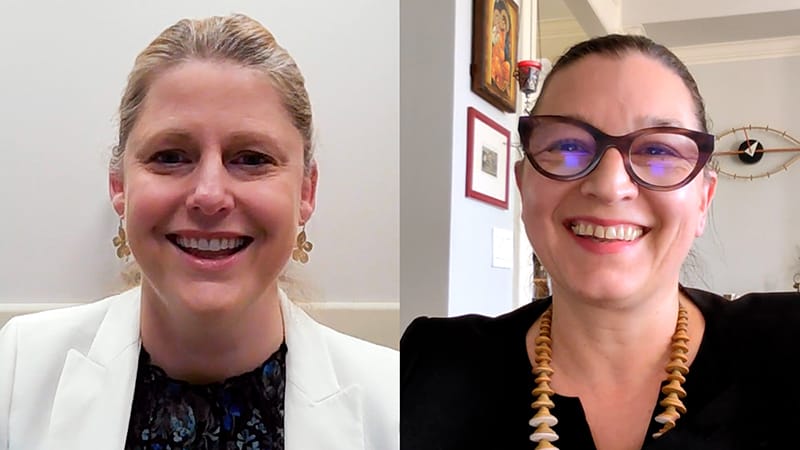
This transcript has been edited for clarity. Kathrin LaFaver, MD: Hello and welcome on behalf of Medscape. My name is Dr Kathrin LaFaver. I'm a neurologist in Saratoga Springs, New York, and I have the great pleasure of talking to Dr Aleksandra Pikula today. She's a neurologist and professor of medicine at the University of Toronto. She's also the inaugural chair for the Jay and Sari Sonshine Centre for Stroke Prevention and Brain Health, specifically focusing on prevention of strokes and brain health for women in neurology.Welcome, Dr Pikula.Aleksandra Pikula, MD: Thank you, Dr LaFaver.Blue Zones JourneyLaFaver: One of the interests in our series that we have been covering is preventive neurology and lifestyle interventions to improve brain health, which has really been an emerging topic in the last years. I know this is a big focus of your research. I have been intrigued to learn that you are one of the physicians with a Blue Zones certification to improve brain health with lifestyle measures. I would love to hear more about this.Pikula: Before I start, I would like to give you a brief context for your question just so people understand how I arrived at Blue Zones.I've been a vascular neurologist for over 20 years. Since 2019, I've also been deeply engaged in lifestyle medicine and women's brain health. There's also our own journey that we carry into practice with wellness, burnout, and everything else that comes our way. Connecting clinical practice, research, education, and my personal experience into an integral approach became a passion of mine. After years of studying stroke prevention and risk factors, my focus in clinical practice and research really shifted from primarily finding new risk factors or biomarkers or genetic pathways and applying pharmacotherapies to real-world strategies and implementation science, especially in women in midlife.Three years ago, I received some innovative funding to integrate preventive strategies into neurology and stroke prevention and brain health at University of Toronto with an operational portfolio to integrate a lifestyle medicine framework into stroke and dementia prevention. This is pretty much talking about modifiable risk factors. In order to understand how to do that, the scope of the research was studying lifestyle medicine interventions that have been done in the past, and understanding what works for who, under which circumstances, and for what kind of population. That led me to Blue Zones, which we now are trying to apply in our hospital community health models. ACLM Certification To explain to the listeners, the Blue Zones certification is done through the American College of Lifestyle Medicine. After being board-certified in lifestyle medicine, it was a natural step for me to really deep dive into the science of Blue Zones and understand what we can translate back into the real-life experience of our patients, and of public health, and hopefully bring that to the community not only through research but also implementation science.For people who don't know, Blue Zones refers to five regions worldwide: Sardinia, Okinawa, Loma Linda in California, Nicoya in Costa Rica, as well as Ikaria in Greece. Actually, I had the privilege to visit all of them except Okinawa. Those are regions where people live longer, to 100-plus years. More importantly, they live longer without chronic conditions, stroke, or dementia. What inspired me is not only that clinical experience and population-level data, but that these populations didn't really plan to age well. They did not plan to not have a disease. They were just living in an environment that made those healthy choices easy. They mostly ate plant-based diets. They forage for their food. They have to move naturally to be able to collect the food, take care of their animals, and they socially connect.They have a purpose, and all this leads to what's called stress reduction practices. These elements are really central to Blue Zones, but they're central to the modifiable risk factors that we talk more and more about in the space of dementia and stroke prevention. It really reinforces the importance of the integration of what people in those populations are doing that we’d like to bring to preventive neurology, hopefully, one day.Practical Steps for Brain HealthLaFaver: It's a very fascinating concept to see how lifestyle choices really do impact our aging process and preventable diseases. We are in a different part of the world, and as you said, you are focused specifically on women's brain health. What are some practical implementation tips and tricks that you might be able to share with our listeners? What can we do to move the needle toward healthier lifestyles and more brain health?Pikula: Thanks for asking that question. I think it's really critical to understand how we can implement certain things in the clinical space and population health. I think those are two different things, but they collide together in the world of clinical practice that both of us live in.In terms of women in midlife — and for everyone else — I think it's really important to look at the person you see in the clinic holistically. We tend to assess from a clinical and risk assessment point of view; we rarely look into their social determinants of health, and that's where we talk about sex and gender differences, and needs in preventive strategies.We have a pretty robust, integrated approach to midlife for women that we're assessing for stroke risk, either through primary prevention or secondary prevention. Those are women mostly in their early forties to mid-sixties when we're talking about the menopausal transition. As we know, that marks a critical stage where women accumulate more risk factors for stroke as well as for dementia. Stroke risk becomes increased when they enter the postmenopause stage. It really doubles at that stage.That gives us a massive window for prevention. It's being aware of their risks, not only for providers, but women themselves should be educated as to what their risks are. It's not just hypertension, diabetes, cholesterol, and obesity, but we are now talking about female-specific risks. These include reproductive history, hypertensive disorders of pregnancy, and gestational diabetes. Those are all residual vascular risk factors for midlife.Someone who had preeclampsia and has not been treated since — obviously, that person is going to be at much higher risk for stroke later on. Apart from pharmacotherapies and knowing the biomarkers and blood pressure numbers, I think we're talking about addressing stress regulators, which are very important; sleep components; vasomotor symptoms that emerge during this transition; and also putting you at an additional risk for stroke, and later on, vascular impairment.We're also talking about substance assessment, alcohol tolerance during midlife, safety, and really holistically assessing what are those small steps that they can take in addition to what our prescription is saying as a clinical provider that we are quite comfortable doing.HRT and CognitionLaFaver: Talking about women in midlife and hormonal transitions, it would be remiss of me not to ask you what your take and practice is as far as hormone replacement therapy (HRT) through menopause, and the possible benefits or effects on cognitive health. Could you comment on that?Pikula: The short answer is that we do not prescribe hormonal therapy for cognitive protection at this point. The picture is complicated when you take a deep dive into the literature. I think it's important to understand that the narrative will be changing. The Women's Health Initiative Memory Study that studied women aged 65 to 80 — women who should not be on menopausal hormonal therapy at that time — found that hormonal therapy roughly doubled dementia risk.Those are old data. We have new trials in younger populations where we're seeing better outcomes. At least we're not seeing harm, but we are not seeing improvement in cognitive outcomes. We're also seeing changes in terms of HRT formulation and the timing of starting menopausal hormonal therapy.Then we have complexities of doing these studies because there are many mediation questions that are key. If you treat severe vasomotor symptoms and fragmented sleep, women will naturally improve, and their memory will naturally improve, and then you have this confounding effect.I think there is much to be done in the future, but the short answer is that we do not prescribe menopausal hormonal therapy for cognitive protection.LaFaver: That's really good to know. As you said, it's a very multi-faceted topic, so individual risk assessment certainly remains important. For people who want to learn more about the Blue Zones certification and other resources to support women's brain health and healthy aging, where can they find more?Pikula: In terms of the lifestyle medicine and Blue Zones certification, I think it’s best to go to the American College of Lifestyle Medicine website. In fact, they have really a nice section for women's health in general. Even for menopause, they have many resources that could be shared with patients and medical providers who do not have time to talk about this, but at least they can share resources. In terms of women's brain health, I think the best platform is the women's neurology space on the American Academy of Neurology website. There is a large amount of learning material there for providers. In general, LinkedIn is a space I highly recommend. There are many good professionals sharing awareness and advocacy around these topics.LaFaver: Thank you so much. Thank you for being one of the change makers and really shifting the needle away from just thinking of pharmacological options for treatment and prevention to putting more focus on lifestyle interventions, which we all know can be so important. Thank you so much for sharing your time with us today.Pikula: You're welcome. Thank you.
Brain Health Lessons From Blue Zones
Full Article
Original Source
Read the full article at Medscape →KhanList aggregates and links to publicly available news content. We do not host full articles from third-party sources. Always verify important information with original sources.