
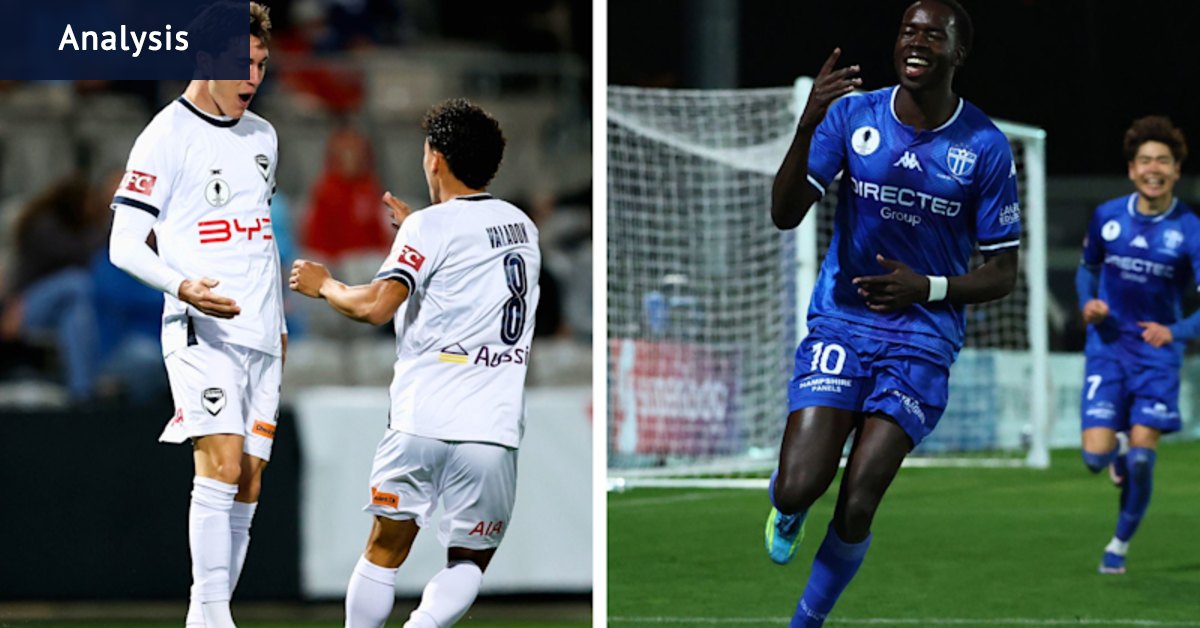
September 16, 2026 — 3:30pmWhen the FFA Cup launched in 2014, few could have imagined the ripple effect it would have on Australian soccer. For the first time since the advent of the A-League, the national spotlight shifted from the game’s new-look, corporatised shopfront to the grassroots and community clubs beneath it, including the exiled giants of the old National Soccer League, still simmering about their exclusion.On opening night, the Brisbane Strikers, champions of the NSL in 1997, defeated the Broadmeadow Magic 2-1 after extra time. Those who watched the Fox Sports coverage may not remember the game vividly – but they will probably remember how it felt to have the action from a suburban oval in Newcastle beamed into their lounge rooms, and the way it cut to footage of goals as they happened in three other concurrent matches in Sydney, Melbourne and Brisbane.It instantly made Australia feel more like the authentic soccer nation it yearns to be, and jump-started mostly dormant conversations about the merits of promotion and relegation versus expansion, and a national second division, which continue to dominate the discourse.Now known as the Australia Cup, the tournament is bigger than its historic forebear, involving 777 clubs from across the country, compared to 747 for last year’s edition of the English FA Cup. Peter V’landys wants to bring back the old Amco Cup, the long-dead midweek knockout competition from the pre-NRL days, but soccer does this stuff better than rugby league or any other sport here ever could. For 12 years, the Australia Cup has been spinning impossible storylines, bringing together all levels of Australia’s most participated but most fractured sport: David, Goliath, and everyone else.Mainstream Australia has no idea what it’s sleeping on. But now would be a good time to wake up.The football gods have conjured what has been broadly described as the “dream final”, a match that has been 21 years in the making, involving two clubs which represent either side of the Australian game’s great schism, but until now have passed by each other like ships in the night.Representing the new dawn is Melbourne Victory, the four-time A-League champions, the club of Archie Thompson and Kevin Muscat, founded by millionaires and marketing gurus, and the embodiment of everything Australian soccer tried to become after the Crawford Report. On the other side is South Melbourne Hellas, four-time NSL champions, the original club of Ange Postecoglou and Paul Trimboli, founded by Greek immigrants, and the embodiment of so much of what the game once tried to leave behind.Archie Thompson and Kevin Muscat after the 2009 A-League grand final.Getty ImagesThis is not the first time a former NSL club has met an A-League club in the Australia Cup final – it happened in 2022 and last year, too – but this is the match people have been longing to see, and exactly the kind of philosophical showdown the tournament was designed to generate. Victory is the kind club South Melbourne wanted to be, but never could; equally, there are certain things about South Melbourne that Victory will envy, but can never dream of replicating, because they are not them.Hellas did not bid for a spot in the A-League when it began in 2005 and almost went bust after being consigned to Victoria’s state league. Victory, with its broad-based appeal, took their position as the dominant club from Melbourne, and many Greek-Australians jumped ship to support them – and thus, the seeds were sown for what feels like an age-old rivalry, even though these two clubs have never played off in a competitive fixture. The conditions for that to even happen did not exist for the first decade of Victory’s existence, but they did not have to meet on the pitch for the animosity to begin festering off it.South Melbourne players celebrate their semi-final win.Getty ImagesIt’s finally happening, on the weekend of October 10-11, in this year’s Australia Cup final. In the words of Craig Foster: It’s the biggest we’ve ever seen. I’m sorry, but it is. This looms as the most significant match in the history of domestic soccer in Australia, offering a level of narrative tension that blows away pretty much any other contender. It is every debate Australian soccer has ever had about itself, condensed into 90 minutes plus extra time, if required.The timing is incredible. The A-League’s ongoing financial crisis and increased investment from leading NPL clubs have closed the gap between national and state-level soccer – a development that should be alarming for the game’s administrators, but one that is not without some benefits.This year, there has been a sharp rise in “cupsets” (wins by state-league teams over A-League sides), while recruitment across the board in the NPL is increasingly impressive. There is a bit of underground buzz about domestic soccer below the A-League, and a growing realisation that its greatest hope of survival is to somehow marry everything together.South Melbourne represents the best of that ambition from below. No former NSL club has felt as aggrieved by its omission from the top level of Australian soccer as them, and none has made such an effort to barge their way in despite continued resistance and apathy from administrators.South Melbourne coach Sinisa Cohadzic.Getty ImagesWhen the A-League last expanded in Australia in 2018, Hellas entered the formal process but were never a chance; some FFA staff at the time were briefing media against them, totally dismissive of the prospect of them ever entering the A-League. But eight years later, the landscape has changed in their favour, and the institutional stance against ethnic clubs has softened.The bid that got in ahead of them, Western United, has proved to be a dismal failure, and the A-League’s continued decline has meant the “metrics” Hellas could offer are now as good as some of the current A-League clubs. They’re trying again now, and this time they are arguably in a position of strength, possessing something that the A-League once had but now needs: history, identity, and a constituency that deeply cares about whether they win or lose.South Melbourne’s resilience as a club is a marvel, and a quality that the game should be harnessing. They showed it again in their semi-final, coming from behind to beat Queensland-based Lions FC 3-1 on Tuesday night at Lakeside Oval – the place where Postecoglou won his first titles as a coach. They have constantly made noise about their grander ambitions, and refuse to accept being told where the limit is, pursuing the highest levels of competition available to them: their off-field lobbying helped get the Australian Championship off the ground, which they won in its first season, while they also made the final of the inaugural OFC Pro League.If they beat Victory in the final, their fans will receive not only eternal bragging rights, but ammunition for every conceivable argument about the way the sport is structured.Indeed, it will be tempting to frame this match as a referendum on every decision made in Australian soccer since 2003, a winner-takes-all battle between two warring factions.The better way to view it is as a vision of a possible future, where both can co-exist within the same structure, and work together for the greater good.How? That’s the hard bit, but the spectacle itself should at least serve as proof of concept.More:Australian soccerAustralia CupA-League MenMelbourne VictoryAnalysisFrom our partners
Brace yourself for the biggest match in Australian domestic soccer history
Full Article
Original Source
Read the full article at Smh →KhanList aggregates and links to publicly available news content. We do not host full articles from third-party sources. Always verify important information with original sources.