
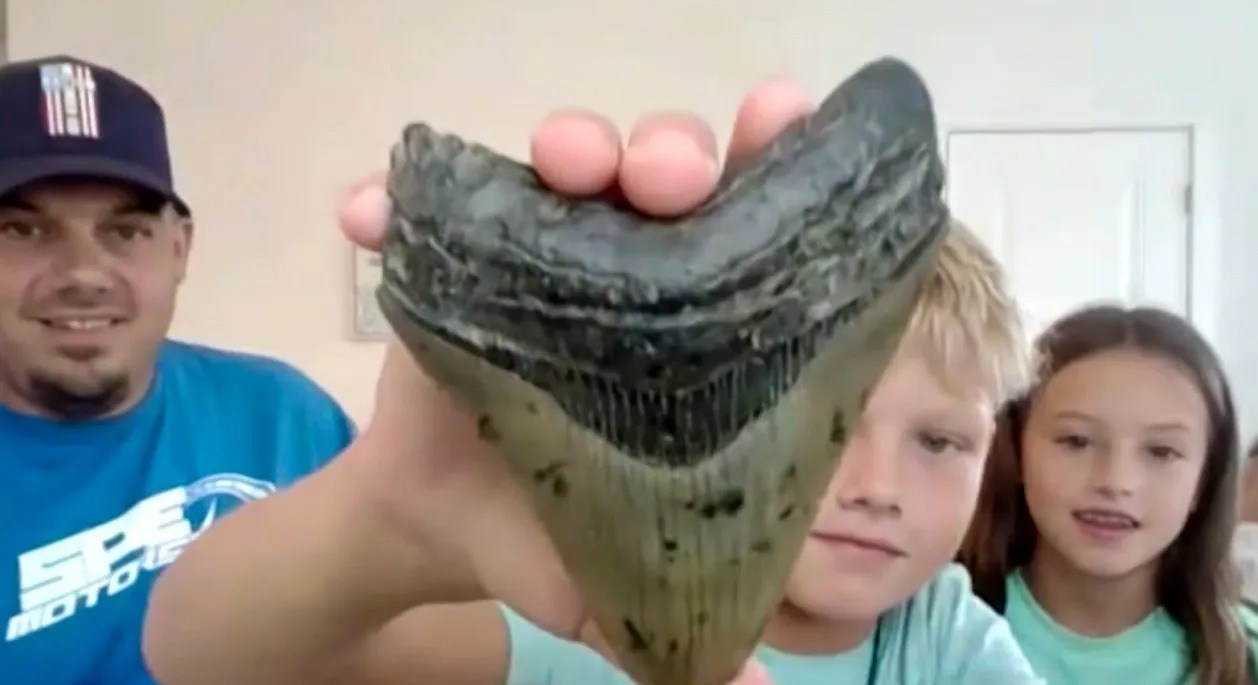
A YOUNG boy has discovered a 3.6 million-year-old tooth from a prehistoric megalodon while on a walk with his dad. Michael Bowers, 42, was visiting Sea Isle City, New Jersey with his son Bo, 11, when they discovered the fossil, on August 11. The duo discovered a giant fossilised shark tooth Credit: Unknown Bowers and Bo with their discovery Credit: Unknown Bowers said he usually finds crazy things in the water but never expected to find a fossil, adding that his son “was speechless.” The father and son were walking along a jetty when they noticed the tooth in a narrow opening. Sign up for the Tech newsletter Thank you! Bo was able to pull the tooth out easily as Bowers’ hand couldn’t fit inside the opening, adding that his knees were “shaking”. The two took their discovery to the Cape May Whale Watch and Research Center, where they confirmed that the tooth was a fossilised megalodon shark tooth. The Bowers family with their Megalodon shark tooth Credit: Unknown Bo’s hand next to the shark tooth Credit: Unknown Bowers said: “It’s on my bucket list of stuff to find.” Melissa Laurino, the centre’s research director, said “It’s a once-in-a-lifetime beach find that the Bowers family will treasure for a lifetime.” Researchers believe that the tooth was dredged up during a project carried out in July by the US Army Corps of Engineers in Sea Isle City. Laurino added: “If the sand came from a few miles offshore, it is very possible the tooth came with it.” Most read in Tech Megalodon’s have been extinct for over 3.6 million years and were intimidating sharks that grew up to 60 feet long. According to experts, fossils of the prehistoric sea predator are rare in New Jersey. New Jersey State Museum curator Dana Ehert said that fewer than five megalodon teeth have been found in New Jersey as fossils of the prehistoric sea predator are extremely rare in the area. The museum’s collection includes teeth from the animal’s relatives because they’ve been found at the shore more often, he added. Megalodon fossils are often found at Maryland’s Calvert Cliffs, where million-year-old sediments contain remains of prehistoric animals. According to the Marylnad Department of Natural Resources, many sharks that lived millions of years ago inhabited areas that are now inland. Comment now
Boy, 11, finds tooth from 3.6MILLION-year-old megalodon – the largest shark to ever live – on beach walk with dad
Full Article
Original Source
Read the full article at Thesun →KhanList aggregates and links to publicly available news content. We do not host full articles from third-party sources. Always verify important information with original sources.