
I went to Rikers Island as part of the Columbia Public Psychiatry Fellowship. The purpose of the visit was to help psychiatrists training to work with people with serious mental illness and co-occurring substance use disorders understand the systems that shape their patients’ lives. The criminal legal system is a central part of that ecosystem.Temitope Ogundare, MD, MPHThe site visit solidified what I had already learned. People with serious mental illness are overrepresented in jails and prisons. Like jails across the United States, Rikers Island functions as a de facto psychiatric institution. Many people detained there have serious mental illness, substance use disorders, trauma, unstable housing, and chronic medical conditions. Their incarceration is often the downstream result of systemic failures.Many would not be in jail if the healthcare, housing, and social service systems were designed to provide what they need effectively and seamlessly. The US healthcare system is fragmented and difficult to navigate, even for people with resources and support. For people with serious mental illness, the gaps can become enormous and nearly impossible to cross, and they cycle through the legal system because the larger system was never designed with their needs in mind.When Jails Become Psychiatric InstitutionsThe paradox is familiar to many who care for this population: Patients receive more consistent psychiatric care while incarcerated than they do in the community. In the community, services can be difficult to find, enter, and remain connected to. Community programs are too often underfunded, understaffed, burdened by long wait lists, and inclined to screen out people with criminal histories. In jail, some may see a psychiatrist, restart medications, and be connected to substance use treatment. But this access occurs in an environment that is itself harmful.As I walked the gloomy halls of Rikers with my co-fellows, I expected to focus entirely on the people detained there. Patients whose lives I had come to understand more fully: people with serious mental illness who cycle between hospitals, shelters, streets, emergency departments, courtrooms, and jails. Yet my attention shifted.At the security checkpoint, correctional officers directed visitors and staff through metal detectors. One officer stood out. She carried out her duties with an upbeat manner that seemed strikingly ordinary in such an extraordinary place. She added “honey” to every request, as if she were working a checkout counter at Costco rather than inside one of the country’s most notorious jail complexes. Other officers walked through the metal detectors, carried trays of gear to a nearby table, changed into their equipment, scanned their IDs, and clocked in.I began to wonder about them: Who were they outside these walls?What had drawn them to this work?What did it mean to them to spend countless hours in a place organized around deprivation, danger, hypervigilance, and control?I wondered about the effect of working in a place where the conditions are abysmal, where the worst of humanity is visible less in the people detained there than in the way society has neglected them, left them in inhumane conditions, and stripped them of dignity.Clinicians are trained to consider social determinants of health, and where people work shapes their health. For correctional staff, the jail is an environment of chronic stress, marked by: Exposure to violenceSelf-harmSuicide attemptsUntreated psychosisIntoxicationWithdrawalInstitutional dysfunctionMoral injuryRikers made me think about work as an environment that can wound.Throughout the visit, I watched the officers. I looked at their eyes, posture, the way they walked, how they interacted with detained people, and how they interacted with one another. After a few hours inside, I could not imagine remaining within those walls any longer. Yet, the people detained there remain for days, weeks, months, and sometimes years. The staff leave at the end of a shift, but I suspect many do not leave the jail behind. It follows them home.Working in such a place may slowly erode mental health. The staff may carry vicarious trauma and become accustomed to indignity because indignity is built into the architecture, the routines, the language, and the expectations of the place. A jail that dehumanizes the people detained within it may also damage the people asked to work there. Over time, exposure to dehumanizing conditions can reshape how they interact with incarcerated people and the world outside the jail.The criminal legal system is an often-overlooked ecosystem, one with a significant impact on population mental health. We need reforms that take a public health lens, are built on equity, and make restorative justice the end goal. These reforms would benefit not only incarcerated people but also the people who work in the system.The Front Door and the Back DoorDuring my fellowship year, one of the most useful frameworks I learned was to think about the front door and the back door.At the front door, people with serious mental illness need real alternatives to arrest and detention. This means crisis response systems that do not rely primarily on police, and offer: Robust jail diversion programsTimely psychiatric evaluationPretrial case managementCommunity treatment capable of accepting people with complex psychiatric histories.It also means providing: Supportive housingOutpatient careAssertive community treatmentSubstance use treatmentPeer supportBenefits navigationCompetency restoration also deserves attention. Too many people with serious mental illness wait in jail while they await restoration services. Jail is a clinically inappropriate place for people whose psychiatric symptoms are severe enough to impair their ability to participate in their own defense. Timely evaluation and restoration services can reduce unnecessary incarceration and prevent further deterioration.At the back door, release from jail should be treated as a high-risk clinical transition. People leaving custody need medications in hand, insurance coverage, transportation, housing support, overdose prevention, and warm handoffs to community providers. Forensic assertive community treatment teams, intensive case management, supportive housing, and supported employment can help prevent recidivism. These interventions exist and are evidence-based, but they are not the standard of care, and remain geographically limited, underfunded, understaffed, and unavailable to the people most likely to benefit from them.Improving Mental Health on Both Sides of the BarsA comprehensive public health approach must also include the mental health of correctional staff. Improving staffing ratios; reducing overcrowding; improving working conditions; screening for depression, anxiety, posttraumatic stress disorder, and substance use disorders; and ensuring confidential access to mental health services are necessary steps. Staff who are chronically overwhelmed, unsupported, and traumatized are less able to maintain safe and humane environments, which may lead to poor outcomes for incarcerated people, including more solitary confinement, self-harm, and suicide.The United States has long used jails to contain the consequences of untreated mental illness and addiction. We cannot provide meaningful care to people with serious mental illness while ignoring one of the systems most responsible for shaping their outcomes. If we want fewer people with serious mental illness in jail, we must build systems that meet their needs before arrest and sustain them after release. If we want safer and more humane jails, we must improve the conditions inside them for the people detained there and for the people who work there.Both the jailer and the prisoner are behind bars. Improving the conditions in these spaces has far-reaching consequences for everyone who passes through them — and for society.Temitope Ogundare, MD, MPH, is an attending psychiatrist at New York-Presbyterian/Columbia University Irving Medical Center and assistant professor of psychiatry at Columbia University Vagelos College of Physicians and Surgeons. He is a former American Psychiatric Association Foundation Public Psychiatry Fellow and Laughlin Fellow of the American College of Psychiatrists.
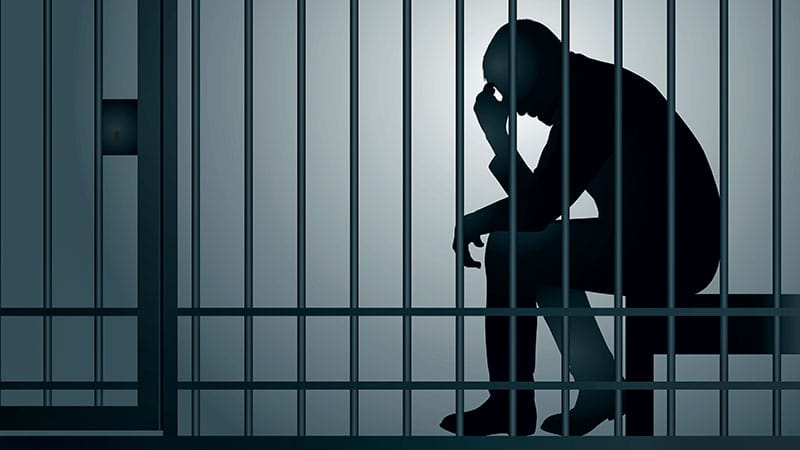
Both Sides of the Bars: Jail Reform as Mental Health Policy
Full Article
Original Source
Read the full article at Medscape →KhanList aggregates and links to publicly available news content. We do not host full articles from third-party sources. Always verify important information with original sources.