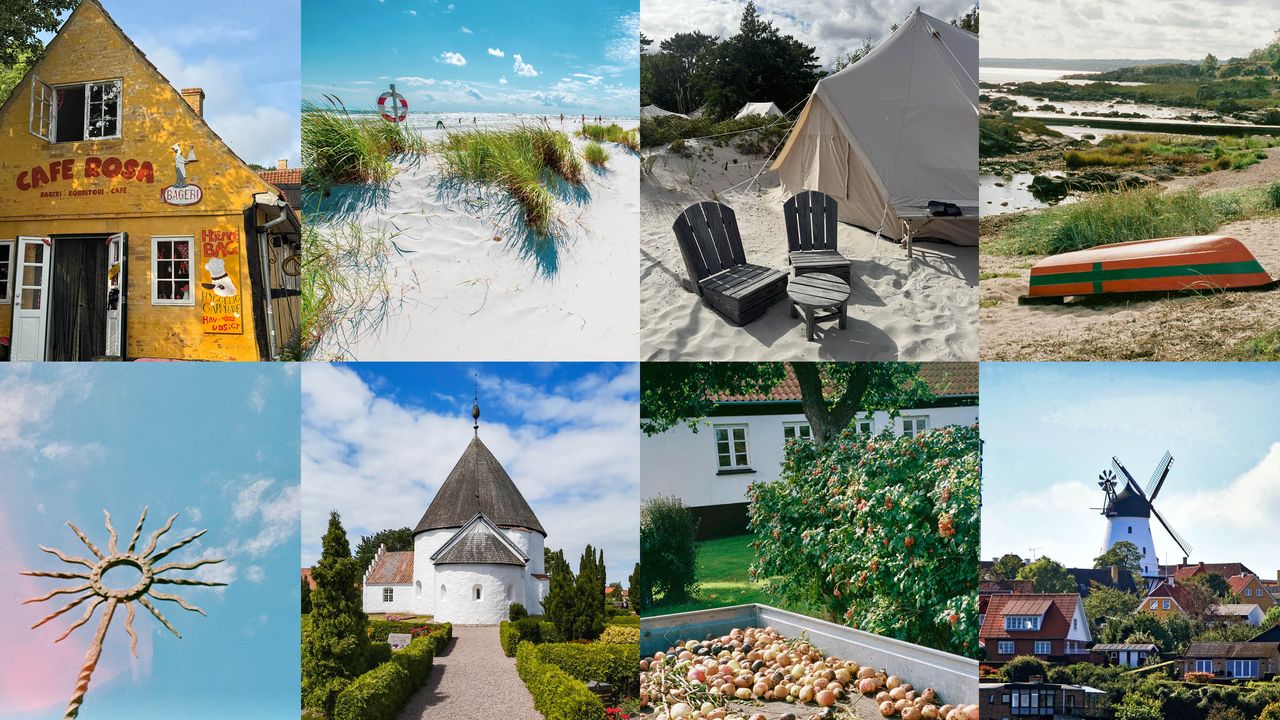
Every summer, my partner and I pack up our London life and move to Denmark. The southernmost Scandinavian country might not seem like an obvious place to spend the warmer months—its mercurial weather is a far cry from the reliably balmy climes of Marseille or Sorrento. But, as an art enthusiast, I can’t get enough of Denmark's creative spirit, and nowhere is that spirit more apparent than Bornholm.Affectionately known as Sunshine Island thanks to a unique microclimate that grants it more rays than mainland Denmark, this rugged Baltic outcrop has been a vacation hot spot for around 200 years. I’ve been coming for three, gradually falling in love with the island and learning how this once-isolated rock became one of Europe's top design destinations.“As an art enthusiast, I can’t get enough of Denmark's creative spirit, and nowhere is that more apparent than Bornholm.” Stephanie GavanThough officially Danish, Bornholm floats midway between Sweden, Germany, and Poland. Historically, the island was a world unto itself, inhabited only by a few hardened farming families, fishermen, and a handful of self-taught clockmakers. That changed in the 19th century when local deposits of clay and kaolin birthed a booming ceramics industry while painters like Olaf Rude and members of the Bornholm School were drawn by the island’s granite cliffs, dramatic coastlines, and distinctive, crystalline light. After the Second World War, regular ferries turned the island into a summer favorite for Scandinavian vacationers, too, but Bornholm remained a sanctuary for artists—a status cemented when the Royal Danish Academy established its ceramics and glass school in Nexø, paving the way for a wave of galleries, showrooms, and workshops in the years since.“Today, several elements reinforce one another,” explains Dorthea Funder Kaas, coordinator at the Bornholm Centre for Crafts. “The Royal Danish Academy’s program, the Arts & Crafts Association Bornholm, a number of committed cultural institutions and the business sector’s recognition of craft as one of Bornholm’s strengths. The island has also developed an increasingly international environment, as students and makers arrive from all over the world.” In 2017, this strength was honored by the World Crafts Council, a UNESCO-affiliated organization that designated Bornholm as Europe’s first World Craft Region. “It was an important international accolade,” Kaas adds, “but it also confirmed something that had been built over a very long period.”“There is a generous, collaborative spirit that draws makers here.” Stephanie GavanThese developments have contributed to a noticeable shift in the island's tourism, drawing global design aficionados and Copenhagen’s urban creative class—the matcha-sipping Københavner-segmentet—to its shores. The turning point can be traced back to 2007, when childhood friends and Bornholm natives Nicolai Nørregaard and Rasmus Kofoed opened Kadeau on the island’s southern coast. Now celebrated as a pioneer of New Nordic cuisine, the restaurant's runaway success captured the imagination of mainland creatives and their European counterparts, directly feeding into the island's crafts scene, with local makers like Oh Oak and Baltic Sea Glass creating minimalist tableware for some of the island's top eateries.Today, visitors can experience this creative ecosystem firsthand. In Svaneke, Pernille Bülow’s open glass-blowing workshop is a fascinating spectacle as she shapes and pulls molten glass in and out of the furnace. Art and design lovers can explore artist-led spaces like SOL Nexø or Galleri Sonja, shop sustainable homewares at Matter or pick up one-of-a-kind creations like those at Container Juvelen. This year, I enjoyed revisiting some old favorites: Provianten wine bar and Cafe Rosa in Gudhjem—two hyper-local spots teeming with character—Maude, a tiny speciality coffee shop in an old pump house and Postgade 21, a makers-run collective where I bought a fun trouser-skirt combo piece by Bornholm designer Jannie Bramsen. But I was equally excited to explore two new additions to the island’s scene: The Dunes, a new culinary beachside spot by Kadeau; and Hodda Bornholm, a recently opened folkhus bringing community and culture together under one roof.“I returned to surround myself with people living life on their own creative terms.” Stephanie Gavan“Pioneers of New Nordic cuisine captured the imagination of mainland creatives and their European counterparts.” Stephanie GavanThese latest additions attest not only to Bornholm's ongoing evolution, but to the generous, collaborative spirit that draws makers here in the first place. For Emilie Fruergaard, a ceramics student at the Royal Danish Academy, that atmosphere is key: “The community created between students on the island creates something really special.” Learning her trade on Bornholm means being constantly surrounded by new creative possibilities. “You're surrounded by talented, skilled makers—often frontrunners exploring new techniques. It feels incredibly inspiring.” It's a sentiment echoed by Dorthea Funder Kaas, who sees that same spirit of openness and camaraderie across the wider scene. “There’s a strong sense that strengthening the environment as a whole benefits everyone.”Despite this, many makers on the island still navigate modest, seasonal incomes. “A major focus now is creating business models that allow craftspeople to sustain year-round practices," Kaas notes, “and initiatives like the EU-funded Hephaestus project are leading that charge, establishing a living laboratory on Bornholm where traditional craftsmanship meets circular production, technology, and sustainable materials.”On my annual visit to Bornholm last summer, I got some bad news and spent hours sitting on the island’s craggy shores, skipping stones, and feeling comically sorry for myself as I took a series of frantic phone calls and gazed existentially out to sea. At the time, it felt like I was looking out over the edge of the world (I wasn’t), if not the end of it (nope, not that either). It’s funny to look back on now. My return this year wasn't just about making up for lost time; it was a chance to surround myself with people living life on their own creative terms. Among Bornholm’s many gifts, that may well be its greatest.Liebertsklippen berth below the Bornholm Art Museum Getty ImagesWhere to stay in BornholmDunes Beach CampBalka Beach’s white sand is so fine it was once used to fill hourglasses—making it a poetic backdrop for glamping. Open for a fleeting 10 weeks each summer, Dunes Beach Camp offers a slice of seaside paradise, complete with cozy bell tents kitted out in Tekla fabrics and Rabens Saloner robes. The on-site restaurant is helmed by the Kadeau team, delivering a simple, soulful alternative to their flagship fine dining.Melsted BadehotelBadehoteller—traditional Danish seaside hotels—have seen a recent surge in popularity thanks to their nostalgic coastal charm. Dating back to the 1930s, Melsted Badehotel is one such example. Perched directly above Melsted beach, it’s been lovingly restored with 21 airy rooms decorated in a minimalist Nordic style and a sea-gazing restaurant to boot.Jantzen’s HotelAs the oldest hotel in Gudhjem, Jantzen's Hotel is a historic spot has been welcoming guests since 1872, and what it may lack in high-tech amenities, it more than makes up for in charm. Expect genuinely warm hospitality, cozy rooms, and a romantic, bloom-filled garden made for slow, sunlit breakfasts.Where to eat in Bornholm“I wanted to learn how this once-isolated rock became one of Europe's top design destinations.” Stephanie GavanKadeau BornholmKadeau’s flagship beachside restaurant features an organic garden that leverages Bornholm’s unique microclimate, cultivating regional rarities like figs, mulberries, and wild sea buckthorn for its signature 14-course tasting menu.Mikkeller AarsdaleSet in the charming fishing village of Årsdale, Mikkeller Aarsdale makes a fine spot for a boozy lunch, with 15 craft beers on tap, heaped-up burgers, and postcard-worthy views over the town’s small but pretty beach.Hasle RøgeriBornholm’s white, multi-chimneyed smokehouses are a defining feature of its coastline. Of the hundred-plus that once operated across the island, just 10 functional smokehouses survive today. Hasle Røgeri remains a standout spot to sample Sol over Gudhjem, the island’s signature dish of smoked herring, chives, red onion, and a vibrant raw egg yolk served over buttered rugbrød.Bornholms Centre for Arts & Crafts Kasper Agergaard KristensenWhat to see in BornholmBornholm Centre for Arts & Craft at Grønbechs GårdHoused in a restored 1875 merchant's building in Hasle, the Bornholm Centre for Arts & Craft at Grønbechs Gård is a vibrant cultural platform. Showcasing local and international makers across 10-15 seasonal exhibitions, it serves as an experimental creative laboratory, hosting annual Royal Danish Academy degree shows and supporting local craftspeople.Bornholms KunstmuseumDesigned in the 1990s by Johan Fogh and Per Følner, Bornholms Kunstmuseum's light-filled architecture is reason enough to visit. But inside, you’ll discover a fascinating window into Bornholm’s artistic heritage, with works from the historic Bornholm School of painters to those of contemporary artists working on the island today.This article was originally published in Condé Nast Traveller UK.
Bornholm Is the Danish Island Set to Become the Sleeper Hit of the Summer
Full Article
Original Source
Read the full article at Cntraveler →KhanList aggregates and links to publicly available news content. We do not host full articles from third-party sources. Always verify important information with original sources.