
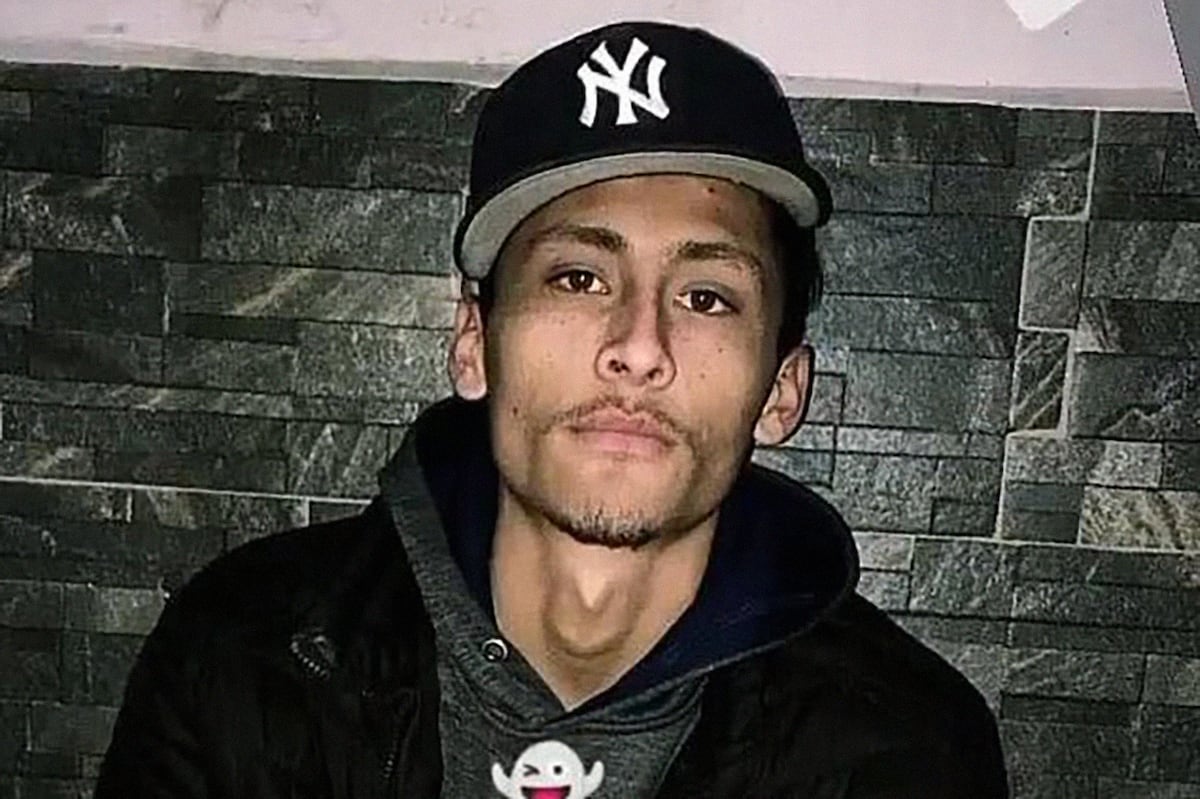
Seven months after Brian José Morales García was deported to Mexico, the Donald Trump administration has finally admitted that this young man of Mexican nationality was also a U.S. citizen, having been born in Denver, Colorado. “The plaintiff has dual nationality: United States and Mexico,” acknowledged U.S. Attorney Justin R. Simmons in the first line of a document filed Friday before a court in Austin, Texas, in which he requests the dismissal of a lawsuit by Morales for the damages caused by the deportation.Morales García, 25, was detained on April 3, 2026, by officials from the Texas Department of Public Safety (DPS) and a state sheriff’s office who stopped the car he was traveling in as a passenger. He told them he was American, confirmed his immigration lawyer, who had access to the videos from the cameras installed in the police cars. But he did not have the documents proving his citizenship on hand, so the police officers called the immigration officers.Since Trump took office in his second presidency, cooperation agreements between local and federal law enforcement have multiplied in the country, but especially in states that have been Republican strongholds, such as Texas and Florida.Morales explained to a Customs and Border Protection (CBP) immigration agent that he had entered the country with his U.S. birth certificate, according to court documents. The official asked for it, as well as his social security number, but could not provide them immediately. After reviewing Mexican government databases, the CBP official confirmed Morales García’s Mexican nationality and classified him as an “illegal immigrant.”“In response to his insistence that he was a U.S. citizen, the agents warned him that if he kept claiming it, he would face five years in prison for lying. He believed them and stopped insisting. He was coerced,” said Morales García’s immigration lawyer, Kate Lincoln-Goldfinch, in an interview with EL PAÍS.Morales recalls the detention, according to his lawyer, as “a traumatic experience”: he suffered claustrophobia, and some officers pushed him and forced him to undress. After his deportation, he says, he lost his job in the air conditioning department. As a result, his family was left without income.He was deported to Mexico four days later and remained there until August 30, 2026, when he was able to return to the United States. In that country, he lived with his relatives (his brother and grandmother) but did not find stable employment.The lawyer asserts that the fact that the U.S. government recognized her client’s U.S. citizenship is “the bare minimum.” But after seven months and a lawsuit, it is not enough to repair the harm they caused him, she says. “They should have believed him from the start. They should never have deported him.”Evidence for his returnFive months passed from Brian Morales’ deportation to his return home, to reunite with his newborn baby and his wife. Lincoln-Goldfinch said the judge in the case asked to present evidence to support his citizenship. Like many Americans, he did not have a passport, a document usually requested as a supplement to validate U.S. citizenship and which many cannot afford, since a new one costs $165.The lawyers then gathered additional records from the hospital where Morales was born in Denver, medical records, affidavits from relatives who knew Brian Morales was born in Colorado, as well as expert reports that could analyze hospital documents.“There came a time when we could tip the balance in our favor. There was enough evidence for the Government to agree to allow his return,” the lawyer recounts in the video call.Lincoln-Goldfinch denounces that CBP agents did not verify Morales’s information in U.S. databases: “They had access to the information they needed, but they didn’t take the time to look for it.” And she adds that Brian Morales offered on several occasions to provide the documentation, which was at his home in Austin: “They refused to allow it to be delivered to them.”EL PAÍS requested information from the Department of Homeland Security about the case and about the government’s request to dismiss this citizen’s lawsuit. They did not respond.End of the storyWhen the government recognized that Morales was a U.S. citizen, it also called for the dismissal of the lawsuit filed by his lawyer demanding accountability from officials and agencies that proceeded with the arrest and deportation of a U.S. citizen. Among other things, government officials argue immunity to enforce immigration laws. The judge in charge of the case has not responded to that request, but Lincoln-Goldfinch says “they must be held accountable (...) And essentially, they are asking that this be the end of the story.”“It was a very difficult and stressful time for him. He lived with the uncertainty of when he might return to the United States, while trying to make sure he had enough money to support his family,” says Lincoln-Goldfinch.The lawyer states that in recent months she has received calls from three more U.S. citizens who were deported or whose documents were confiscated at the border and were not allowed to re-enter the country. An investigation by the media outlet ProPublica has documented at least 519 cases of U.S. citizens wrongly detained by immigration agents between January 2025 and October 2026.Brian Morales, the lawyer says, remains nervous about the possibility of having new encounters with the police or immigration agents: “He is still processing the trauma of everything he went through.”Sign up for our weekly newsletter to get more English-language news coverage from EL PAÍS USA Edition
Born in Denver and deported despite being a US citizen: the case that forced the Trump administration to back down
Full Article
Original Source
Read the full article at English →KhanList aggregates and links to publicly available news content. We do not host full articles from third-party sources. Always verify important information with original sources.