
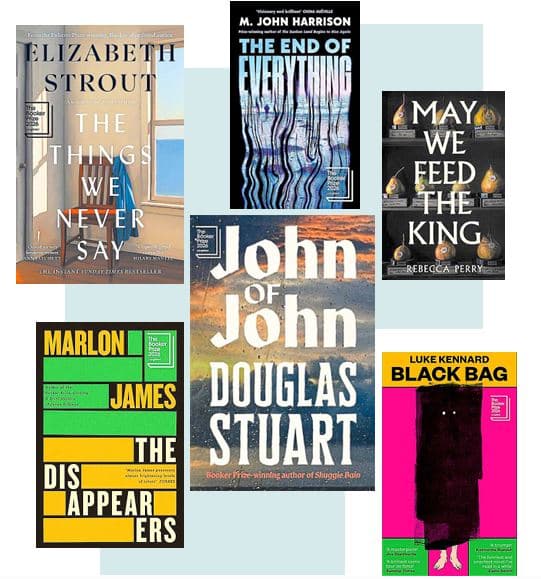
There’s one absolutely calamitous omission from this year’s Booker shortlist: Emma Cline’s Switzy. It’s the fantastically well-written story of a 70-year-old American businessman with advanced dementia flying to Switzerland to end his life in a euthanasia clinic, before he loses his marbles completely. David Hastings has wasted his life on work, not what matters most. He has let everybody down, including the estranged daughter he stops over in London to see. “Even before he’d actually lost his mind, he’d lost his mind”, he recognises too late. None of these novels has as much to say about the way we live, and die, now as Switzy Switzy, published a fortnight ago, has been called The Death of Ivan Ilyich of the Dignitas era. It makes scary, dismaying reading but it is quite extraordinarily accomplished: dropping it from contention at this stage is nothing less than idiotic. The Times columnist, Giles Coren, claiming to have read the entire long-list, swore in print last week that Cline simply must win. “I will eat Mary Beard, the chairman of the judges, if she doesn’t”, he promised. He can start right away. A public event, I hope.The shortlist with a hole in it has three serious contenders, as well as three amiable also-rans. Two former Booker laureates are back in contention with gay period pieces.Booker Prize 2026 shortlisted booksThe London StandardJohn of John by Douglas StuartJohn of John by Douglas Stuart, the author of 2020 winner Shuggie Bain, is a story of mutual misunderstanding between different generations of gay men in the island of Harris in the Outer Hebrides in the early 1990s, before phones and apps. It’s engaging and hugely sympathetic — but its tragic plot, worthy of Thomas Hardy, presumes the most preposterous failure of gaydar, even then.The Disappearers by Marlon JamesMurder and masculine mishapsThe Disappearers by Marlon James, the winner in 2015 for A Brief History of Seven Killings, is the 640-page story of a murderous homophobic attack on eight gay actors while they are rehearsing in Kingston, Jamaica, in 1988, and its long aftermath of sorrow and revenge. Reviewers in the States have compared its stature to William Faulkner and Toni Morrison (it’s the only shortlisted novel I have not yet read, I confess).The Things We Never Say by Elizabeth StroutThat leaves the only other possible winner as The Things We Never Say by Elizabeth Strout. Artie Dam, a much loved, liberal history teacher in his fifties on the coast of Massachusetts, faces his private life coming apart at the same time as the public realm is becoming unintelligible to him. “Why don’t people ever say anything real?” he wonders, reaching sad conclusions about that. Understated but unsparing, it’s a gripping read from a 70-year-old serial novelist. One reviewer hailed it “the first great work of fiction about Trump’s presidency”.Black Bag by Luke KennardThe remaining three are all slighter, however likeable. Luke Kennard’s Black Bag is a hoot. A failing London actor, in his late thirties, takes on a job to appear at an academic’s lectures completely encased in a leather bag (a real life psychological experiment in the 1960s). Discovering that being “a sentient sex toy” suits him, our shameful narrator has plenty to say about the mishaps of masculinity and ageing millennial creatives.May We Feed the King by Rebecca PerryRebecca Perry’s debut May We Feed the King is a charming, tidy invention, about a dresser of scene sets in historic buildings, commissioned to create a series of tableaux in a medieval palace, who finds herself consumed with imagining the troubled reign of a reluctant monarch. This new twist on the historical novel is deservedly selling well and will be a staple of National Trust shops for decades to come.The End of Everything by M John HarrisonThe End of Everything by SF veteran M John Harrison, 81, envisages the Kent coast, post-apocalypse. People scratch a living beachcombing, coping with hallucinatory alien entities, suddenly erupting into violence. It’s good to see that JG Ballard’s influence is still so vital, post-Brexit.None of these novels has as much to say about the way we live, and die, now as Switzy, though. What were these judges thinking? Over to you, Giles! David Sexton was the literary editor of the Evening Standard from 1997 until 2020
Booker Prize 2026: the 6 books shortlisted – and the one that's missing
Full Article
Original Source
Read the full article at Standard →KhanList aggregates and links to publicly available news content. We do not host full articles from third-party sources. Always verify important information with original sources.