
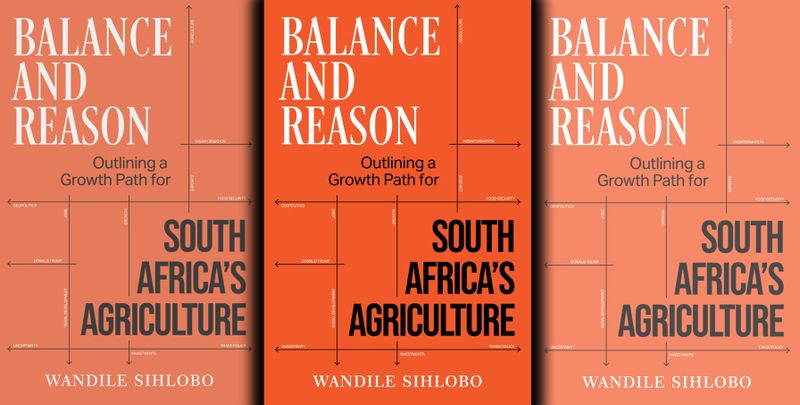
Wandile Sihlobo has established himself as the leading voice in South African agriculture, and in Balance and Reason: Outlining a Growth Path for South Africa’s Agriculture he plants sensible policy seeds to help this vital and promising sector grow. Pulling no punches, Sihlobo aims his hoe straight at the biggest weed that has sprouted on this fertile landscape: US President Donald Trump. “His return to office... brought about two troubling trends for South Africa’s agriculture,” Sihlobo writes. “First, Trump spread lies about the genocide of white farmers supposedly taking place in South Africa. Rather than repudiating these false claims, which risked damaging the reputation of both South Africa’s agriculture and the country more broadly, certain fringe groups within South Africa embraced and propagated them.” The second was the Liberation Day tariffs he unveiled in April 2025. Dealing with the first, Sihlobo notes that the portrayal of South African agriculture as under siege and Trump as its (white) saviour is wildly misleading, counterproductive and a threat to investment and confidence in the sector as a reliable supplier to global trading partners. “... the constant doom that some among us continue to proclaim, suggesting – to an uninformed international observer – that the sector is under threat... risks presenting the sector as an unsustainable supplier of agricultural produce in the future.”The reality is, of course, quite different from the twisted distortions of fascists uninterested in the truth. “... domestic agricultural output in 2023/2024 had more than doubled since 1994. There is widespread expansion in output across all major sub sectors: livestock, horticulture and field crops,” Sihlobo notes. ChallengesWeeding out Trump’s baseless lies does not detract from the fact that South African agriculture faces many challenges that constrain its potential. Scouring this terrain, Sihlobo makes a number of reasonable policy proposals. Turning to the second big challenge presented by the Trump administration, Sihlobo argues that the trade barriers it has thrown up in a chaotic fashion – and now South Africa’s Agoa expulsion looms – underscore the need for South Africa’s farming industry to diversify its global trade base. This is low-hanging fruit: despite Trump’s trade tantrums, South African agricultural exports grew 10% in 2025 to a record $15.1-billion.“... opening new export markets should be the primary focus of the South African agricultural sector, especially as the geopolitical environment globally is changing,” Sihlobo writes. “Even more important is that new-entrant farmers and land reform beneficiaries should have a deeper appreciation of the need to expand exports. The goal is not for every farmer to export, but for all farmers to champion exports.”Sensible suggestions on this front include reforming the Southern African Customs Union (Sacu) to remove the bottlenecks that impede South Africa’s ability to negotiate trade deals because of the need to get neighbouring countries on board.Rolling out title deeds to aspirant farmers to breathe life into the dead capital that is currently state-owned land is also crucial and would transform fallow fields into productive land. “One of the key areas where insufficient progress has been made is the release of government land with title deeds. This includes approximately 2.5 million hectares of land acquired through the Proactive Land Acquisition Strategy (Plas), which will now be released and could provide significant opportunities for the sector’s long-term growth,” Sihlobo notes in his typically diplomatic manner.“Insufficient progress” hardly begins to describe this deplorable state of affairs. For over three decades, South Africa’s efforts at land reform have been ham-fisted and shambolic in the less charitable view of this reviewer. South Africa’s leading voice in agriculture, Wandile Sihlobo. (Photo: Supplied) In the islands of rural poverty and underdevelopment that are the former homelands, reform in this area faces the formidable obstacle of the political power of the chiefs. But the 2.5 million hectares of land acquired through Plas faces no such obstacle when it comes to the rolling out of title deeds. It is simply bogged down in the swamp of government bureaucracy. “Streamlining land administration processes to register title deeds or rental contracts quicker and reform the process of subdividing land, so title deeds to farmworker houses and the donation of land to farmers are made possible,” is a key proposal Sihlobo makes. Title enables farmers to use land as collateral to access finance for investment. Without it, the prospects for commercial farming withers and dies in the field. It’s an empowering solution that is elegant in its simplicity. The lack of secure tenure and the vested interests of traditional leaders are among the constraints identified by Sihlobo that have created a “poverty trap” for many of South Africa’s rural communities. These also include market failures linked to remote locations and poor service delivery by local governments. To address these challenges, Sihlobo suggests simple remedies such as removing the barriers that prevent “... smaller farmers and entrepreneurs in deeply rural areas and traditional communities from supplying state institutions, including hospitals, prisons and school feeding programmes”.Matumeleng Jali rolls up row covers that maintain cool soil and deter pests before harvesting spinach at Costa farm in Klippoortje, Boksburg. (Photo: Felix Dlangamandla) This is a no-brainer, and the fact that such barriers exist is testimony to poor planning and in some cases no doubt corruption – a lot of food doesn’t even make it to schools to feed students because cadres have chowed the lunch money. There is a lot more ground covered here and Sihlobo remains an optimist, which is always refreshing. Crisply written and engaging, this is the prolific Sihlobo’s third book on South African agriculture. Reading it is time well spent for anyone with an interest in South Africa’s vibrant agricultural sector. DM
Book review: Sensible policy seeds sown by SA’s farming maestro
Full Article
Original Source
Read the full article at Dailymaverick →KhanList aggregates and links to publicly available news content. We do not host full articles from third-party sources. Always verify important information with original sources.