
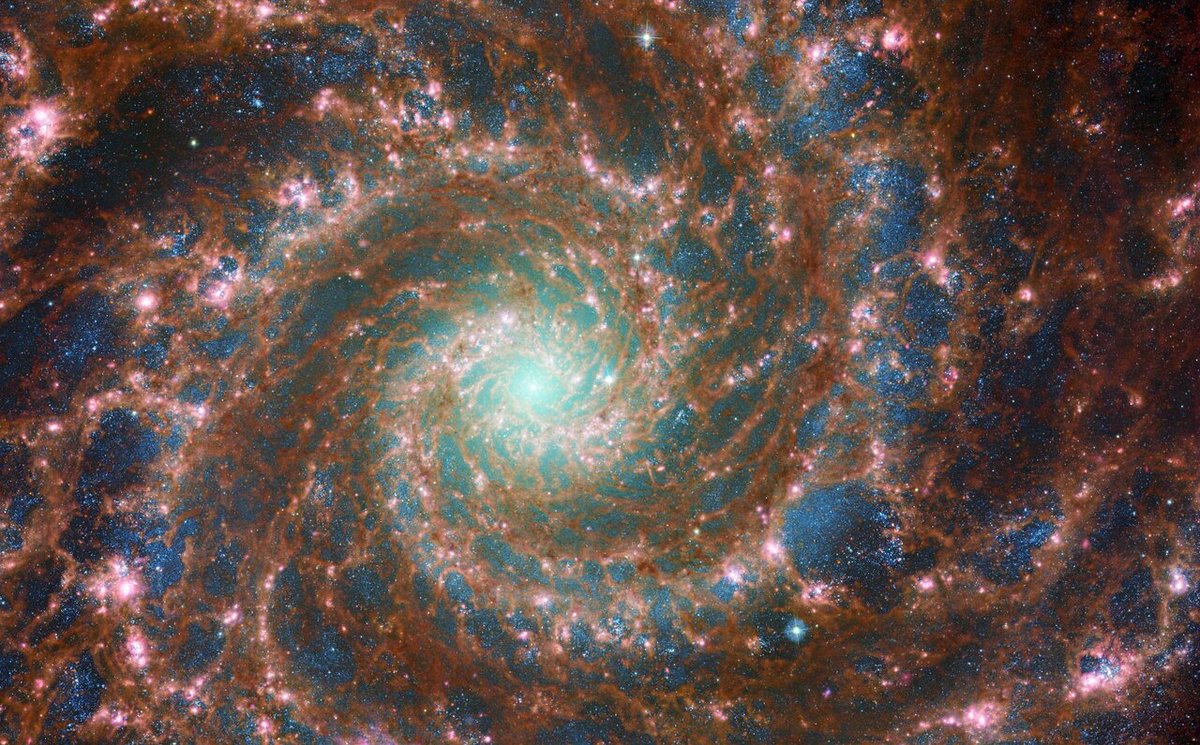
October 31, 20262 min read Add Us On GoogleAdd SciAmFrom ghosts to skeletons and even spiders, the cosmos is full of scary surprisesThe Phantom Galaxy. ESA/Webb, NASA & CSA, J. Lee and the PHANGS-JWST Team; ESA/Hubble & NASA, R. ChandarAs ghosts, skeletons and spiders roam the streets trick-or-treating on Halloween night, they’ll have cosmic company. Throughout outer space lie stars and galaxies that resemble creepy creatures, spooky skulls and galactic ghouls. And while there’s no candy in outer space (though there is sugar), these colorful images are a treat in and of themselves.Exposed Cranium Nebula.NASA, ESA, CSA, STScI, Image Processing: Joseph DePasquale (STScI) Skeletons and disembodied heads are a hallmark of Halloween, but this phantasmic apparition, called the exposed cranium nebula, lurks above us all year long. Its brainlike appearance stems from the different phases of star death. First, the dying star ejects a bunch of hydrogen, which forms the white outer bubble, then heavier material, which creates the orange “brain” within.On supporting science journalismIf you're enjoying this article, consider supporting our award-winning journalism by subscribing. By purchasing a subscription you are helping to ensure the future of impactful stories about the discoveries and ideas shaping our world today.IC 63 Ghost Nebula.NASA, ESA, and STScIThe name of this nebula sounds like the title of a scary story. Called “the Ghost of Cassiopea,” its gas and dust glows like a haunted spirit because of hydrogen interacting with ultraviolet radiation from a star in the constellation Cassiopeia the Queen. When the two mix, the gas glows red, and the blue haze comes from light reflecting off space dust.The Red Spider Nebula.ESA/Webb, NASA & CSA, J. H. Kastner (Rochester Institute of Technology)This nebula, called the Red Spider Nebula, is scuttling around space while its central star, glowing bright red in the middle, ejects bursts of gas and dust. These filaments, made up mostly of hydrogen, form the spider’s “legs.”The Cat’s Head Nebula.NASA, ESA, STScIWe all know the stories about black cats on Halloween, but what about space cats? The Cat’s Head Nebula is a collection of gas and young stars sitting within the Carina Nebula. Although the shape will someday dissipate, for now it resembles a cat turned to the right, with a glowing red eye that’s likely a young star.The Phantom Galaxy.ESA/Webb, NASA & CSA, J. Lee and the PHANGS-JWST Team; ESA/Hubble & NASA, R. ChandarThe aptly named Phantom galaxy lies 32 million light-years away in the Pisces constellation. It’s called that because it has low surface brightness and is difficult to spot—but with a head-on spiral view that resembles a portal to another dimension, it certainly lives up to its haunted name.Subscribe to Support Independent JournalismGreat science journalism requires human expertise, time, effort and creativity. And it costs money. That’s why I and the journalists here at Scientific American hope you’ll join our community.When you subscribe, you are supporting staff and freelance journalists who are passionate about telling science stories that are true, important and compelling. Our editors and reporters are often experts in their fields, which means they understand the nuances of big discoveries and can untangle the breakthroughs from the hype. With a subscription, you are also supporting rigorous fact-checking to ensure the words we publish are precise and accurate. And you’re supporting original illustrations, graphics and photos that bring you closer to an advanced laboratory, an ice sheet in Antarctica or a space mission in orbit. You’re helping us craft other types of high-quality journalism as well: Our newsletters are carefully written, edited and curated by staffers you have or will come to know and love. Our Science Quickly podcast is based on original reporting, collaboration with editors and scientists and exacting production.Subscriptions keep this engine running so we can continue to deliver thoughtful, rigorous and independent science journalism to you. In an era of viral misinformation, this work is crucial. If you value what we do, I hope you’ll consider joining us as a subscriber
Boo! See the universe’s spookiest sights in time for Halloween
Full Article
Original Source
Read the full article at Scientificamerican →KhanList aggregates and links to publicly available news content. We do not host full articles from third-party sources. Always verify important information with original sources.