
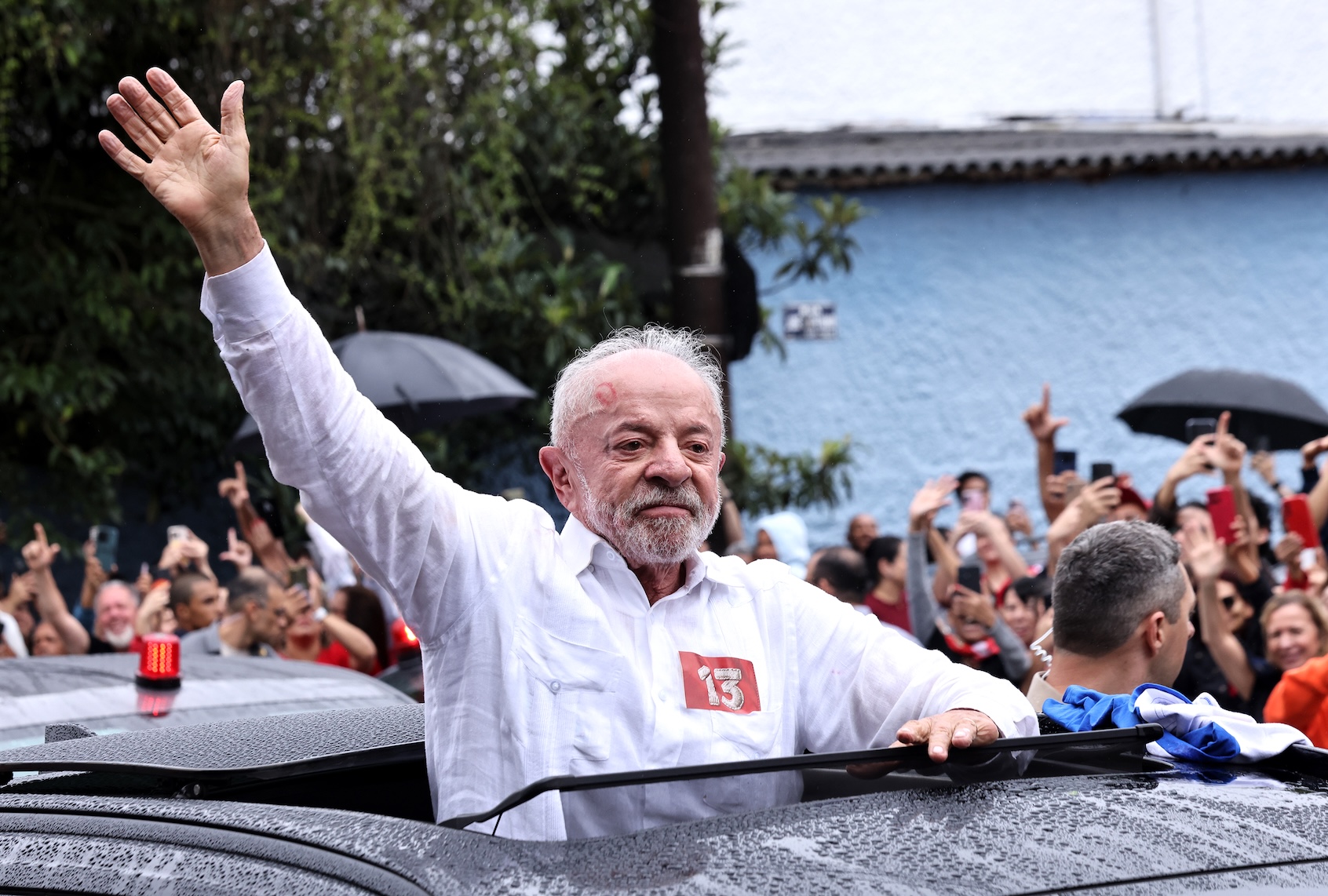
Brazil’s Congress is now packed with allies of the Bolsonaro family Published October 27, 2026 5:45AM (EDT) Luiz Inácio Lula Da Silva, incumbent president of Brazil and presidential candidate waves supporters after casting his vote during general election day on October 25, 2026 in Sao Paulo, Brazil. (Photo by Rodrigo Paiva/Getty Images) In what’s being described as an unlikely comeback, Brazilian President Luiz Inácio Lula da Silva won reelection on Oct. 25, defeating Sen. Flávio Bolsonaro in the second round of an election that promises to hold profound implications for Latin American politics. That breaks a streak of seven straight victories for right-wing parties and candidates in Central and South America over the last year and a half, and denies President Donald Trump a key ally in Brazil. From France to Russia, world leaders were quick to congratulate Lula, including some of those recently-elected right-wing presidents, such as Peruvian President Keiko Fujimori and Colombian President Abelardo de la Espriella. But neither Trump nor Argentina’s right-wing president, Javier Milei, have joined in. Trump has claimed, without evidence, that the Brazilian result “looked like another rigged election, frankly,” telling reporters before flying to a Mississippi rally, “Elections have to be indisputable and it looked very bad to me.” Bolsonaro, eldest son of imprisoned former president Jair Bolsonaro, initially said he intends to challenge the results, although there’s no precedent for overturning an election in Brazil. As of Monday, Lula had 51.79% of the vote while Flávio Bolsonaro had 48.21%, with nearly 97% of ballots counted. That marked a dramatic flip from the first round of voting on Oct. 4, when Bolsonaro led by nearly two full percentage points, 47% to 45%. This is the first time since Brazil returned to democratic elections in 1989 that a candidate who placed second in the first round went on to win the runoff. Most observers are saying that Lula’s campaign successfully doubled down on voter turnout, convincing many of the 33 million people who did not vote in the first round to show up for the runoff. Brazil’s back-and-forth presidential corruption Lula is a longtime labor activist and co-founder of the left-wing Workers’ Party, who ran losing campaigns for president three times before being elected in 2002 and reelected in 2006. After leaving office he was swept up in a 2014 anti-corruption probe, convicted of corruption and money laundering and in 2018 was sentenced to 12 years in prison. A year later, The Intercept published reports that the judge and the lead prosecutor in Lula’s case had allegedly conspired in an effort to prevent him from running again in 2018. (In Brazil, presidents may only serve two consecutive terms, but are free to run again after that.) Start your day with essential news from Salon. Sign up for our free morning newsletter, Crash Course. After winning his release from prison in 2019, Lula completed his first remarkable comeback by narrowly defeating conservative incumbent Jair Bolsonaro in 2022 presidential election. Claiming election fraud, Bolsonaro incited a mob assault against government buildings in Brasilia on Jan. 8, 2023, almost exactly two years after the Trump-inspired riots at the U.S. Capitol. In late 2025, it was Bolsonaro’s turn to be convicted of crimes relating to the attempted coup. He was sentenced to 27 years in prison, but for health reasons has been serving his sentence under house arrest. Trump said at the time, “That’s very much like they tried to do with me. But they didn’t get away with it at all.” A long fight ahead Like his imprisoned father, Flávio Bolsonaro refused to accept Lula’s win, telling reporters “It is impossible to recognize the election results, given the circumstances under which things unfolded.” He’s citing a decision late on Sunday by a Lula-appointed Supreme Court justice to extend voting by two hours over alleged public transport irregularities, which does not seem likely to have affected the result. Nonetheless, Bolsonaro initially sought for the result to be annulled. Since he trails Lula by about 4 million votes in the official count, most observers said he was unlikely to succeed. Although losing sides have often complained about Brazil’s elections, the country’s electoral system is widely considered fair and transparent. Late Monday, after it appeared that Trump wasn’t going to help him, Bolsonaro effectively conceded. He is also now under investigation for an alleged money laundering scheme and authorities have seized his passport. Lula’s win isn’t just encouraging for the Latin American left. It’s arguably also a victory for democracy and environmental causes, as the rate of deforestation in the Amazon rainforest has fallen by 71% during his presidency. Greenpeace Brazil said the election “is a win for democracy and maintains the commitment to protecting the Amazon and fighting climate change.” Still, Lula now faces a difficult political landscape, as conservative voters in the general election’s first round have packed Brazil’s Congress with allies of the Bolsonaro family, pushing the Brazilian legislature further right. “Bolsonarism remains a major political force among conservative voters,” Bruno Ronchi, a political science researcher at the University of Rennes, told France 24. “Flávio Bolsonaro’s result was not exactly a humiliating defeat.” How Hegseth shattered the world Eisenhower made Midterm panic turns Trump’s GOP into “Lord of the Flies” Throughout Latin America, US backs autocrats in the name of liberty Related Topics ------------------------------------------ Related Articles
Bolsonaro concedes but Lula’s fight has just begun
Full Article
Original Source
Read the full article at Salon →KhanList aggregates and links to publicly available news content. We do not host full articles from third-party sources. Always verify important information with original sources.