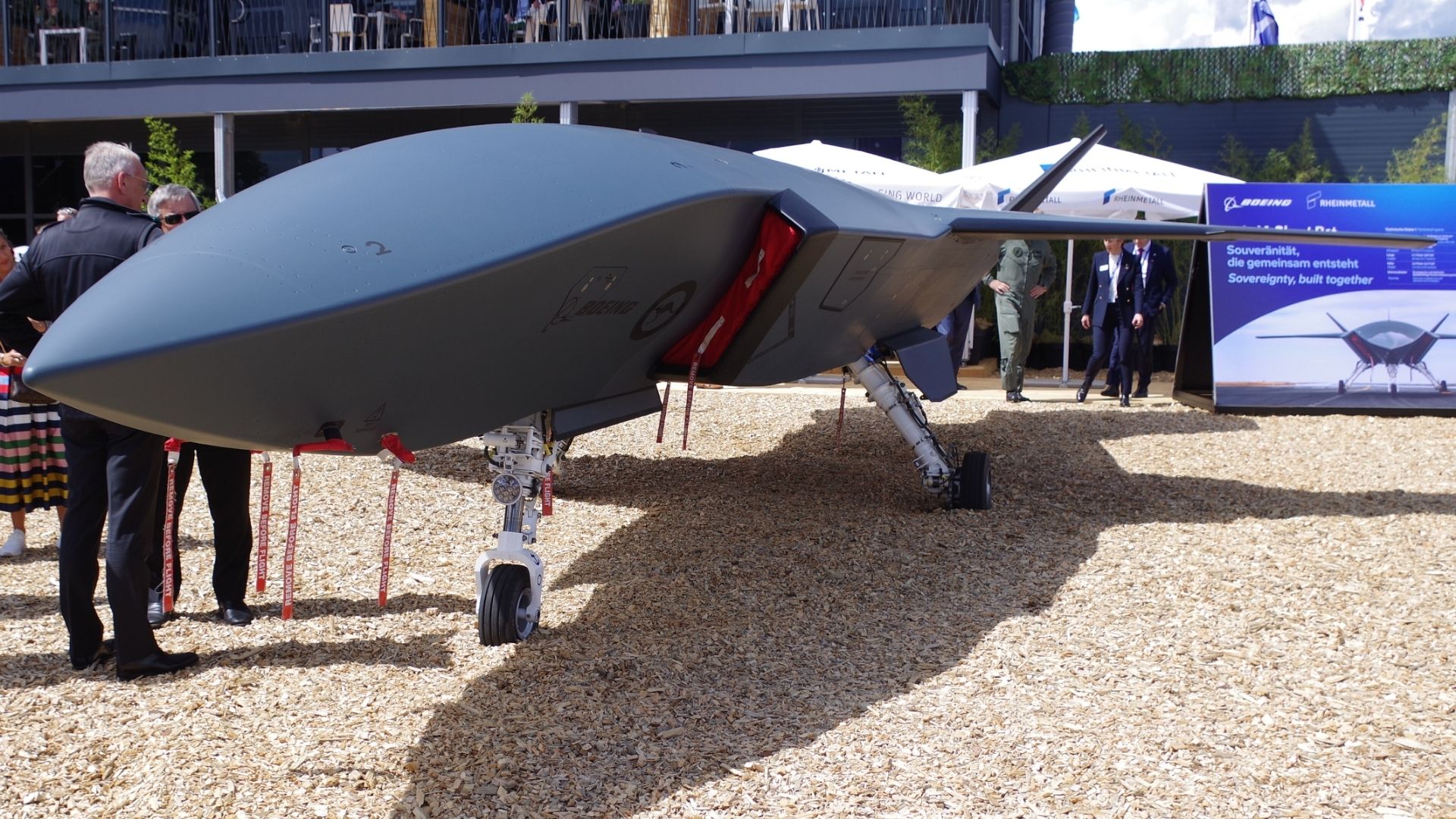
Boeing’s MQ-28 Ghost Bat completed multiple operational sorties during Valiant Shield 2026, testing how the uncrewed aircraft could deploy and fly from an austere Pacific location. From June 21 to July 1, the U.S. Air Force’s Experimental Operations Unit operated the aircraft at Rota in the Northern Mariana Islands, with support from the 21st Air Expeditionary Wing. The 11-day deployment evaluated the personnel, infrastructure and resources required to sustain future Collaborative Combat Aircraft away from established bases. Testing combat aircraft under realistic conditions The exercise moved the MQ-28 beyond a controlled test setting and placed it inside a large-force event under operationally relevant conditions. Teams assessed the power, fuel, communications and security needed to keep the aircraft functioning remotely. “The EOU conducts rapid experimentation with CCA prototypes to provide direct warfighter feedback to CCA and mission-autonomy vendors,” said U.S. Air Force Maj. Daniel Pesich, EOU combat aircraft detachment officer in charge. “The unit is uniquely designed to take emerging technologies like the CCA and place them into operationally relevant environments much earlier than traditional acquisition programs,” he added. The EOU studied both the deployment and sustainment requirements associated with Collaborative Combat Aircraft. According to the Air Force, lessons from activities that worked, as well as those that did not, will help shape how CCA are developed and employed. “This is the first of many large force exercises the EOU will participate in with the CCA. We will build from this event with the intent of quickly integrating with the force more each time,” said Pesich. Support network enables MQ-28 sorties The 21st Air Expeditionary Wing established the support network required for the flights. Its personnel handled power production, communications and force protection, creating the foundation upon which the aircraft and its operators depended. “The ability of our team to work in the background is the foundation necessary for MQ-28 operations,” said U.S. Air Force Lt. Col. Nathaniel White, 21st CABS commander. “Without power the ground control unit wouldn’t be functional, without fuel the power wouldn’t be supplied, and without communications we wouldn’t be able to provide the MQ-28 operators the necessary capabilities to plan,” he continued. The wing supported decentralized activity across four islands in the Guam cluster. Its responsibilities included managing airfields, refueling and defueling aircraft, moving logistics and protecting assets. Lessons for future US collaborative aircraft The sorties showed how the Ghost Bat could be incorporated into expeditionary operations under the Air Force’s Agile Combat Employment concept. That approach is designed to distribute forces and reduce reliance on a small number of permanent operating locations. The deployment also gave warfighters an opportunity to provide direct feedback to mission-autonomy developers. Such observations could influence the technologies, support systems and operational concepts adopted by future U.S. collaborative aircraft programs. For the EOU, Valiant Shield marked an early step rather than a final demonstration. Large-force exercises are expected to increase the MQ-28’s integration with other elements of the force while exposing the aircraft to more demanding scenarios.Recommended ArticlesGet the latest in engineering, tech, space & science - delivered daily to your inbox.Atharva is a full-time content writer with a post-graduate degree in media & amp; entertainment and a graduate degree in electronics & telecommunications. He has written in the sports and technology domains respectively. In his leisure time, Atharva loves learning about digital marketing and watching soccer matches. His main goal behind joining Interesting Engineering is to learn more about how the recent technological advancements are helping human beings on both societal and individual levels in their daily lives.
Boeing’s Ghost Bat drone flies multiple sorties to show deployment readiness
Full Article
Original Source
Read the full article at Interestingengineering →KhanList aggregates and links to publicly available news content. We do not host full articles from third-party sources. Always verify important information with original sources.