
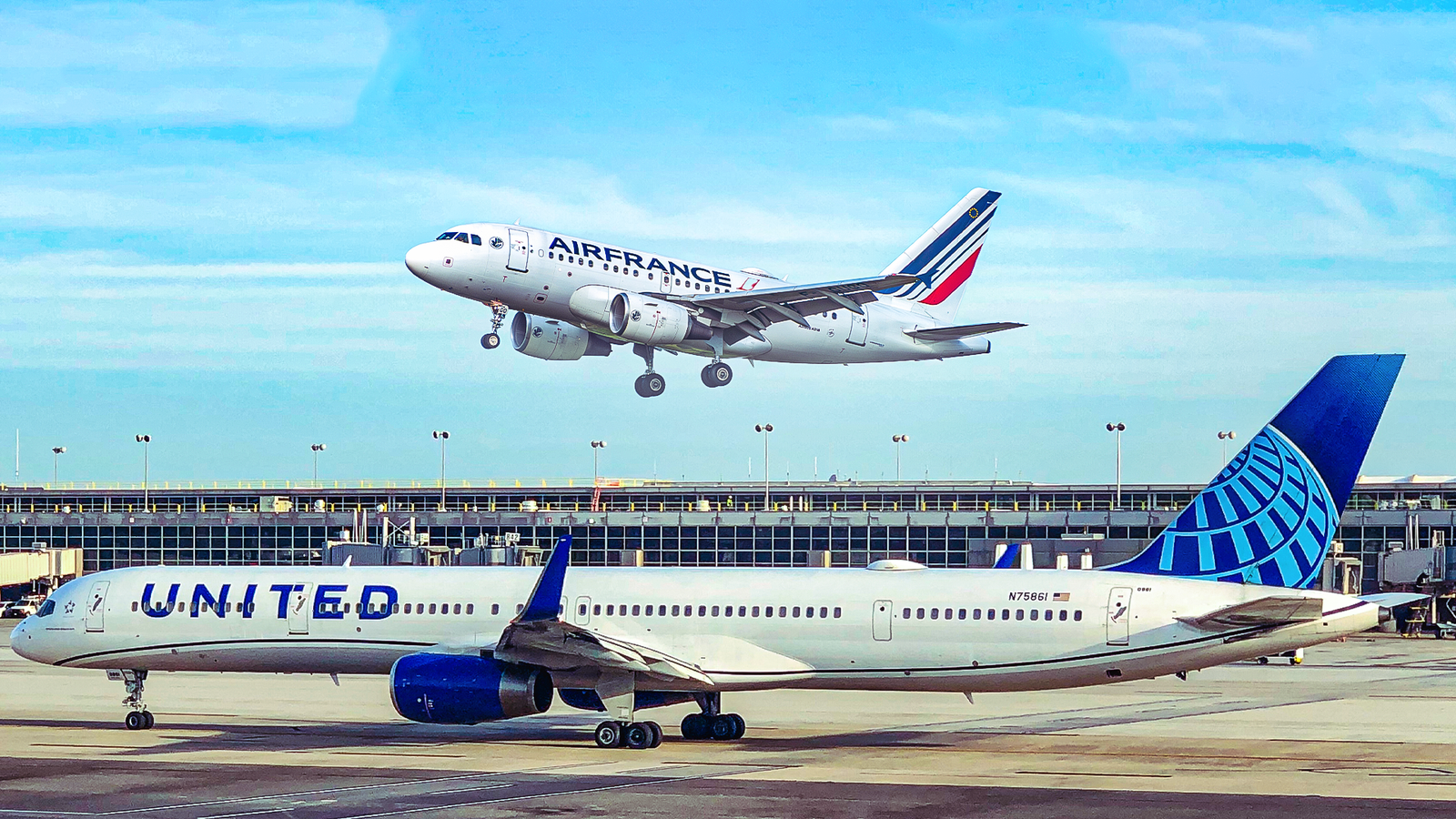
Published Sep 17, 2026, 7:00 AM EDT Airline and Airport Management Graduate, Student Commercial Pilot and Commercial Aviation Writer. Based in London & Nagoya Plenty of modular jet families exist today, designed to allow airlines to right-size their fleet, though the economic sweet spot almost always lands directly with the middle variant. Airline order books routinely cluster around baseline narrowbodies and medium widebodies that strike a precise balance between payload, range, and operating empty weight. Even still, aircraft builders repeatedly test the limits of these platforms by engineering extreme fuselage stretches and heavy shrinks. Today, the commercial aviation landscape is a striking case study in this economic dynamic. Only three scheduled passenger airlines in the world still fly three of the rarest production jets built by Boeing and Airbus: the Boeing 757-300, the Boeing 767-400ER, and the Airbus A318. Together, these three models account for just 173 airframes ever delivered across their entire production runs. This article shines the spotlight on these overlooked members of iconic families, looking at exactly why these never ended up becoming the global leaders they could have been. Boeing 757-300: The Flying Pencil's Extreme Stretch The Boeing 757-300 is somewhat of a manifestation of the outer boundary of single-aisle aircraft design. Stretched by 23 feet four inches (7.11 meters) over the standard Boeing 757-200, the airframe measures 178 feet seven inches (54.43 meters) from nose to tail, making it the longest single-aisle passenger jet ever produced. Boeing built just 55 examples between 1998 and 2004 for high-density trunk routes, fitting up to 295 seats by reinforcing the wings, landing gear, and center fuselage. Despite strong unit economics on dense corridors, the operator base for the Boeing 757-300 has shrunk rapidly. German leisure carrier Condor retired its final Boeing 757-300 airframes in late 2025, following earlier exits by airlines like Icelandair. This left just two commercial carriers operating the type in scheduled service worldwide: United Airlines and Delta Air Lines. Together, they keep 37 of the 55 produced airframes flying across high-yield domestic networks. United Airlines operates the world's largest active fleet with 21 Boeing 757-300 jets, while Delta Air Lines flies 16 airframes. Both airlines deploy the type from major hubs like Atlanta(ATL), Chicago O'Hare(ORD), and Denver(DEN) to high-volume leisure markets such as Orlando(MCO) and Las Vegas(LAS). While exceptionally low seat-mile costs make the jet highly profitable when full, its slow single-door boarding and gate length limits ultimately restricted its broader adoption. Boeing 767-400ER: A Tailored Transatlantic Stopgap Designed at the turn of the century, the Boeing 767-400ER was engineered to solve a niche fleet replacement problem for Delta Air Lines and Continental Airlines, which later merged into United Airlines. Stretched by 21 feet one inch (6.43 meters) beyond the Boeing 767-300ER, the airframe measures 201 feet four inches (61.37 meters) in length and features aerodynamic raked wingtips that expanded its wingspan to 170 feet four inches (51.92 meters). Boeing produced just 38 airframes in total, delivering 21 units to Delta Air Lines, 16 units to Continental Airlines, and one VIP transport airframe to the Kingdom of Bahrain. The Boeing 767-400ER carved out a lucrative role on premium transatlantic and long-haul domestic routes. United Airlines operates its 16 active frames primarily out of Newark Liberty International Airport(EWR) and Washington Dulles International Airport(IAD) on flights to Europe and Hawaii. Delta Air Lines uses its 21 aircraft across heavy transatlantic corridors linking New York JFK Airport and Atlanta to major European hubs. The variant provided launch carriers with updated Boeing 777-style flight deck displays and expanded premium cabin capacity at lower operating costs than larger widebodies. It saw success on premium routes, but the small production run sealed the long-term fate of the Boeing 767-400ER. Arriving just before the twin-aisle market shifted toward new composite designs like the Boeing 787, the custom stretch stayed as a stopgap. Both operators have outlined plans to phase out the type, with United Airlines expecting to retire its entire Boeing 767 fleet by 2030 as new long-range deliveries take over. Airbus A318: Carrying Heavy Weight As The Baby Bus At the opposite end of the spectrum sits the Airbus A318, the smallest member of the single-aisle Airbus A320 family. Measuring 103 feet two inches (31.45 meters) in length, the airframe was shortened by six feet three inches (1.90 meters) compared to the Airbus A319. Airbus built just 80 units of the type between 2001 and 2013, targeting regional routes with 100 to 120 seats, but the aircraft suffered because it retained the heavy wing structure and main landing gear of the larger Airbus A320. As a result, the operating economics of the Airbus A318 were affected very negatively, driving up fuel burn and landing fees per seat compared to purpose-built regional jets. Following the retirement of Romanian flag carrier TAROM's fleet, Air France became the world's sole remaining scheduled passenger operator of the type. The French carrier originally operated up to 18 examples on short-haul domestic and regional European sectors where steep-approach capabilities and short airfield performance were required. Air France has steadily phased out its Airbus A318 subfleet as deliveries of the more efficient Airbus A220-300 accelerate. The airline currently maintains just four active airframes operating out of Paris Charles De Gaulle Airport(CDG) to European destinations such as Madrid, Venice, and Bologna. Scheduled to be fully retired by early 2027, the departure of these final four airframes will mark the complete exit of the Airbus A318 from commercial passenger service. Why A Shrink Or Stretch Is Not Always Straightforward The commercial trajectories of the Boeing 757-300, Boeing 767-400ER, and Airbus A318 illustrate the underlying engineering balance required when shrinking or stretching a baseline airframe. When a manufacturer creates a shrink variant like the Airbus A318, shortening the fuselage removes passenger seats much faster than it eliminates structural weight. The resulting aircraft carries heavy wing spars, landing gear assemblies, and tail structures engineered for larger variants, creating a huge empty weight penalty for every seat on board. Conversely, extreme fuselage stretches encounter a different, but equally impactful set of physical and operational constraints. Adding cabin length increases capacity without needing a massive redesign of the wing or engines, but it alters takeoff and landing performance. The extreme length of the Boeing 757-300 increased the risk of tail strikes during rotation, requiring protective tail skid hardware and specialized pilot technique. Generally, these penalties stack up at the outer edges of a platform family, and so naturally, airline order books consistently favor middle-of-the-market variants. Models like the Airbus A320 and Boeing 787-9 provide an ideal mix of cabin volume, structural efficiency, and operating range. Modern manufacturers have largely abandoned radical shrinks, preferring dedicated ground-up designs like the Airbus A220 family that are purpose-built specifically for the 100 to 150 seat market. Where To Fly These Ultra-Rare Aircraft Today For passengers seeking a flight on the rare 757-300, booking options are still strictly limited to domestic routes within the United States. United Airlines schedules its 21 airframes primarily out of hubs like Denver International Airport and Chicago O'Hare International Airport to heavy leisure destinations like Orlando International Airport. Meanwhile, Delta Air Lines uses its 16 757-300 aircraft out of Hartsfield-Jackson Atlanta International Airport to high-volume leisure markets including Las Vegas, Orlando, and Tampa. Similarly, finding a ticket on the 767-400ER is limited to United States-based carriers. United Airlines flies its 16 airframes from Newark Liberty International Airport and Washington Dulles International Airport to transatlantic hubs like London Heathrow Airport, alongside high-demand domestic routes to Honolulu. Delta Air Lines schedules its 21 767-400ER jets across major transatlantic lanes connecting New York John F. Kennedy International Airport and Atlanta to European destinations such as London Heathrow and Paris Charles de Gaulle. Catching a flight on the Airbus A318 means having to travel through Europe before the variant exits commercial aviation entirely. Air France operates its final four remaining airframes exclusively out of Paris Charles de Gaulle Airport, deploying the jet on short-haul feeder routes to cities such as Madrid, Venice, and Bologna. With full retirement set for early 2027, aviation enthusiasts have a closing window of less than two years to log a segment on the smallest member of the original Airbus single-aisle family. A Unique Legacy Although the 757-300, 767-400ER, and A318 fit into the commercial niche category with only 173 combined deliveries, each aircraft fulfilled vital operational roles for its customers. They provided tailored capacity solutions during an era when airline fleet planning favored maximum commonality with existing flight deck type ratings and maintenance programs over ground-up aircraft development. For Delta Air Lines, United Airlines, and Air France, these airframes outlasted the expected end date and fulfilled the role that the manufacturers intended. The commercial evolution of these three rare types is equally responsible for shaping how airframe manufacturers approach future aircraft design. Rather than modifying existing narrowbodies or widebodies to fit niche market extremes, manufacturers now focus on purpose-built architectures or moderate stretches that preserve structural efficiency. With Delta Air Lines, United Airlines, and Air France working on their respective fleet modernization plans, the era of these niche production variants is drawing to its natural close. Within a few short years, the final examples of the 757-300, 767-400ER, and A318 will be retired from scheduled passenger service. Their departure is the end of a unique chapter in commercial aviation history, leaving behind a unique legacy that few other aircraft could ever have.
Boeing & Airbus Each Built A Passenger Jet That Only 3 Airlines Still Fly
Full Article
Original Source
Read the full article at Simpleflying →KhanList aggregates and links to publicly available news content. We do not host full articles from third-party sources. Always verify important information with original sources.