
June 1994, New York. The Republic of Ireland had just beaten Italy 1-0 in the nearby Giants Stadium, stirring hopes of a World Cup run that might top the quarter-final appearance at Italia ’90.Unfortunately for Clonmel-raised Dermot McDonogh, then 28, was in the Big Apple to follow the Boys in Green but missed out on the historic win over Italy because he was at a wedding. McDonogh would make it to Ireland’s drab goalless draw with Norway 10 days later in the same stadium and the limp exit from the tournament following the round-of-16 meeting with the Netherlands in Orlando in early July. While most of the Green Army headed home, McDonagh stayed on, handing out his CV. READ MORE“I’d met my wife at a St Patrick’s Day party in New York [months earlier],” recalls McDonogh in an interview in Dublin with The Irish Times. “So, I actually went to New York to be with her.” The University of Limerick business graduate, who had worked for a period in finance in London, ultimately landed an interview – and a job – at one of Wall Street’s most storied firms: Goldman Sachs. Rather than joining one of the firm’s trading floors or with a merger and acquisition (M&A) team, he found himself working in financial reporting and control. Unglamorous, perhaps, but it set McDonogh down a path to become one of the most senior Irish bankers in the US. For the past three and a half years he has been chief financial officer (CFO) of BNY, formerly Bank of New York Mellon, the world’s largest custodian bank – which manages the safekeeping of tens of trillions of dollars of assets held in investment funds. It also oversees the operational and administrative work around trillions more. BNY set up a base in Dublin in the 1990s along with the likes of State Street and Northern Trust, helping establish Ireland as one of the world’s main hubs for the location and administration of investment assets.More than €7 trillion of assets are now serviced in the State, with about €6 trillion of assets held in Irish-domiciled funds, in an industry that employs more than 20,000 people, according to industry body Irish Funds. BNY is now in the process of buying its Irish headquarters, a new eight-floor building on the south of the Liffey – called The Shipping Office – that it has leased from developer Pat Crean’s Marlet Property Group since last year. The deal is estimated by property sources to be valued at between €140 million and €165 million. The group previously had two locations in Dublin. The acquisition follows decisions last year by the company to close regional locations in Wexford, affecting 300 jobs, and Cork, which had 200 employees at the time of the announcement. The Cork wind-down is continuing into next year. While a number of staff are understood to have taken up – or plan to accept – offers to transfer to BNY in Dublin, others have left the company. McDonogh said the closures were a result of BNY, which traces its roots back to 1784, considering its global footprint in recent years. “These are tough decisions to make. And at an individual level, it can be difficult,” he says. “But scale matters and we want to be where our clients are. So, you weigh up the pros and cons, and you make the right decision for the firm, for the employees, and for clients overall.” He says the move to purchase the Dublin office is a clear sign that Ireland remains a key location for the group. BNY currently employs more than 1,000 people in the Republic. The building has space to accommodate more than 1,300 staff, aside from floorspace already let to Danske Bank. “We have a commitment to Ireland,” he says. “If Ireland Inc is doing the right thing, BNY in Ireland can grow. Fundamentally, it comes down to education and talent. [Ireland has] highly ranked universities running great courses in STEM [science, technology, engineering and maths], AI, and engineering. That makes people want to be here, because they can source the talent.” “Dublin has also become a lot more cosmopolitan in the last 30 years,” says McDonogh. “It’s quite interesting to see the diversity here. It’s something that we should feel very proud of.” Some 23 per cent of the State’s resident population was foreign-born as of early 2025, according to Eurostat data. BNY’s country head in Ireland is Paul Kilcullen, who joined from Citigroup six years ago. While IDA Ireland has highlighted housing, energy, grid capacity, water, transport and wider infrastructure as constraints on Ireland’s competitiveness for foreign direct investment, McDonagh says he isn’t overly concerned. “Infrastructure is a problem,” he says. “But Dublin is not unique and people need to figure it out. I wouldn’t say it is a thing that would cause us not to be here.” CLONMEL ROOTS McDonogh was in Dublin last week, attending meetings centred around the Eurofi Financial Forum for financial leaders. A quietly spoken man, he has managed to avoid acquiring the mid-Atlantic accent of many peers who have spent their career going between London and New York. Born in Letterkenny, Donegal, McDonogh was raised in Clonmel in Tipperary as the youngest of four children. His father was a dentist and his mother a nurse. After graduating from UL, he went to London and worked with Swiss Bank Corporation (a predecessor of UBS), before meeting his wife, Joan, a Galway native, in New York. After six years in the US with Goldman, where McDonogh largely worked on profit and loss accounts for traders of fixed-income (bond) and equity derivatives, he moved with the group to London. “We actually based ourselves in Dublin for family reasons then, and I commuted between Dublin and London,” says McDonogh. In London, he would progress to become the group’s chief operating officer for Europe, the Middle East and Africa (EMEA) and chief executive of London-based Goldman Sachs International Bank, a provider of wealth management and private banking services and home of the group’s Marcus online retail bank in the UK. After 28 years spent helping to keep Goldman Sachs’s financial machinery in order, McDonogh was lured in 2022 to join BNY, home to the plumbing of the financial system that allows assets in individuals’ investment and pension pots to be held, traded and accounted for around the world. Custody banks may not have the brand recognition of investment houses like BlackRock, Vanguard or Fidelity Investments. But they are the invisible infrastructure on which the global investment industry depends.The attractions of BNY and New York were many for McDonogh, he says. “I knew BNY well from my Goldman Sachs days. I’d never been a public-facing CFO before. I knew Robin [Vince], who was just about to become CEO, and got a lot of inspiration from his vision.” Vince, the fifth CEO since BNY acquired smaller rival Mellon Corporation, laid out his vision in his first letter to shareholders in February 2023, five months after taking charge. He said the oldest continuously operating bank in the US needed to: do more business with existing clients; rebuild margins by moving away from bespoke, costly deals with clients that can’t be scaled; and become more careful about how it spent money and find ways to work more efficiently. “While we’ve succeeded in many areas, we’ve also missed opportunities and fallen short of investors’ and our own expectations in others,” Vince concluded in the letter. The first three years of Vince and McDonogh working together saw BNY’s revenues increase by a fifth, while pretax profits and its return on tangible common equity – a key measure of profitability, – doubled.Assets under custody and administration have grown more than 40 per cent to $62.6 trillion from the end of 2022 to June of this year. Meanwhile, shares in BNY have more than tripled over the same period. Its market valuation now stands at more than $100 billion. The top executives have been handsomely rewarded. McDonogh’s total compensation last year amounted to $19 million, driven by stock-based bonuses, while Vince’s amounted to $48.9 million. Vince also granted company shares at the outset of his leadership to staff that didn’t previously have equity in the business. “Looking back, that was quite important,” says McDonogh. “People feel like they have skin in the game. Everybody should feel like it’s their company.” SAVINGS SCHEMEMcDonogh, as you might expect, is very much in favour of the Government’s plan to set up a tax-efficient savings and investment accounts scheme for Irish households – in line with a broader European Commission push for member states to encourage people to put some of the money lying idle in low-yielding deposit accounts to work. He has discussed the plan with Minister for Finance Simon Harris on a previous visit to Ireland. A launch of a scheme needs to be accompanied by a push to improve financial literacy, he says. “In America, you’re kind of taught from a very early age to plan your own finances,” he says, adding that Europe – which already has an older population than the US – needs to catch up. While fund administration and custody are financial-services areas where artificial intelligence (AI) could have a major impact, McDonogh says he sees it as a way for BNY to get more out of its workforce – or what he calls “creating capacity” and “giving people more interesting work” – than bots necessarily replacing people. “AI is here to stay. You can’t undo it. But I would be optimistic about it ... Thomas Edison had no idea what electricity was going to do for society,” he adds, referring to the inventor of the first commercially viable light bulb and power distribution system. “I think AI will create industries and jobs and other things that we haven’t even thought about today.”Vince, McDonogh’s boss, has a ringside seat as he joined the board of directors of both ChatGPT owner OpenAI’s commercial and non-profit arms in July. Meanwhile, many see the advent of tokenisation – where assets such as a share, bond or unit of a fund become individual digital tokens – having an even more profound effect on the asset management, custody and administration industries. European Central Bank executive board member Piero Cipollone put it as succinctly as anyone in a speech earlier this year. The shift over the past 50 years from paper-based to electronic messaging, trading and settlement has led to a much faster and more reliable system for executing and settling transactions.But, he noted, the underlying architecture has remained largely unchanged, with trading, clearing, custody and settlement operating through separate layers, each with its own infrastructure and intermediaries. Tokenisation could change that by creating a “single, shared source of truth”, reducing the need to reconcile multiple ledgers – potentially simplifying financial services and lowering costs.McDonogh says that BNY, as the world’s largest custodian bank, has put a lot of work into developing expertise in this area. “People come to us for advice and thought leadership,” he says. “Where better to write the next chapters of financial market infrastructure than at BNY?”“But this is not going to happen overnight, and will take several years, if not longer. I wouldn’t view it necessarily as a job disrupter.” For now, at least. Name: Dermot McDonoghPosition: Chief financial officer of BNYLives: New YorkFamily: Married to Joan with an adult sonHobbies: Swimming, tennis and Pilates.Something you might expect: His school and college jobs working on a soda bottle assembly line and serving customers at a US fast-food chain left a lasting impression on the importance of quality control and customer serviceSomething that might surprise: He swam 10 miles of New York’s Hudson river in 2023 alongside endurance swimmer and ocean advocate Lewis Pugh to highlight the critical role rivers play in a habitable planet
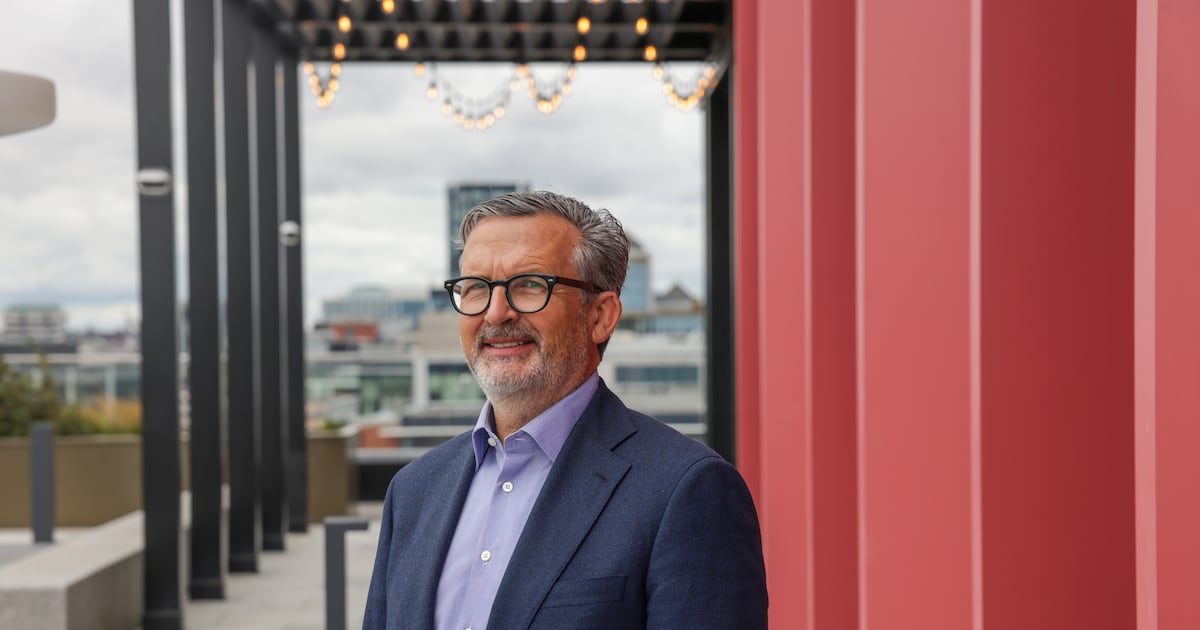
BNY CFO Dermot McDonogh: ‘If Ireland Inc is doing the right thing, BNY... can grow’
Full Article
Original Source
Read the full article at Irishtimes →KhanList aggregates and links to publicly available news content. We do not host full articles from third-party sources. Always verify important information with original sources.