
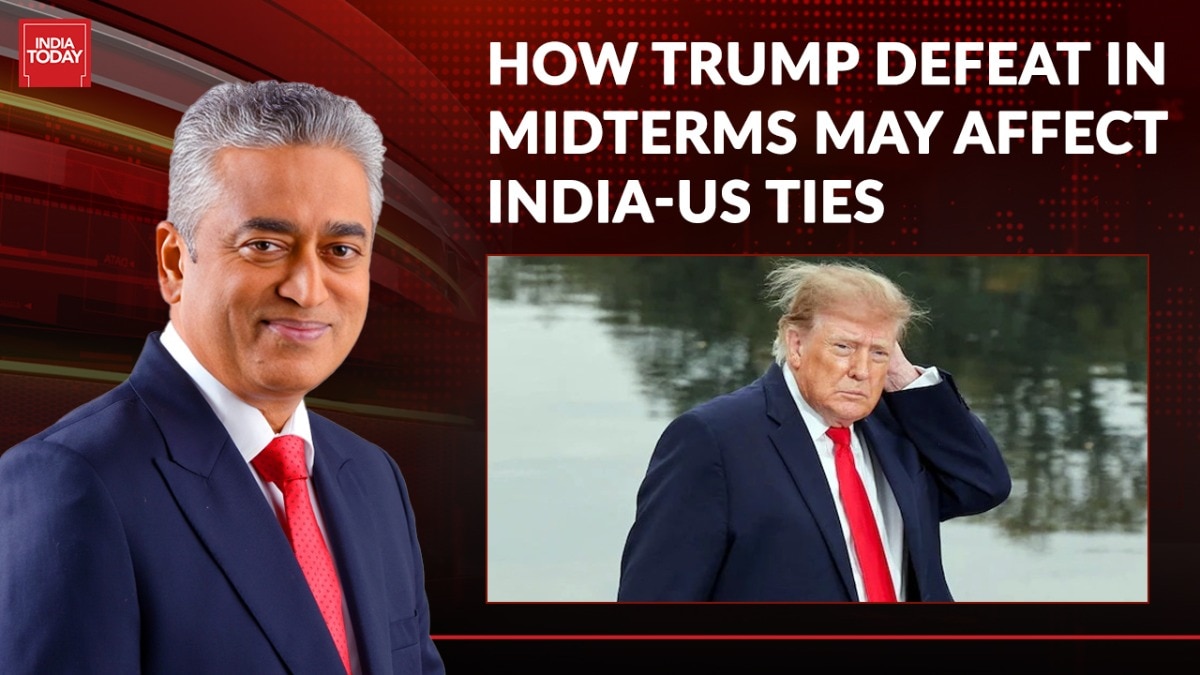
UPDATED: Nov 4, 2026 22:38 ISTThis special broadcast of The News Today, anchored by Rajdeep Sardesai, examines the United States midterm election results after Democrats secured majorities in both the House of Representatives and the Senate. The coverage details key Democratic victories, including Senate race wins in Texas, Kansas, and Michigan. Former United States National Security Advisor John Bolton and Congress Member of Parliament Dr. Shashi Tharoor analyze the drivers behind the electoral outcome, pointing to voter dissatisfaction with inflation, fuel prices, and military engagements in Iran. Bolton outlines the domestic constraints and potential congressional investigations confronting Donald Trump, while Tharoor discusses the broader foreign policy implications for India, West Asia, and South Asia. The programme assesses how economic pressures and foreign policy decisions influenced voter turnout, reshaping legislative power dynamics in Washington and establishing a divided government framework for upcoming domestic governance and international relations. Read MoreVIDEOS FROM OTHER SECTIONSLATEST VIDEOSUS Midterms: Democrats Flip Texas & Kansas, Make History As Trump Faces A New Political ChallengeDemocrats have secured major victories across the United States, breaching traditional Republican strongholds and flipping control of both the Senate and the House of Representatives. In Texas, James Talarico won a Senate seat for the Democrats for the first time since 1994, while Adam Hamilton captured a Kansas Senate seat, marking the party's first victory there since 1932. In Michigan, Abdul El-Sayed won to become the first Muslim elected to the US Senate. Key election issues cited include the rising cost of living and the West Asia war. In response, President Donald Trump shifted from initial defiance to acknowledging the outcome, expressing willingness to work with Democrats as his agenda faces new congressional resistance.US Midterm Results: Democrats Sweep House & Senate, Trump Loses Control Of Congress In Shock VerdictThe US midterm elections have delivered a dramatic verdict as the Democrats routed Donald Trump and his Republicans to take control of both the House of Representatives and the Senate. Key Republican strongholds including Texas witnessed significant upsets, with the Senate and gubernatorial seats flipping away from the GOP, alongside key Democratic gains in states like Kansas. Driven largely by voter pushback against administration policies concerning inflation, rising diesel costs, the economy, and the war in Iran, the scale of the victory has reshaped the American political landscape, potentially placing the Senate out of reach for Republicans until 2032 and setting up new battlegrounds for 2028.Agnipath Debate: 6-Year Tenure, Gorkha Recruitment & India's Military PreparednessOn India First, host Gaurav Sawant leads an in-depth discussion on proposed changes to the Agnipath recruitment scheme and its broader strategic ramifications. Lieutenant General Rakesh Sharma, former Adjutant General and former Ladakh Corps Commander, assesses the organizational and individual impacts of extending tenures up to six years, noting, 'It's a very bold and a strong step, and it has got great amount of merit.' Lieutenant General KJS Dhillon, former Director General of the Defence Intelligence Agency, explains how retaining top talent over six years creates a win-win system that brings technologically advanced new blood into the forces. Defence expert Sandeep Unnithan compares the proposed structure to historical seven-year service frameworks, examining operational pressures along the northern and western borders. The panel also underscores the urgency of reviving recruitment for Nepal domicile Gorkhas, highlighting the deep civilizational and military ties between India and Nepal.Agniveer Service Extended By 2 Years: Centre's New 6-Year Tenure Plan Sparks Political War Of WordsThe central government has approved a two-year service extension for Agniveers, revising the terms of the tour of duty scheme ahead of the exit of the inaugural 2022 batch. Chief of Defence Staff General N.S. Raja Subramani announced that while 25 per cent of Agniveers will be enrolled as regular soldiers after completing four years, the remaining 75 per cent will be offered a second engagement period of two years based on merit and recommendations from the Indian Armed Forces. Following this six-year tenure, all willing Agniveers who meet objective selection criteria will be enrolled into regular service. Military veterans and analysts discussed the move on the broadcast, assessing organisational advantages, personnel retention, and implications for border security. The panel also highlighted the potential opportunity this revised policy creates to resume recruitment of Nepal domicile Gorkhas into the Indian Army, addressing historic military ties and operational requirements.
Blue wave sinks Republicans, Trump flunks midterm test. India-US ties to feel impact?
Full Article
Original Source
Read the full article at Indiatoday →KhanList aggregates and links to publicly available news content. We do not host full articles from third-party sources. Always verify important information with original sources.