
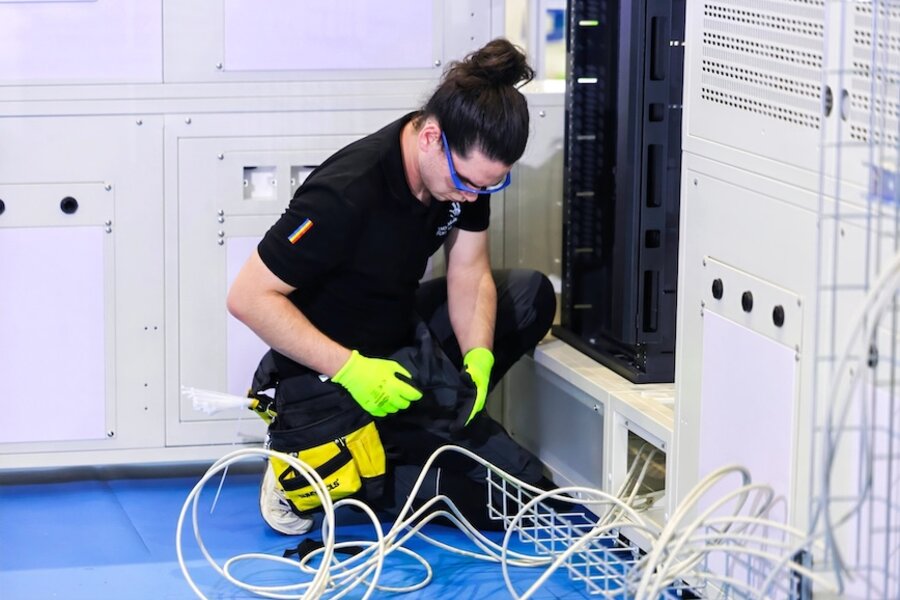
Is one of the world’s most pernicious social stigmas finally lifting? In late September, more than 1,400 young people from nearly 70 countries locked tools at the WorldSkills competition, testing their abilities across 64 crafts, from industrial robotics to culinary techniques. This Olympics-like contest, held in Shanghai this year, has grown in stature and scope over decades. And so, perhaps, has a favorable view of blue-collar work. A survey of the skilled tradespeople pitted against each other for four days found 71% believe the public image of technical and vocational careers has improved. Three-quarters (76%) of respondents say technical and vocational skills are increasingly important to the global economy.Yet just over half had been encouraged by parents or others toward traditional academic paths.In the United States, at least, such advice nowadays makes less sense. Or rather cents. A federal survey of wage data shows 47% of skilled-trades workers earn more than the median college graduate. A journeyman electrician earned $62,350 in 2024, while the average starting salary for a bachelor’s degree holder was $59,384. In fields such as construction and manufacturing, “the stigma’s being pulled back,” Laura Ullrich, director of economic research in North America at the Indeed Hiring Lab, told The Washington Post earlier this year.In too many countries, young people are still pushed to go to university even though many will drop out or the job market for their career choice is saturated. In the U.S., about 40% of degree holders hold jobs that do not require a college degree.In China – which has the world’s largest vocational education system, even though the number of annual university graduates has increased almost fourfold over two decades – the government has tried since 2022 to change attitudes toward careers in skilled trades. This year, for example, Beijing ordered that unemployed university graduates be offered vocational training. It also mandated a “skills improvement” plan for youth, targeted to train them for jobs in advanced manufacturing. The government’s challenge, stated the Shanghai Daily, “is to change the mindset that university diplomas are the only key to successful careers and ensure that vocational training leads to lasting, good-paying jobs where people can feel they make a difference.” That shift in thinking requires a society to better value all levels of skills, including hands-on work. Deepen your worldviewwith Monitor Highlights.Politics with respectGet political stories with respectful analysis.There‘s a world of new ideas in everyBooks newsletter.There‘s more to life, enrich yours withCulture & Learning weekly.Follow humanity‘s discoveries withScience & Nature stories in your inbox.Gain a spiritual perspectivefrom the stories in your inbox.Want to understand the deeper impact of critical events? Learn the Monitor‘s insight.Already a subscriber? Log in to hide ads. “Just as a skilled maker will anticipate a user’s needs, a really attentive user will be able to imagine the way something was made,” wrote Glenn Adamson in a 2018 book, “Fewer, Better Things.” A deeper appreciation of trade crafts, he added, will allow us to “better understand our fellow humans.” ALREADY A SUBSCRIBER? LoginReal news can be honest, hopeful, credible, constructive.The Christian Science Monitor was founded in 1908 to lift the standard of journalism and uplift humanity. We aim to “speak the truth in love.” Our goal is not to tell you what to think, but to give you the essential knowledge and understanding to come to your own intelligent conclusions. Join us in this mission by subscribing.
Blue skies for blue-collar work
Full Article
Original Source
Read the full article at Csmonitor →KhanList aggregates and links to publicly available news content. We do not host full articles from third-party sources. Always verify important information with original sources.