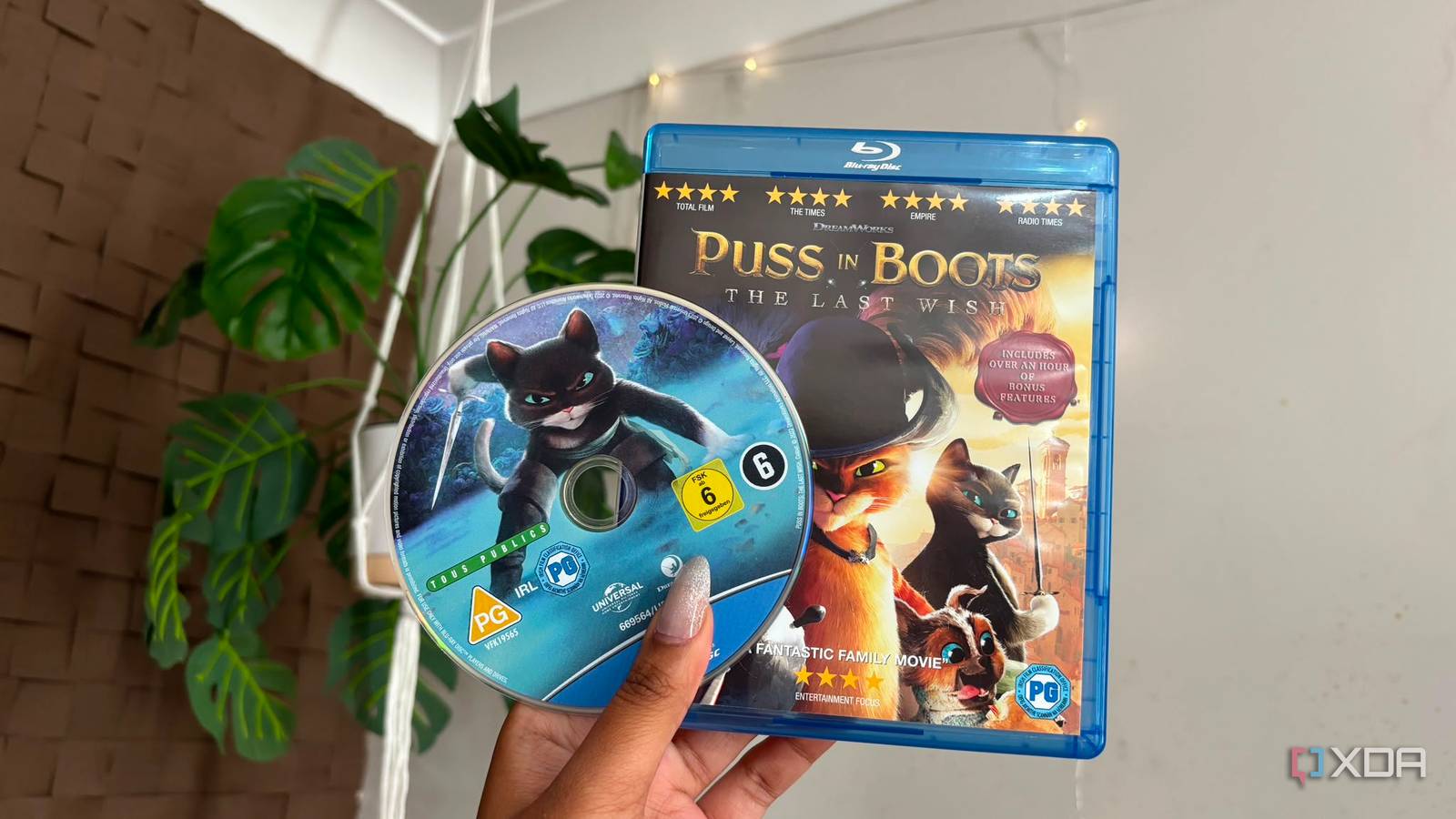
Published Jul 19, 2026, 11:30 AM EDT João has been covering the tech world for over 7 years, with a heavy focus on laptops and the Windows ecosystem. I also love all things tech and videogames, especially Nintendo, which he's always happy to talk about. Prior to joining XDA in 2021, he worked at Neowin: https://www.neowin.net/news/poster/jo%C3%A3o-carrasqueira/ As technology has evolved, the media landscape has shifted significantly as well. These days, streaming services dominate our lives, whether it's for music, TV shows, movies, and sometimes even games. While popular opinion would have you believe physical media is long past dead, that's not at all the case. Blu-rays and even DVDs still exist and have an audience — it's just not the one we used to think of. Streaming wins on convenience Easily accessible everywhere Streaming services started to hit the mainstream in the late 2000s and early 2010s, with Spotify dominating the early music streaming scene, while Netflix made an incredibly smooth transition from DVD rentals to online streaming. It's not often that you see a company do such a good job transitioning and shaping a new era of its medium. It's easy to see why streaming quickly took over the world, though. When internet speeds could keep up, using online streaming had huge benefits: there was no physical space taken up in your home, you could play content on almost any device in your house, and, in some cases, you could even be on multiple devices at the same time. Netflix was even on Nintendo's Wii and 3DS, alongside other consoles at the time. There was no way to play physical movies on those platforms, but streaming made everything possible. And as smartphones and tablets became ubiquitous, the benefits of streaming became increasingly apparent over time. Why buy a DVD or Blu-ray you can only consume on a handful of dedicated devices when you can stream content anywhere? Plus, these services offer a wide range of content to choose from at no additional cost, for a monthly fee that usually costs less than the price of a single movie. It was and still is a no-brainer for most people, even as the selection of shows on each streaming service has become more lackluster due to increasing competition for licensing rights. So who is watching Blu-rays? There's still an audience Just because streaming took over with the mainstream audience doesn't mean Blu-rays and DVDs were killed off outright, despite what some people might assume. Sure, you probably won't see stacks of DVDs at your local Best Buy or Walmart as you used to, but physical media like Blu-rays is still being sold. You just have to look at specialty stores or go online, where stock exists for pretty much everything. That's because the people buying Blu-rays aren't the ones who just want to consume as many movies and TV shows as possible or have them playing in the background. Physical media has become more aimed at enthusiasts and collectors, those who value a physical object not only because it's a piece of memorabilia related to a movie they love, but also because it ensures they will always have access to it without having to fork over cash every month. And while a Blu-ray will usually come in 4K resolution that works on any TV and with a high bitrate, streaming services often cut back on quality, especially on cheaper subscription tiers. Plus, physical releases often include all kinds of extra content you won't get just by streaming the movie or show. If you're a big fan of a product, the higher upfront cost can also be worth it in exchange for long-term or permanent access to it, as opposed to a monthly fee that gives you access to years of content you'll never watch. In most cases, physical media is even available well before movies land on streaming services. Let's take a recent movie like The Drama, for example. It hit theaters in April this year, and it was released on Blu-ray just a month later. But in the United States, it hasn't begun streaming yet. I don't have this bug specifically for movies, but I know this feeling all too well when it comes to video games. I have shelves full of Switch games, and I wouldn't care nearly as much about a streaming service for them. You can digitize your physical movies, too The best of both worlds If you want a physical copy of your favorite content but also love the convenience of digital formats and streaming, there's a solution. It's actually part of why physical movies can still be relevant. You can own a legal, physical copy of a movie, but make it accessible on all your devices. You can do this with self-hosted services such as Jellyfin or Plex, which use network-attached storage to serve your content within your home network. With some additional configuration, you can even make it accessible remotely while keeping it private. This does require some extra work, but it's a way of life for many, as it gives users control over their media library while retaining the benefits of modern services. I suspect the ability to do this is a big part of why physical media remains relevant today. Video games are a different beast Physical media is more fragile When it comes to movies and music, the transition to digital didn't mean the death of physical media. But in light of Sony's recent announcement that it will stop making discs for PlayStation console games in 2028, I can't help but think about the differences between these media. Blu-ray discs and CDs are a relatively open format that anyone can technically manufacture and sell. If Sony Pictures decided it would no longer release any of its movies in physical formats, it would only affect those specific movies. But with proprietary media formats like PlayStation discs, Sony is the sole supplier and manufacturer. It's not just that Sony won't be releasing its games physically anymore; no company making games for PlayStation consoles will be able to do it. And just as Sony has done, Microsoft and Nintendo could also pull physical media from shelves and force every video game developer to go all-digital. This not only puts an end to a hobby that many people enjoy — collecting physical copies of media they love — but it will effectively reduce competition, since digital prices no longer have to compete with retailer discounts. And while movies can easily be preserved in other ways, it can be very hard to preserve playable copies of games outside the platform they were designed for. This announcement by Sony is a grim reminder of the importance of physical media. It's easy to forget physical media still exists, but once it's gone, the impact will be noticeable. Physical media is important Whether it's the sense of ownership, the collectibility of a physical item, the higher quality, or the bonus content, there are a lot of reasons to love physical movies and TV shows, and the ability to digitize it means you can get a lot of the benefits of streaming without all the downsides. Physical media such as Blu-rays haven't gone away yet, and it still has a passionate fanbase that keeps buying them. That makes the recently announced discontinuation of physical discs for PlayStation games all the more heartbreaking, because that audience who loves collecting physical items simply won't be able to get them anymore. And unlike more open formats like Blu-ray, once those discs stop being made by Sony, they just won't be made anymore. I hope for a future where physical media remain alive and relevant, even if it's not the default anymore.
Blu-Rays didn't die, they just found a new audience
Full Article
📰 Original Source
Read full article at Xda-developers →KhanList aggregates and links to publicly available news content. We do not host full articles from third-party sources. Always verify important information with original sources.