
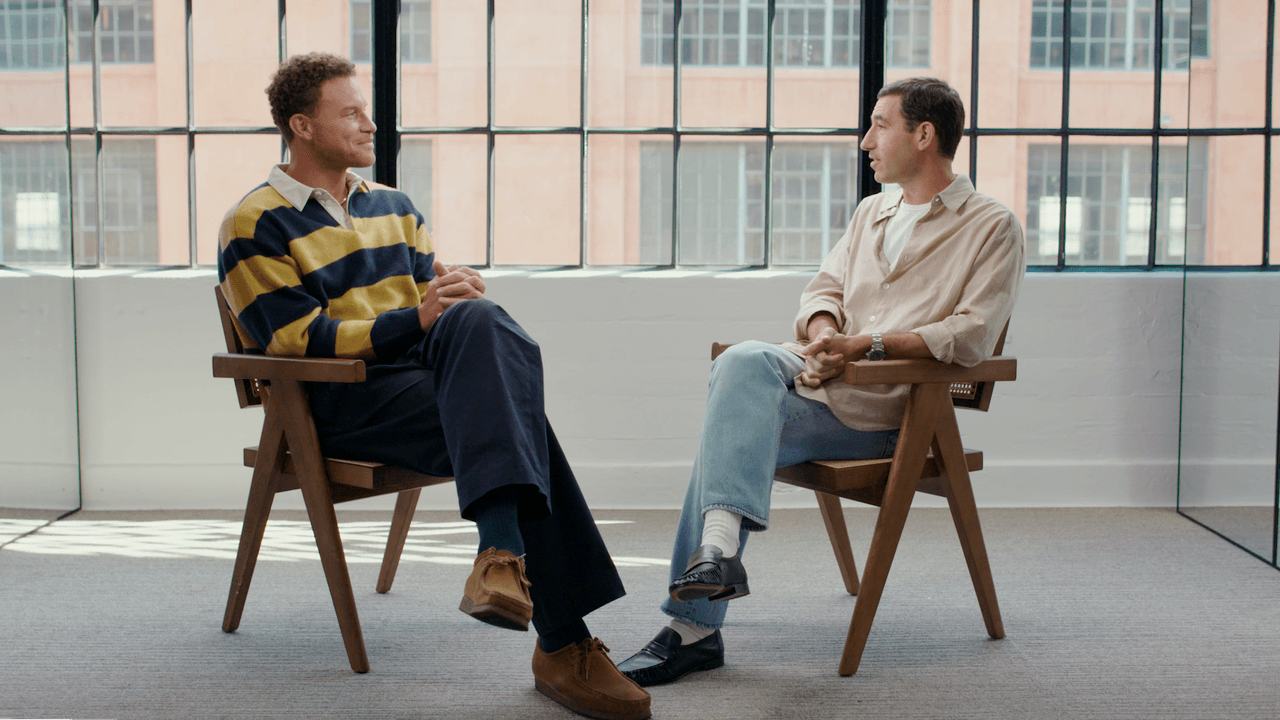
Twelve years ago, I was sitting in Blake Griffin’s house, listening to him tell me that under no circumstances would he stay around basketball after he retired. “Well, look who’s a liar,” he says now.Griffin is a former NBA All-Star who played for 14 years, many of them for the Clippers, before announcing his retirement in 2024. He now has his own show, The Stepback with Blake Griffin, and a weekly gig with NBA on Prime, as part of their studio show. “I always thought that there was a little bit too much negativity when it came to scrutinizing players,” Griffin says. “This is a job that 400-something guys have. It’s extremely hard. I don’t need to go on TV and I don’t need to tell everybody that the guy that went three for 17 sucks at basketball. He doesn’t.”On The Stepback, Griffin puts on a suit, sits behind a desk, and addresses a big, sports-related topic each week: the media, taxpayer-financed stadiums, the rocketing costs of youth sports, and so on. Like him, the show is unexpectedly funny, frequently insightful, and a good hang. In this conversation, he and I discuss the Clippers then and now, retiring at 34, and what it was like to have some rude journalist visit his house, all those years ago.The following conversation is lightly edited and condensed from the latest episode of One More Question with Zach Baron. Watch below or on YouTube. Listen on Spotify or Apple Podcasts.GQ: You and I first met in 2014 and I interviewed you for a GQ cover. You were 25 years old and playing for the Clippers. What do you remember about that time in your life?Blake Griffin: It’s funny, being 37 now, looking back at that time, and being like: “Man, I didn’t know what I was doing.” I can’t believe people were entrusting me with having a house and a car and doing all these adult things. I wasn’t an adult yet.My recollection of the house was that it was big and basically empty and devoid of furniture.Well, in fairness to me, I’d only been living there for four years—no, I think it was fairly new at the time. I moved into that house at the end of 2013 and we spoke the next year. So over time you collect more stuff, figure out your taste.And you had an 11-month-old child, I believe.Yes. And now he’s 13.This was an interesting time in your life. Donald Sterling, then owner of the Clippers, had just been forced to sell the team for saying racist stuff on tape. I remember you told me a story where you were at a white party at his house and he was taking you by the hand and walking you around.He walked me through the entire party for—it felt like an hour, I don’t know, I had lost track of time. When you’re holding a 70-something-year-old man’s hand who’s not related to you, being introduced to party guests—and I think I was 19 at the time, I’d just gotten drafted—time sort of slows down. So I don’t know how long it was. Could have been half a day. But yeah, from the first time I met him, it was a very different experience.Not only were you 19, but you’re from Oklahoma and then also went to college there. So this was your “Welcome to LA” moment, too. There must have been some culture shock.Everybody, when I first moved there, was like, “Where are you from?” I’m like, “From Oklahoma.” And they’re like, “Oh, so—horses?” I’m like, “Well, yeah, but also cars.” It’s a civilized place. Culture shock in just that—I didn’t live in Hollywood, but you’re just in LA and that’s the epicenter of so much. It was a lot, but also you’re so focused when you’re 19. Apartment, practice facility, airport—those are the three things that I did. So it kind of gave me time to grow up. And then when we met, I was a much more seasoned man at 24, 25. It’s crazy looking back, because you’re like, “Man, I can’t believe I moved there at 19.” I tell people all the time, I grew up in LA.This 2014 interview was a weird trip down memory lane for me, too. I asked you, “How do you date women now?” I don’t think I would ask that question today. Your answer was beautiful, but I have some notes for that journalist.Look at us now. We’re older and wiser.Maybe there’s nothing interesting to say about it, but what is it like to be 25 and have a journalist from a national magazine in your home being like, “What is it like to date women?”I didn’t really dwell on that question. I don’t know. It was cool. I really enjoyed our conversation.For the record, I wasn’t fishing for a compliment.No, it’s fine. I was going there on my own. It’s fine. I’m happy to give one. I did. I enjoyed our conversation. I was actually thinking about it on the way here. Those are the best conversations—when you can just sit and talk and there’s not just these six questions that you’ve got to hit. You just let the conversation go where it goes. That’s what the conversation felt like to me.We did hit on a couple good things. I asked you, “Do you think about life after your NBA career?” You said: “I don’t have a clear-cut plan, but I’m 90% sure I won’t be involved in basketball. I’ll obviously be supportive and help out there, but I don’t want to stay in the NBA world or anything like that. I think once I’m done, I’ll be done.”Well, look who’s a liar. You know what’s crazy is, I never envisioned myself doing the NBA on Prime Show. And even until I retired and had conversations about going to join TNT or ESPN, whatever it was, and I still didn’t want to. And it really was Amazon getting a part of the TV rights and them really wanting to do a show differently than what was already on air. And that intrigued me because I thought there was this space in the NBA particularly where you can just analyze games, you can talk about basketball. And I always thought that there was a little bit too much negativity when it came to scrutinizing players. This is a job that 400 something guys have. It’s extremely hard. I don’t need to go on TV and I don’t need to tell everybody that the guy that went three for 17 sucks at basketball. He doesn’t. He had an off night. Instead, maybe I can walk you through some of the things he maybe could have done differently or some of the things he did well and it just wasn’t his night.Did you have to figure out as a former player how to talk about, basically, guys who were your peers and teammates at times?It’s kind of how I talk just in real life. I don’t want to harp on somebody who’s going through a shooting slump. Trust me, no one in the world wants to shoot better than the guy who’s in a shooting slump. It happened to me. Trust me. So I don’t need to come on TV and talk about it. So it’s kind of the same way I talk to people just in real life about certain games or what happened with this, what happened with that? It doesn’t always have to be negative.It’s interesting because when you and I spoke for this 2014 cover story, Charles Barkley had been giving you a hard time. And you said, “I think the whole former player thing where they come and they’re now analysts, it’s hard because they don’t want to give it up to anybody unless they really, really have to or you have a relationship with them.” Now that you’re a former player, do you see it the same way?I still do. I think that the day that I am bitter, or the day that I watch the game and I only see it from a negative standpoint or I’m like, “Back in our day, we didn’t do this or these guys are getting paid too much money”—I think that’s probably the day that I don’t need to do this anymore, because if I’m not going to adapt to where the game is today, I think that’s where you end up being jaded and you end up being biased in your observation or your analysis. And that’s what we’re hired to do, give our analysis. But it’s also like: Give your analysis on basketball today. It doesn’t matter what happened back then. And so my biggest thing too is every year I try to spend time with coaches, GMs, whoever it is, to keep understanding where the game is going, because it does change. Basketball evolves and you have to evolve your mindset around it.How are you and Charles these days?We’re actually boys now. We went and did this golf thing together. I can’t lie. I was always just like, “What? Why? Give me a break, man.” I never was like, “Gosh, Charles is awesome.” Then you spend time with him and you see who he is and I appreciate it. I wasn’t the only person and at times it’s also not unwarranted. There’s games I played bad, I could have done better and this and that. And if that’s his style and that’s how he does it, that’s totally fine. It’s not that you can’t be critical. I just think I wanted to do [it] a little different.Are there players that remind you of you, that are super athletic and they can dunk, that you have to be extra careful about not comparing them to yourself?There are definitely guys like that. My advice, if you’re in that spot, or something I wish somebody had told me when I was in this transition of really trying to develop my game, but also I was known for being aggressive, athletic, attack the rim, is you can continue to develop this skill and you continue to work on your game, but don’t go away from the things that got you to this place in the first place. So I would say to guys, use your athleticism, get to the rim, put pressure on the rim and then let that be your play making because now people have to rotate over, they have to help. Now you can open up different parts of your game. So a lot of times players hear all this like, “He can’t do this, he can’t do that.” And sometimes you kind of block out what you do well and you’re just so focused on what people are saying you can’t do.It sounds like you’re speaking from experience.Yeah. I mean, it’s almost impossible not to. I wouldn’t read tweets. I don’t read mentions during the season especially, but I wouldn’t put a lot of thought into comments, but it’s hard not to... When you’re just watching sports and you love watching sports and there’s morning shows on and it’s all around you, you’re going to hear stuff. And then there’s also the side of you that you know what you need to get better at as well.Do you feel like there’s things that you see more clearly about the game now from an analyst seat than you did as a player?I watched the game a little bit differently. I think as a player, I was watching so much of player tendencies, like I’m going to be guarding this guy in a couple days, or whatever it is. You’re also watching plays, you’re seeing teams run different sets. And now I’m interested a little bit more in the chess match that’s happening because trying to analyze, you’re looking at, okay, “What are the matchups? What would I have maybe done differently in that matchup? What could they do differently? What worked well? What didn’t work well?” And then you’re watching both sides of the ball, obviously. So it’s a lot of the same obviously basketball viewing, but I think when you’re trying to watch from an analyst perspective, you have to be a little bit more all-encompassing. When I’m watching as a player at night, if we don’t have a game, I’m not really tuning into, “Oh, since so-and-so got a tech, they’ve been on a 7-0 run,” but that’s something you clock now because it’s part of telling the story of the game.When we spoke all these years ago, you said in the NBA, 15 years is a great career. You said, “I started playing when I was 20, so I could be retired by the time I’m 35.” You were off by one year. You retired at 34. Why’d you retire?I think it was my time. I think when I got to the point where I still enjoyed the game of basketball, but I was enjoying less and less everything else that came with it. My last several years I was in Detroit, I was in Brooklyn, I was in Boston, and my kids are in school in Los Angeles. So being away from them was tough. Even getting to see them once a month is still a little bit brutal. Or you’re on the road, you come back here, you get a couple days. So that wore on me. I also had an unfortunate amount of injuries, and I felt like I was having to put just as much in just to practice and then recover from that practice and then get ready for the game the next day, and it became this whole thing. I felt like I wanted to walk away from basketball on my own terms. I had a chance to go play another year and took some time to think about it, and I just felt like it was my time.Was there a moment or a day that you knew?I don’t think there was a specific moment. I did remember when training camp came back around that next season and I was still trying to decide and I realized I didn’t feel like I was missing anything. I was like, “Oh, all right. Not as scary as I thought it would be.” Then as the season went on, I just didn’t see myself going back. I remember I was playing golf with JJ Redick once before I retired. This was before he took the job with the Lakers, and he said something to me that just stuck with me. He was like, “I’m telling you, you won’t be truly happy until you retire.” It kind of shocked me. Because he and I played together for five years, I think, and we were so similar in the way we prepared and the way we worked and how much we cared about the game that it just is this all-encompassing, obsessive thing. And it’s hard to really appreciate the little things, and it’s hard to appreciate making your own schedule. The school drop-offs, first day of school, doing all these different things. That’s sort of the way I took it, and the way I think that he meant it—is it’s such a grind, mental grind, physical grind, of putting literally everything you have into this thing. And then when you’re done, you just find this new sense of peace.What was the difference in energy as a parent when you were like, “Oh, I’m around now”?It’s amazing. I mean, I hope that they understood why I was having to be gone so much, but just being present is such a huge, huge gift. I mean, literally yesterday, my son had a football game that was two hours outside of LA. I drove two hours to watch an hour and a half football game, and then two hours back, and I was so happy. Now their games are what brings me sports joy.You were pointed like an arrow at something from when you were very young, meaning basketball, and then at 34, it’s over. Maybe to you that’s normal, but for the rest of us, what is that feeling like?It’s definitely scary because it’s also the one thing that you’ve done your whole life. And you also have to think—I dropped out of college. A lot of guys don’t even go, or guys are maybe there one year, and you don’t get the college experience of the workload and classes and graduating, internships, your first foray into the working world and you’re learning all these lessons and figuring out who you’re going to be, who you want to be, or how to operate in that world, and you miss out on that, and then you retire. I think a lot of guys have that What now? thing. And for me personally, doing nothing was never an option. I would be bored out of my mind. So that’s one thing I always preach to younger guys is find something you think you may want to do before you’re done.Even in the offseason, you have to work out. So it’s still all based around this one thing. So even your free time is not quite necessarily like, “Okay, all right, go do whatever you want.” And then the season is so structured and you don’t really think about it. Every move is planned. You have your schedule in advance so you know it. It’s not like a surprise, but there’s no free time. I remember when I got traded to the Pistons, somebody asked me: “So, do you just commute? Are you still living in LA?” And I’m like, “No, no. We play every other day. There’s no commute time.”You mentioned the injuries. You had nine surgeries in your playing career. Were you like, “God, why have you cursed me?”You definitely have those moments. I kind of made this thing where whenever you get injured—unfortunately I had several times to perfect this—but I would give myself 24 hours to be upset, mad, angry, whatever, feel sorry for yourself. And then after that, you just have to put everything you have into coming back. But there was a specific one. I tore a ligament on the bottom of my foot in the playoffs in 2017. And I remember that season, I had a chef to make sure all my meals were exactly what I needed. I took my pregame naps in a hyperbaric chamber. I would nap in a hyperbaric chamber on off days, ice baths, hot tub, hot, cold, sauna. I was doing everything possible. And I remember the doctor coming in telling me that I tore my tendon, I had to have surgery, and I just broke down. And that was really the first time I really had a break. The other times it’s a shitty feeling, but I broke down, emotionally broke down. I just remember thinking, “Why me?” And I don’t know. I think I just allowed myself to have that moment, and then you have to just flip the switch and go into surgery and go into rehab and go into that whole process of coming back to the court with everything. Everything you would put into preparing for games, you have to put into that. You have to find a way. And for the most part, I feel like coming back from injuries, I did a pretty solid job. It was kind of like the last one. I felt like: I can’t get back to that certain level.Well, that must be a crazy feeling where it’s like one day you can do something and the next day you’re like, “I can’t.”It’s a weird negotiation you’re having with your body like, “Come on, we’ve always done this. Let’s do it.” It actually is funny because you’re like, “Come on, him? He can’t stop you. Let’s go.” And your body’s just like, “Relax. I’ll tell you what we can do.” But I mean, you know it’s coming. Everybody—I mean, LeBron, I don’t even want to talk about, he’s a freak, guy’s a freak—but you know it’s coming and you just have to make that transition as graceful as possible. I feel like as I got older and when I got to that point, it’s like, Okay, you have more time to put more of yourself into your teammates, into making sure everybody else is good. And it sounds like you’re doing this selfless thing, but that’s part of how you contribute and come to terms with it. There’s different ways to be a team player.When you look back on it now, do you feel like you got the most out of the talents and the ability that you had and all that?I don’t know. It’s hard to answer that question. I think the thing that I am happy with is I know I worked as hard as I possibly could. To use a sports analogy, I left it all out there on the floor. When I was able to walk away, that’s part of the reason—because like I told you, I was doing everything possible. So when you feel like you laid it all out there and you gave it your true best shot, I think it was easier for me to walk away than to be at the end of my career and be like, “Yeah, but what if I had done this or what if I had done that?”Are there regrets or moments that you would like to have back?I mean, there’s definitely things where I’m just like, “I wish I had known this or I wish I had known that.” Earlier in my career, I remember Chris Paul always talking to me about screening angles and this and that. He’s talking about the strategy of how he wants to screen, or what I should be doing. It’s not that I was hearing that and being like, “No, no, I know how to do it.” It was like, you couldn’t quite grasp it until you get it. And as an older player, you start to understand these things better and they become second nature. So you’re not having to think through everything. And so now I’ll see an older clip or an older game and I’m like, “My screen should have been…” Stuff like that where it’s like, “Man, I wish I could go back and tell my younger self.” But then it’s also part of that thing where sometimes you have to experience and you have to understand it on your own. You can tell somebody how to do it, but until it clicks, it doesn’t work.Do you miss it at all?I miss games, especially the end of the fourth quarter of a close game when I’m watching. I’m like, “Oh man, that looks fun.” But then I’ll get a FaceTime from a buddy who’s still playing and he’s in three degree weather in Chicago on Tuesday in January and he’s going to shootaround and you’re like, “Oof, I don’t know if I miss that part.” So there’s the perspective. Like I said, the games were just the best. They’re the best. And then as I got older, some of the things that came along with it, I think that’s what I wasn’t really prepared for. When I wasn’t excited to do that for a full season, I think that’s when I knew it was time to step away.You have a new show called The Stepback with Blake Griffin. For lack of a better way of asking: Why?I had the idea for this show a long time ago. I was watching John Oliver in 2016, and John Oliver’s the way I make sense of real world issues, politics, whatever’s going on. And it also keeps me entertained and locked in with the comedy aspect. And also always watching these reactionary debate shows, morning TV and basketball or sports in general, and realizing that there’s sort of a void in sports entertainment where it feels like you’re learning about some of these bigger issues that affect fans, sports fans, athletes, and even honestly not fans. I think one of my favorite things was talking to somebody this week who was not really a sports fan. They were like, “Hey, that episode is really cool. I didn’t even think about any of that.” We have a research room, we have a writer’s room, and we’re making sure that I’m not just spewing my personal thoughts or feelings about certain topics, but doing the research and saying, “Hey, I played sports and some of this stuff is still confusing to me, so let me do the research. I will present it to you and you can form your own opinion.” I thought there was a void for that.My first thought was: “He chose the hard way.” It would’ve been so much easier for you to do a podcast or a moronic interview show like this one. And I’m curious why you chose the hard way.I mean, there’s tons of podcasts. There’s so many athlete podcasts and they’re great. I am a listener of some, but like I said, I wanted this to be scripted in the way that you can trust that this is researched information and not just me being like, “Today, on The Blake Griffin Podcast, I’m going to talk about sports journalism. You know what? I got a bone to pick with Stephen A. Smith,” and just going at it from just my perspective.A cool dynamic of the show is that a topic about sports media or analytics will include your own experience. Are there things that you feel like you learned about your own life or career through doing the research and the crafting of these?I mean, one of the best parts about making this show is I felt like I got to utilize a research team to learn about all these topics because the idea of the show isn’t like, “Hey, I played sports. I know what I’m talking about.” It’s, “I played sports, I still don’t really know some of these things.” So being able to try to make sense of that from my perspective was the idea. But man, even just taking a step back to look at analytics and it’s like, “All right, when did this start?” And that’s sort of the entry point to that episode is like, “All right, this is how it started. This is what it’s become, and this is what I think is maybe the issue with it, and this is how we can move forward.” We tried to make every episode not just this like, “Hey, here’s an issue, this sucks.”It’s very surreal as a journalist to hear you talk about declining newsroom figures and the difference between an insider and a beat reporter, as you do in the first episode of the show. Is that stuff that you were aware of when you were a player?The “debate over everything” show was definitely something I was aware of. We were sitting in the training room one time and First Take was on, and it was like Stephen A. Smith and Skip screaming at each other, and the topic was our team, and guys are dying laughing because they’re both just dead wrong. It’s not like one guy you’re like, “Oh, he’s got a good point there.” You’re like, “What are they talking about?” And that was the other thing that sparked my idea for the show was there needs to be something where you can feel like you can rely on what’s being said.You’re very hard on Stephen A in that first episode. Have you heard from him?I haven’t heard from him. Here’s my pushback on that. I’m hard on specific things that he said. I’m giving you a very real example, something that actually happened and then talking about it—that to me is a little bit different.You have real life experience with this. You referenced it on the show. You find out in real life, for those that don’t know, that you’re traded from the Clippers to the Pistons via tweet. Is that a sports media story or is that a Clippers story?That’s a sports media story. So many guys have found out through Twitter what is going to happen to them in their career. I just feel like in this day and age where information is just about getting it out there first, we’ve sort of maybe lost a little bit of decency in how people are being affected by that. And yeah, you can say, These guys get to play sports and they get to make money doing the sport they love. But at the end of the day, I think you should always know first what’s happening in your life rather than everybody else.You had the actual experience of looking at your phone and finding out that as of tomorrow you lived in a new city.Yeah. And I think that the insider can still be a thing. My argument in the sports journalism episode isn’t that like, “Hey, we need to get rid of this.” My argument is that if this is going to exist, we also need to make sure that we keep a space for real journalism.You have said that there’s things about that trade that you wish were done differently. Is that one of them? Or when you say that, what are you talking about?I just wish that I had known and then there was just an upfront conversation like, “Hey, this is what we’re doing.” I remember after the trade, I remember my agent telling me, he was like, “I got calls from several GMs being like, ‘Why didn’t you tell us we would’ve…’” And it maybe was a situation closer to home. I truly enjoyed my time in Detroit. I really did. So it’s not the fact that I wish I could go back and go somewhere else or do something different. It’s just you just wish that there had been a conversation first.I have basically forgotten this whole saga until recently. But I was reminded that the Clippers, as part of trying to re-sign you, made this shirt, with Martin Luther King, Gandhi—Abraham Lincoln, obviously. Albert Einstein. Yeah, it was part of the free agency pitch.The life of a pro athlete probably has a lot of surreal moments. On that particular day in your life, are you like, “This is pretty much business as usual,” or are you like, “Something has happened here”?I didn’t even process it when I first saw it. We’d had this free agency meeting with the front office and myself, my agent, my brother, and I come downstairs in Staples Center, Staples at the time, and all the staff is around and they all had these shirts on and I’m just saying hi. I mean, it’s people that I’ve known for nine years or eight years at the time. I was just saying hi and I kind of clocked the shirt, but I didn’t start looking at each person being like, “Wait, why did we do this?” I kid you not, said hello to everybody, got in the car, was on the 10 driving home, and the picture of the shirt was everywhere. So it was like 15, 20 minutes later, the shirt was already out there and people were dying. And then I was like, “Oh my gosh, that is nuts.” I didn’t even clock it in real time.But for the record, the real problem, like you were saying, was just communication. You wish it was better.Yeah. And I’ve since talked to Lawrence Frank, and that was even something he expressed to me too, and zero hard feelings.Although I saw you say when Chris Paul got sent home, you were kind of like—Yeah, [I] was definitely bummed about that too. I mean, knowing that was his last year and him going back to the Clippers—that’s a thing that a lot of guys do. It’s like, “I want to finish my career in a place that means a lot to me.” That was tough to see.What’s your relationship like with Chris Paul?It’s been great. We have had a lot of conversations recently, and I think we all look back on that time of—Clippers in general, but that time in general also has a spot in our heart. We had a great time. Unfortunately, we didn’t win a championship. But I think we definitely have a sense of pride.This era, for those that are unfamiliar, was called Lob City—you, Chris Paul, and DeAndre Jordan were kind of the main characters. JJ Redick, who you mentioned before, was a big part of that team too. How do you look back on that era now?I definitely look back with a sense of pride. I think with the organization, when I got drafted to the Clippers, they were owned by Donald Sterling, who we touched on—historically bad franchise, it was a punchline. And over the course of eight years of being there, we got Chris Paul, we got JJ, we got all these guys, and we were making runs at not only just getting to the playoffs, but certain years I felt like we had a legitimate chance to win a championship. And obviously we ultimately came short, but I look back on it with a sense of pride more than anything, of trying to leave a place better than you found it. And they continued that success even after we left, and it was always a thing where you look back and you’re like, “It’s cool that we were sort of a team that ushered in that era of not being necessarily a punchline.”You guys revitalized the franchise.Vitalized it. Wasn’t a lot of re.Right. You guys vitalized the franchise. And you’ve talked about this too, that they haven’t really—there’s been no commemoration or noting of that from the team, right?I think I had answered a question that was asked of me and I wasn’t like, “It’s crazy they haven’t done…” It was just kind of like, “We haven’t gone back.” But it’s not a thing. I don’t take the stance of we deserve our time or our time to—it’s not really that. Like I said, if we had won a championship and there was never any recognition of that, sure. I mean, maybe you could be hurt about that, but yeah, that wasn’t a statement of like, “I can’t believe they haven’t had it.” That’s not how I feel at all.Do you ever feel cursed by the universe to be the unelected representative of the Clippers franchise?No, I’ll carry the flag, man. I’ll carry the flag. I mean, I’ve said it time and again, Clippers fans here are an incredibly loyal bunch. I don’t think anybody can argue that. They’ve been through a lot of ups and downs, and I love it when I’m out in LA and a Clippers fan comes up to me like, “Hey man, I had Lob City tickets” or “I used to watch you play.” It always means something to me. It’s special. So I don’t shy away from being known as a Clippers player at all.What do you make of the alleged Kawhi Leonard salary-cap circumvention, and the whole saga there?It’s obviously an unfortunate event. I feel bad for the guys that were in the trade coming to the Clippers. Or not necessarily bad, but if you’re a guy who’s 30, 31—Brandon Ingram, for example, he’s 29 and has been to several different places, a great player still, and now you’re coming to a place that doesn’t have draft picks for the next five years. And it’s not to say he can’t go anywhere else after his contract, but it feels like they were penalized and now those guys just kind of had no say and they’re just on that team and they’re like, “But I didn’t do anything.” And then also the fans, just having to sit through the next five years. And it’s not to say they can’t be competitive. I think they will be competitive. They have a great coach and they have solid pieces on their roster, but it’s hard to move forward as a franchise if you’ve been stripped of five picks. As far as: Did the punishment fit the crime? It’s not really even for me to say, to be honest.I was wondering about this as a former player, right? Do you hear a story like that and you’re like, “Yeah, there’s kind of always shady stuff going on at the edges of the game”?Not really. I think teams will introduce a player’s agent to a company, but then the whole thing is—in an endorsement deal, who’s to say what you’re worth, in my opinion? If Aspiration wants to pay Kawhi, whatever it is, that’s on the company. But now if you’re not doing anything for it, huge red flag. I feel like if you had just planted one tree, just one tree—a bush, have a bonsai tree in your house, anything, I feel like that’s where you could just be like, “All right. I guess that’s what they wanted to pay.” So I think that sure, teams do introduce players to brands, but if you’re doing an endorsement deal and you are doing something for it, shooting a commercial, photo shoot, autograph signing, whatever it is, you can’t really argue.So you’re saying as a player, you generally know if there’s an endorsement contract, you’re going to endorse the thing, and if you’re not, you’re not. But there’s not a lot of, in your experience, gray-area stuff?No, I’ve never heard of a player in my time in the league that was just getting paid by this company to not do anything. Never have.This conversation reminds me of a friend who has a theory that increasingly what people like about the NBA is the soap opera aspects of it. They like the scandals and the trades more than they like the actual games. I’m curious what you think of that theory.I prefer the basketball, but I think that’s part of it. I mean, there’s always a story. There’s always something going on. And especially now with players being their own brands and having such huge followings on social media, little tiny things can just become their own thing and it’ll grow on its own. I think it’s part of why basketball is so culturally relevant, but I prefer just the basketball part.We had Ashley Padilla on the show, who’s on SNL, and I interviewed Stephen Colbert a year ago, and in both cases we ended up talking about the late night format and whether it still makes sense in 2026. And your show is clearly in that model.It’s funny because earlier you said, “You could have gone the podcast route and you did it the hard way.” And on top of that, I’m like, “Let’s do late night, that thing that’s definitely dying right now.” So, double down on the hardness of it. But I don’t think you’ve seen these shows go away because they’re just a dead format. I think that some of these shows, it’s budget and expense. Like this show, for example, the budget is not huge at all. I mean, I don’t even know what a regular late night budget is, but I would bet a 50th of that. So figuring out ways to do that format, do the late night format, include sports in today’s world. And thankfully YouTube allows people to do that. It’s one of the best things about it, is creators get to just create what they want. If you can figure out a way to take that format, the old school format and make it work in today’s world, today’s budget, I think that’s how you get things to work.Yeah. I’ll ask you the same unfair question I asked you whatever it was 12 years ago.“Is it hard to date?” I’m married now. Not hard at all, actually. It’s been pretty chill.Congratulations. My question was going to be: Do you have a sense of where this thing is going, what the kind of apex form of it would be? Not your marriage. Your show.Well, for one, for budget reasons, for other reasons, we had to block shoot these. So I shot 14 episodes and we had to keep things pretty evergreen and make sure that we weren’t dating ourselves. So eventually I’d love to get that shooting window from shoot to air much closer. I think season two will accomplish that, but eventually I’d love it to be more of a weekly style show where it’s still broader topics, well researched, scripted, but we’re able to have multiple episodes going at one time. And then if we need to activate one, we can and be able to have a much closer to Last Week Tonight, that format. So it’s truly up to date. I really enjoyed doing this. It was so much fun. As hard as it was and as much work as it was, I had a blast. It’s something that I truly, truly enjoyed. So as long as that joy’s there, I’d love to do it till the wheels fall off.
Blake Griffin: ‘There Needs to Be Something Where You Can Rely on What’s Being Said’
Full Article
Original Source
Read the full article at Gq →KhanList aggregates and links to publicly available news content. We do not host full articles from third-party sources. Always verify important information with original sources.