
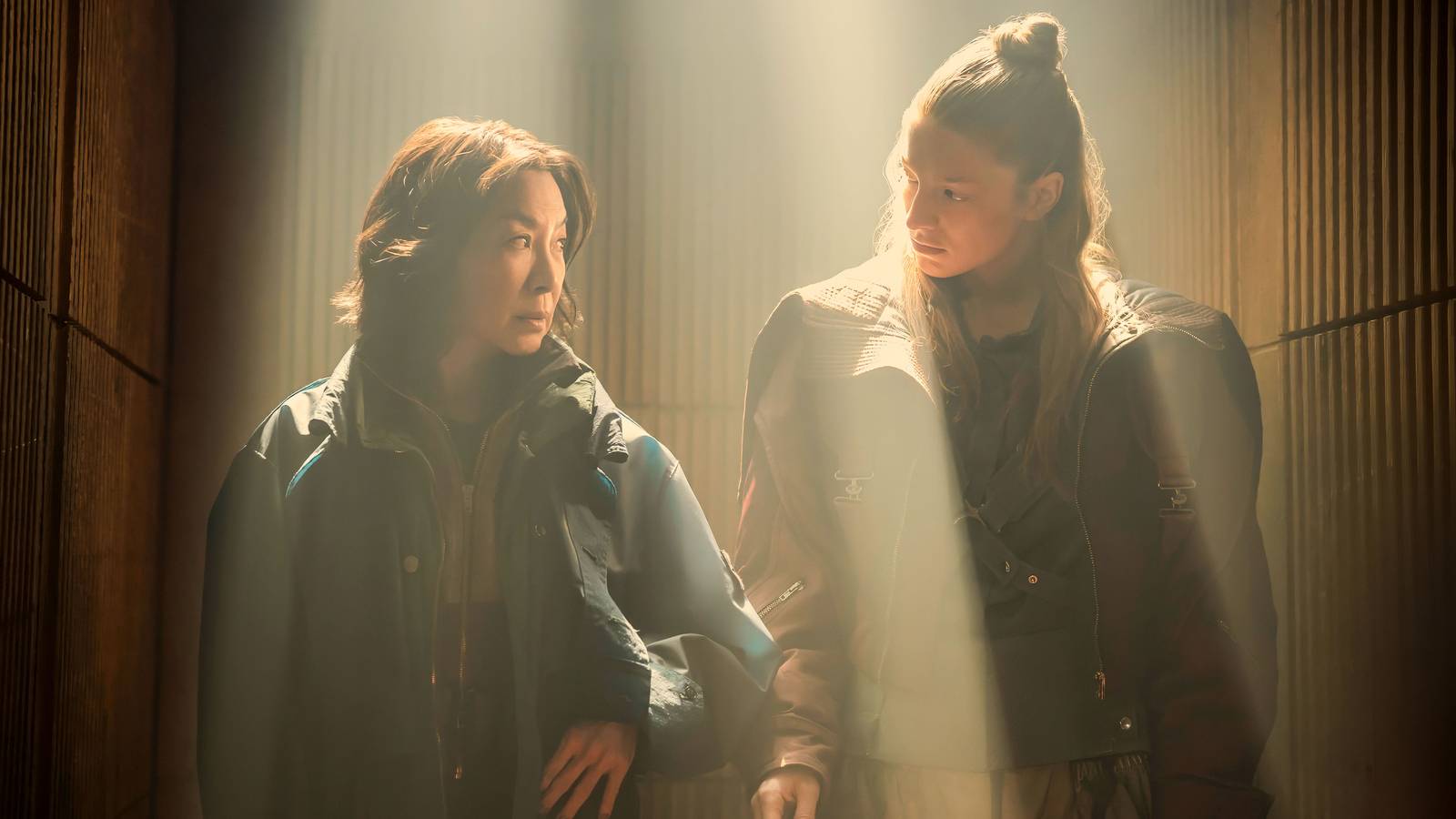
Published Nov 23, 2026, 6:01 PM EST Therese Lacson is a Senior TV Editor who has been with Collider since 2021. She got started in this business over ten years ago working primarily as an interviewer and critic. At Collider, she works closely with the features team to support the writers and also ideates and develops content daily. She has covered major industry events including Cannes Film Festival, Sundance Film Festival, SXSW, Toronto International Film Festival, and San Diego Comic-Con. Although she reviews and covers both film and television, her focus is in television and her expertise is in fantasy and sci-fi genre shows. Her favorite shows to cover include House of the Dragon, Bridgerton, Fallout, 9-1-1, and Rivals. In just a few days, we will be going back to the dystopian future of replicants with a new limited series from Prime Video. Blade Runner 2099 jumps the story forward 50 years and places us in a world where the replicants have finally come out on top and humans have been turned into second-class citizens. The series follows Cora (Hunter Schafer), a human who has gone undercover as a replicant, who works as a blade runner alongside Olwen (Michelle Yeoh), a dying replicant in the last days of her life. Collider got to speak with creator and showrunner Silka Luisa and director Jonathan van Tulleken about this brand new entry into the sci-fi franchise and how the series differentiates itself from the previous two films in the universe. Van Tulleken reveals the films he drew from as reference for the visual palette of the show, and Luisa reveals the process of what it takes to transfer a story into a new format. Luisa also talks about the big change between replicants and humans and how Cora and Olwen's story gives us insight into the new dynamic between the two groups. Finally, she gives some insight into the show's connection to both Blade Runner and Blade Runner 2049 and why the show decided to lean away from drawing stronger connections to the previous film. How 'Blade Runner 2099' Found Its Unique Look "What makes those films so connected to what Ridley does as well is they've so much tactility..." Image via Prime Video Going into this, what's the most daunting task when it comes to formulating the world of Blade Runner 2099? JONATHAN VAN TULLEKEN: I think Silka had written on the page this concept of the sunshine noir, and it was beautiful because Ridley [Scott] described his movie as a 40-year-old movie set 40 years in the future. And [Jordan] Cronenweth had looked to Citizen Kane, his cinematographer, and he described Harrison Ford as a Bogart detective story. And I think, for me, when reading what Silka had written, I was going, "Well, what is our touchstone then? What is our 40 years, 40 years ago?" So I was really thinking of those movies from the 70s and 60s, you know, The French Connection by [William] Friedkin and [Alan J.] Pakula's paranoia trilogy. What makes those films so connected to what Ridley does as well is they've so much tactility; they're based in vérité. It was where cameras were small enough that you could take them out onto the streets. I think that really led into how we wanted to approach the work, which was something that felt very human, in a way that Ridley's feels so human; it's about what it is to be human, and so we wanted to make it feel human. So we built places that were real; we used original old lights; we used the original glass from the films, the lenses. I think that allowed us to build on what Ridley started and what Denis [Villeneuve] started. SILKA LUISA: I think just from the narrative perspective, obviously, there's a shift from something that is so cinematic and theatrical. It's a really different experience going into a theater and being locked in a room and letting this world wash over you. We knew we were going to be watching this on TV, and so we really had to consider what is the pace of our Blade Runner? There is a certain tempo to both films that is very meditative; I love it, it puts you in a mindset that is that world, so we were always trying to calibrate both in the writing and in the shooting and ultimately in post when we were editing, how do we pace the show? Can you have it be this much faster heartbeat? Do you also then need to create moments of breath so that you can actually do the score, which is so iconic? Early on in editing, we had cut the episodes really, really tight just to get that propulsion of Cora's story. But we realized we really needed those breaths because without them, it's not really Blade Runner, and so we were always balancing that. Silka Luisa Reveals Why They Flipped the Script on Blade Runners in '2099' "At the beginning of the season, both of them are really lacking empathy..." Image via Prime Video Talking about the show and the specifics of the narrative, I really like that you flip the script on what we know before, making replicants into Blade Runners who hunt humans. But how did switching the narrative of the story change the approach to how you might structure the story with the focus being on the replicants more than on humans, or at least more than in previous stories? LUISA: Well, I think the biggest shift was that it was an undercover story. I knew because we were doing a TV show, we would have more time, and that meant that there could be a relationship at the center of the show, not just a single character and their journey. And if you want to tell a relationship story, you know, there's been so many great undercover [stories], that Donnie Brasco dynamic felt like that was going to give you a human and a replicant side-by-side, both of them hiding secrets, that would be really rich terrain. It's interesting that in this show, you're right, you do have more room to develop things, and you have dual protagonists in the form of Cora and Olwen. Can you talk a little bit about how these two characters have a meeting of the minds as the story progresses? Because Olwen is getting older, she's dying, whereas Cora is forced to go undercover and has to be forced to think more like a replicant. LUISA: Yeah, at the beginning of the season, both of them are really lacking empathy. Olwen because she's a replicant, and that is just something; without childhoods, they don't develop it in the same way. It's one of the defining characteristics between humans and replicants that we know from the films. And Cora is just a human who is just been stripped of her soul, because sometimes you're in these circumstances where you just are, "Go, go, go," and you can't really take a breath to even think about other people because you just are trying to live the next day. [We] wanted to tell a story of two people who really have lost this fundamental part of what the human experience is, and how can they rediscover it together? Or can they? Can a human and a replicant being side-by-side... can that awaken empathy in both of them? Luisa Explains Why the Show Doesn't Touch 'Blade Runner 2049's Story "I definitely wanted to leave 2049 with enough space to tell their story..." I'm curious because I know this story does have connections to the original film and 2049. So considering the reveal that we get from 2049 about replicants being able to have children, I was always thinking that in the back of my mind. Why didn't you guys lean into that? Are we going to get more of that, or are there hints trickled throughout the show? Because I have thoughts. LUISA: How many episodes have you seen? I've seen them all, but I don't want to get too deep into spoilers, but I'm curious about your thoughts on that. LUISA: Well, I definitely wanted to leave 2049 with enough space to tell their story, because what I love about the end of that film is it felt like it left me wanting more. I could imagine different directions for how all those characters' lives continue, and what it meant for the city, what it meant for them individually, which I think is something that Blade Runner always does. In terms of is the focus on replicants being able to have babies? No, because I feel like that is connected to the 2049 story in such a fundamental way that it felt like touching it would be making decisions for how they were to finish that film. Blade Runner 2099 premieres November 25 on Prime Video. Release Date 2026 - 2026-00-00 Network Prime Video Showrunner Silka Luisa Directors Jonathan van Tulleken Writers Silka Luisa, Ryan Willison, Claire Kiechel, Kirsa Rein, Tom Spezialy Cast
'Blade Runner 2099' Creator Reveals the Biggest Challenge for Prime Video’s New Sci-Fi Series
Full Article
Original Source
Read the full article at Collider →KhanList aggregates and links to publicly available news content. We do not host full articles from third-party sources. Always verify important information with original sources.