
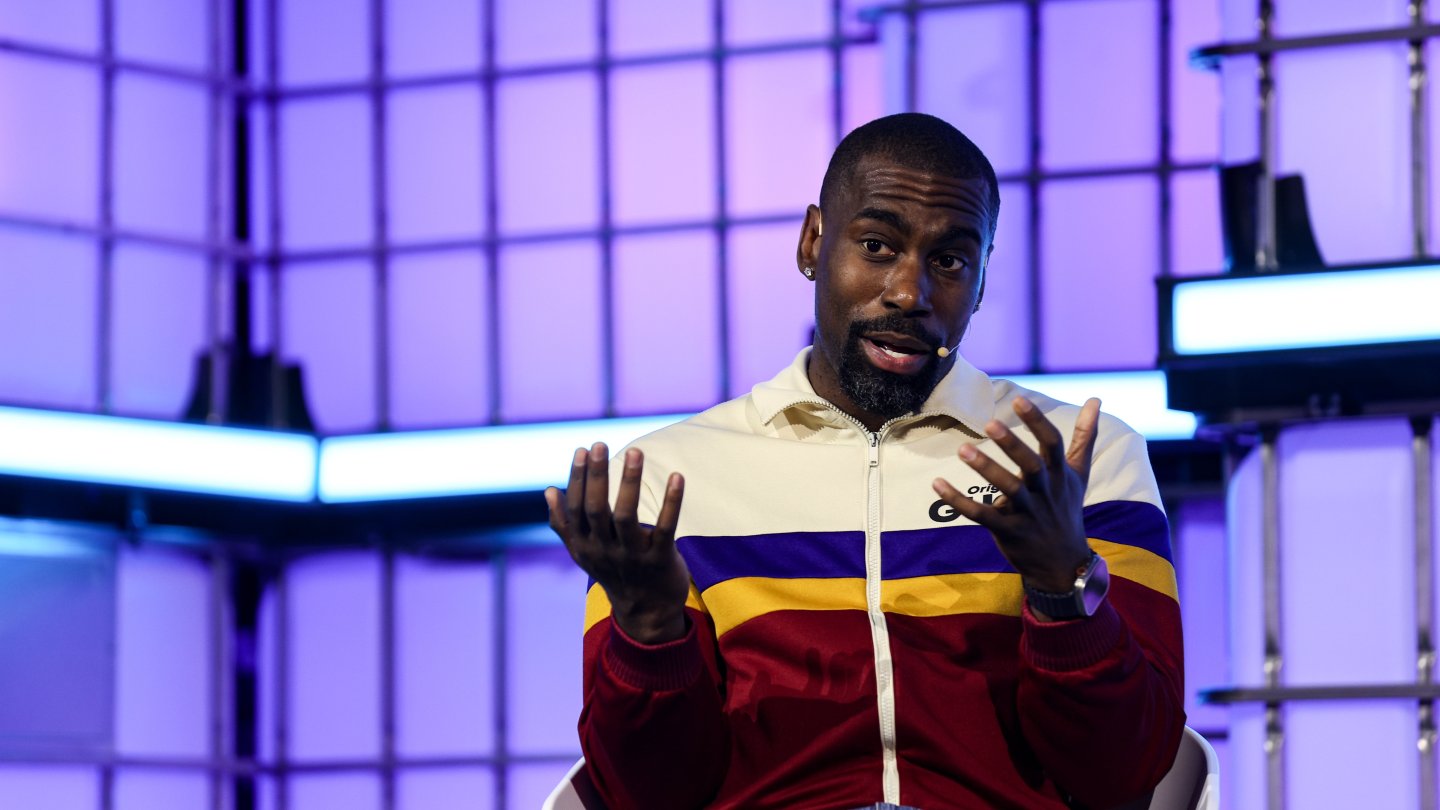
Activist DeRay Mckesson, while today a podcaster and digital storyteller, in 2014 first made a name for himself as a street-level Black Lives Matter protester and a leading voice against police violence. So Mckesson has a unique perspective as both a social issues activist at the street level and behind a microphone and in front of a camera. And on Tuesday at the Web Summit in Lisbon, he pointed with nostalgia to a once-powerful protest mobilization tool no longer at hand. “I miss Twitter. Twitter rest in peace. It was such a powerful platform for us back then,” Mckesson, an executive director of Campaign Zero, argued during a session entitled From Chaos to the Campaign moderated by Maer Roshan, editor-in-chief of The Hollywood Reporter and also webcast. Roshan, who was part of ACT UP, a 1980s group that redefined social activism, and McKesson discussed whether chaotic street protests or strategic policy work were more effective drivers of political change. In response, McKesson praised the subversive utility of Twitter and Vine to get protesters onto the street. Of course, that’s before Donald Trump was first elected U.S. president, Elon Musk rebranded Twitter as X and slower-paced content from Instagram and TikTok increasingly came to dominate the social media space. He added Instagram and TikTok had changed digital storytelling by getting civil rights activists away from tweeting in real time for rapid mobilization to taking longer and being more polished with content they distribute across social media platforms. “Especially on Instagram, capturing video footage and getting it out takes time,” Mckesson argued. At the same time, the recent U.S. midterm elections underlined how civil rights campaigners today use Instagram and TikTok more widely and effectively to talk about candidates and competing stances on hot-button issues. “There are way more people with access to stories and sort of talking because of Instagram and TikTok, in a way that does feel different,” Mckesson insisted. Elsewhere, he pointed to New York City mayor Zohran Mamdani as a social media master using an influencer operation to get the issue of affordability top-of-mind among New Yorkers when he first ran for political office. And ten years after Trump got to the White House, Mckesson argued social justice content creators enjoy greater traction as Americans increasingly tired of the U.S. president. “ICE was a big part of the backlash to Trump,” he said of dramatic protests after hooded immigration enforcement agents made arrests at school graduations and birthday parties and attempted deportations across America. Mckesson said opposition to ICE agent protests more easily cut through and were amplified compared to a decade ago: “In 2014-15, we were a small group of people worried about ICE. Now there’s huge groups of people who don’t even identify as protesters or activists and are pushing on ICE. There are reporters questioning jail deaths in a way that just wasn’t happening.” And mainstream media is today more likely to cover and raise the alarm on social and political issues and enable calls to grassroots change. “We do see legacy media sort of helping us challenge systems when some of the stuff is just so bizarre, but people think that’s normal,” Mckesson told the Web Summit informal conversation. Today, he is also co-host of the Pod Save the People podcast from Crooked Media that explores social justice, culture and politics via a platform a long ways from street-level protests during the Black Lives Matter movement. Mckesson insists he’s fine advocating to the converted when it comes to supporting people of color and representing underrepresented voices calling for meaningful change. “I’m okay with preaching to the choir. The choir needs good messaging. I do think people are smarter today than they were in 2014. People can handle nuanced conversation in a way that is actually really powerful,” he said.
Black Lives Matter Activist DeRay Mckesson Talks Losing Key Trump-Era Protest Mobilization Tool: “I Miss Twitter”
Full Article
Original Source
Read the full article at Hollywoodreporter →KhanList aggregates and links to publicly available news content. We do not host full articles from third-party sources. Always verify important information with original sources.