
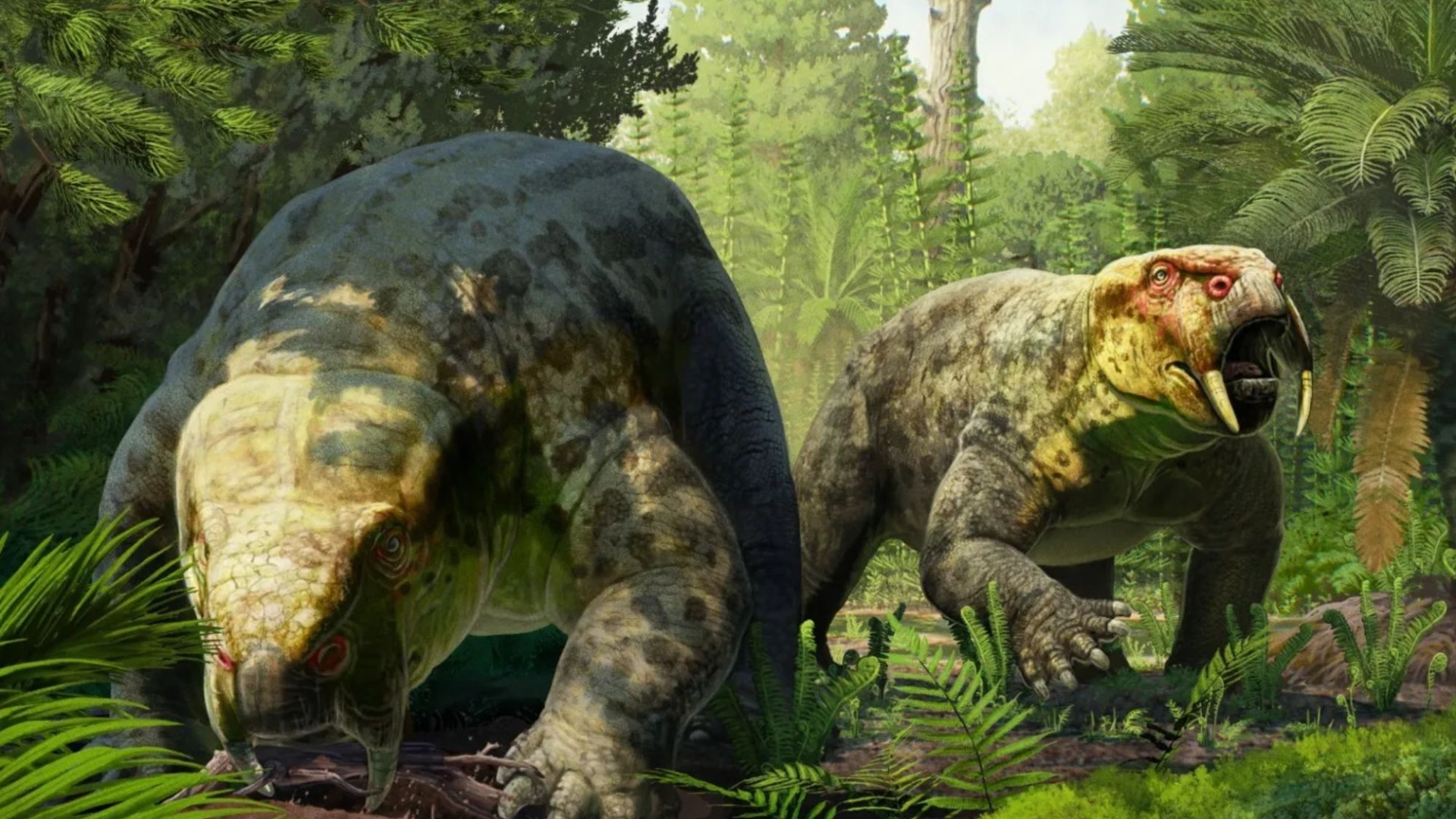
A BIZARRE “unknown” species that would have roamed the land around 240million years ago has been discovered. The odd-looking creature resembled a “huge pig” with a “turtle’s beak” and massive tusks. The Dinodontosaurus isiyavamanda was a previously unidentified species from the Triassic period Credit: Gabriel Ugueto Also known as the “cow of the Triassic”, its fossil has been living at the Natural History Museum for over 60 years Credit: Unknown A previously unidentified species has been identified by scientists following the full examination of fossils housed in the Natural History Museum. The fossils were first discovered in Tanzania in the 1960s, and have now been identified over 60 years later by researchers. Sign up for the Tech newsletter Thank you! The Dinodontosaurus isiyavamanda, nicknamed the “cow of the Triassic”, would have roamed the land around 240million years ago during the Triassic period. The strange-looking creatures had huge tusks and belonged to a group of mammal relatives called dicynodonts. According to experts, the herbivore would have roamed around in herds, feeding on plants, yet despite its vegetarian nature, it could also cause serious damage to any threatening predators. Analysis carried out by the University of Bristol discovered that while patterns on its large tusks indicate that they were likely used for foraging and digging, the creature’s massive teeth could also have been effective for self-defence, able to deliver a painful bite. Curator of non-mammalian tetrapods at the museum, Dr Mike Day, told the Daily Mail that it was “wonderful” to see the species properly identified, and that by confirming the Dinodontosaurus roamed both South America and eastern Africa, “it offers a glimpse of our planet 240 million years ago”. Its identification has also unveiled a crucial understanding of wider Triassic history. Most read in Tech Up to this point, dinosaurs belonging to the genus Dinodontosaurus have only been unearthed in South America, but the identification of this fossil now also places the animals in Tanzania. Researchers were able to connect the geological sequences of the animals across these two geographical locations and determine that they are of an equivalent age. This discovery is important as rocks found in Tanzania that house the Dinodontosaurus also contain the fossilised remains of what were originally believed to be some of the oldest dinosaurs. Lead author Hady George said that in determining that these two sets of dinosaurs are of similar age, it “helps confirm that the oldest dinosaur candidates from Tanzania are probably no older than those in South America”, in turn, “refining the timeline of dinosaur origins”. She said that future projects will continue to examine the remaining fossils “and explore the biomechanics and ecology of Triassic dicynodonts”. Comment now
Bizarre ‘unknown’ species from 240million years ago that looked like a ‘huge pig with turtles beak’ is discovered
Full Article
Original Source
Read the full article at Thesun →KhanList aggregates and links to publicly available news content. We do not host full articles from third-party sources. Always verify important information with original sources.