
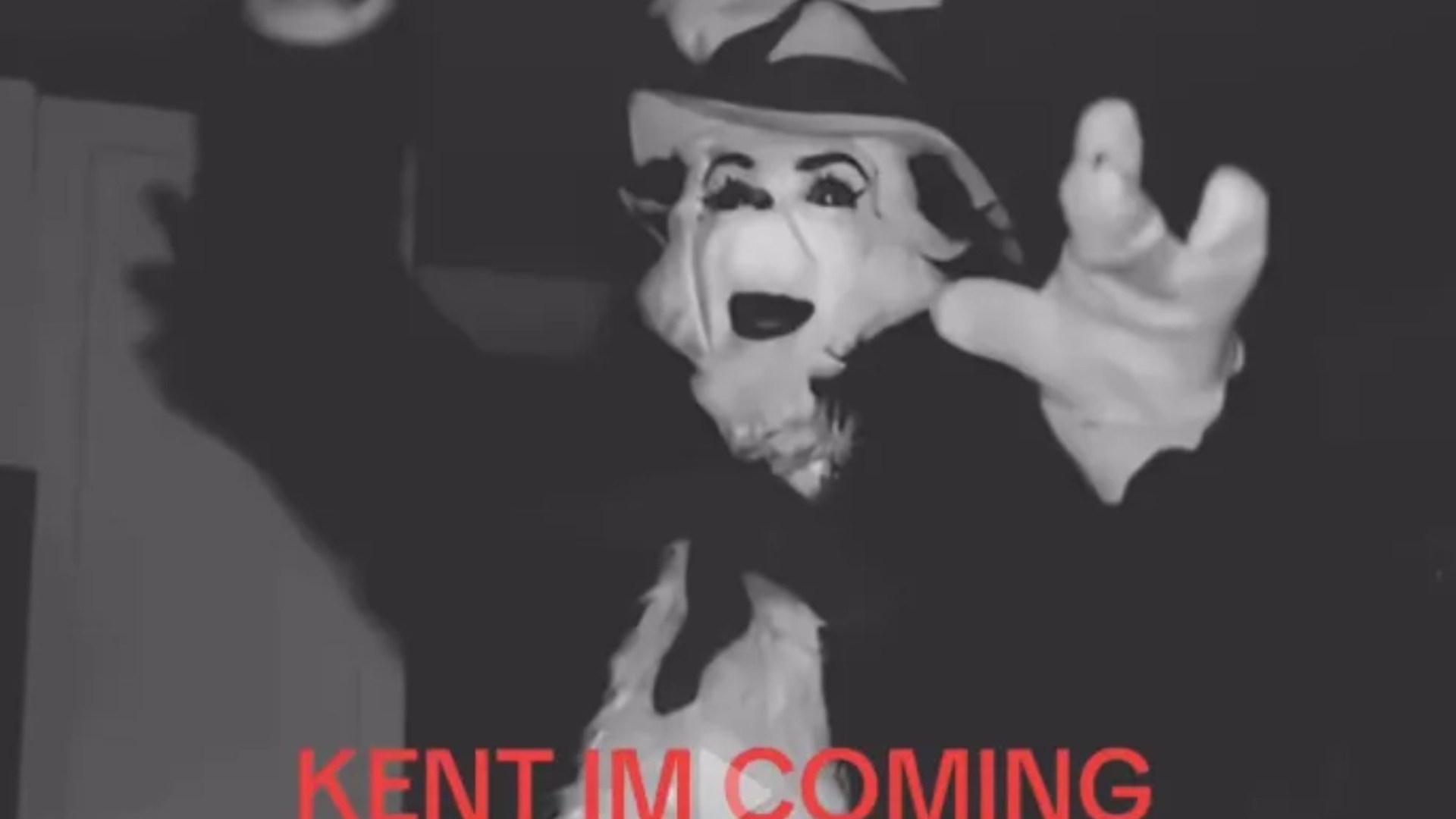
“I’M COMING… LOCK YOUR DOORS” reads the sinister caption on a viral TikTok video of someone dressed as Dr Seuss character The Cat in the Hat dancing robotically. The clip, which racked up a million views, joins a legion of others showing the children’s book favourite in similarly menacing scenarios – and it is leaving UK kids and teens terrified. Fears have spread about a person ‘dressing up as The Cat in the Hat’ to carry out attacks Credit: TikTok/nomuggiesmb This young lady filmed herself being ‘followed’ by a ‘person’ dressed as the fictional character Credit: TikTok/babycharlotte1 Some have claimed an individual in the costume carried out assaults, stalked them while walking home at night and sent “threatening messages” warning of a plan to carry out “violent acts”. Youngsters in every corner of the country have been terrorised by TikTok footage and photos of the creepy cat. But it is all a hoax. Artificial intelligence is behind the creepy creations – all made for online clout, followers and money. In just over a week, the wild speculation about this mythical ‘attacker’ has caused such concern that police in Wexford, Ireland, were forced to share a post debunking the theories and outing the clips and photos as fakes. They claimed to have received a number of distressing reports of the cat “causing havoc in neighbourhoods and towns across the country”. A spokesperson added: “To be clear, the Cat in the Hat was not in your driveway while you were out and he is not currently hiding out in [the village of] Curracloe.” Similarly, South Yorkshire Police had to denounce a fake online account pretending to be them, which wrongly claimed there was “suspicious behaviour” in the Meadowhall area. The phony post urged homeowners to lock all windows and doors, insisted that extra police patrols had been ordered and said they were taking the incident “seriously”. An SYP spokesperson encouraged the public not to believe everything they see online and jokingly added: “We can also confirm no recent sightings of his associates Thing One and Thing Two.” While the claims of a Cat in the Hat killer may seem laughable, teenagers and children around the UK believe and fear it. Multiple clips showing the eerie lifelike character alongside the locations he will strike in next have spread like wildfire. And, worryingly, some parents are adding fuel to the flames. In response to Wexford police’s statement, one person claimed: “He was in Coolcotts last night chasing kids with a knife. My daughter showed me the video.” Another insisted “it’s not AI” because their daughter “saw him in Ashford the night before last”. Hysterical fear has spread among young people. Ellie, 16, from the Scottish Borderlands, told the BBC: “I was so scared of him when I was little. Now it’s like he’s actually come to life to haunt me.” Another, Skye, 16, decided to leave a friend’s sleepover at 3am because she was so worried after watching clips of the freaky feline. “I wanted to go home,” she said. “When I started walking down my friends’ driveway, I got totally freaked out that the Cat in the Hat was going to jump out. I had to call my mum to pick me up.” More concerningly, one account observed by Lily, 14, claimed they would be arranging a “meet and greet” for TikTok followers in the woods near Galashields, near Scotland. Thankfully, she spoke to her mum, who rightly warned her there could be a predator, paedophile or attacker waiting for anyone who attended. She told Lily: “You are not going to meet anyone in the woods in the middle of the night!” Menacing AI-generated images of the cat have spread on TikTok like wildfire Credit: Facebook One account created a fake post from South Yorkshire Police alleging they were ‘taking the matter seriously’ Credit: TikTok/catinthehatdiscovery No police force so far has expressed any concern about a Cat in the Hat ‘attacker’ – but it’s clear from posts seen by The Sun that some people on social media have their concerns. On an Essex Facebook community group, one person anonymously posted that their younger siblings had received “threatening messages” on Snapchat and TikTok. They wrote: “This was from a user called the ‘cat in the hat’, messaging them that they will be committing violent acts and to lock their doors and windows as they are ‘coming to Loughton.’” The individual, whose claims are unverified, said one sibling, who has a learning disability, was “panicking” and they feared the kids would be “scared to leave the house”. They claimed they had contacted the police and urged parents to ensure their children’s social media accounts had the location feature disabled and to warn kids about the hoax. One mum in St Helier, Jersey, claimed on a community board that she had seen an individual dressed like the character “running around quite erratically”. She admitted being uncertain if it was “teenagers messing around” or a genuine threat, before adding: “It really scared my six-year-old.” Another lady in Mansfield, Nottinghamshire, shared screenshots of an exchange with her daughter where she begged her to lock all windows and doors. Fake photos and footage of the Cat in the Hat have been shared from numerous locations Credit: Tiktok Some are especially eerie and its struck terror into the hearts of kids and teens Credit: TikTok/catinthehatdiscovery The message read: “There’s a cat in the hat lurking [a]round Mansfield and police have even sent a warning on Facebook… it’s so scary, people are getting chased.” The hoax comes a decade on from a viral ‘killer clown’ trend, where individuals would dress as clowns and lurk near schools, dark roads and forests to scare people. Often they would film the reactions of the spooked strangers to upload online. The phenomenon spread from the state of Wisconsin across the US and then to the UK, Europe and Australia. Other iterations, all attempting to recreate the posts’ viral success, have followed, including someone who dressed as Stephen King’s Penny Wise the clown from IT. Now these hoaxes are more easily spread because AI can create lifelike people and scenarios for videos and photos. It’s easily achievable with a few clicks on a smartphone. Last year, an AI prank saw a daughter trick her “extremely concerned parent” into believing she was home alone with a homeless man she had taken in. The mum was so scared that she called Dorset Police, who attended the scene and discovered it was fake. They then urged people to conduct research before calling 999. It’s likely police forces across the UK are cautious to give oxygen to this new Cat in the Hat attacker hoax and will want to ensure already-stretched police time isn’t wasted. The original Cat in the Hat costume, from the 2003 film, will be auctioned off this Wednesday Credit: Propstore Irish police in Wexford called out the posts as fake online Credit: Wexford Garda The trend’s origins are unknown, but one theory pointed to a viral post on X, formerly Twitter, about the original costume from 2003 film The Cat in the Hat being listed for auction. The furry outfit, which is tipped to sell for £17,500 under this hammer on Wednesday, was labelled “genuine nightmare fuel” and “scary as f***” by commenters. On the August 8 post, which received 10 million views, one person wrote: “This is a horror movie in the making.” Another clip that showed someone dressed in the original Cat in the Hat costume was captioned “Help, what do I do?” racked up 15 million views. Seeing the viral popularity achievable may have inspired people to turn to AI to create their own creepy clips for online clout or to make money. “An AI image costs seconds to make but ‘buys’ millions of views,” Ruth Azar-Knupffer, Co-Founder at VerifyLabs.AI, tells The Sun. “The platforms also pay in reach, followers and sometimes in money, for exactly the emotions this material produces.” In addition to this, Ruth suspects that for some people “frightening teenagers has some kind of pay-off” for them. Others like sharing conspiracies without thinking about the consequences She believes the public at large needs to have access to deepfake detecting technology to avoid falling for these types of hoaxes again. She tells us: “The lesson is that the public is unarmed. Verification is currently a service sold to institutions while the people actually being targeted are left to squint at their screens and guess. “Until everyone has access to a deepfake detector, they will continue to be the victims of other people’s imaginations, however dark those imaginations get.” 'Cat in the Hat creator wanted to go viral & money' PR EXPERT Carla Speight explains that social media tends to go in cycles – from good, wholesome content to “dreadful things like this”. She believes the original creator recognised that content like the Cat in the Hat ‘attacker’ capitalises on “rage baiting and misinformation” and they will “make a fortune from it”. “All locals will get upset and scared, police will get harassed to make a statement and then everyone searches for the video,” Carl tells The Sun. “Off the back of that, creators will repost and talk about the video to profit from it too. It has a ripple effect across the creator economy. “The original creator will make the most money and everyone else who hops on the trend will get smaller amounts and more views on their videos.” Prior to the changes, drop in payments from social media Carla knows of creators earning £8,000 per month for content with 10 to 15 million views. “It’s a nice wage for someone who has not left the house,” she adds. “To break through the noise, you will get terrifying creations like this Cat in the Hat trend. “It will kick off other versions too. Then there will be a call for niceness and the cycle starts all over again. The more people see it, the more exposure it gets, the more times the police are called, the more money it will make. It’s sort of a social experiment. “I hate to say it but it’s a clever move by the creator who started it. But that’s not to downplay the harm this could cause though. “It could easily trigger people who have battled anxiety or trauma, like being attacked on the streets. “The creator won’t have thought about that. They will have simply wanted to go viral and make money and what they have done is the best way to do it.”
Bizarre truth behind the haunting Cat in the Hat ‘serial killer’ terrifying Brit kids… and the even scarier paedo threat
Full Article
Original Source
Read the full article at Thesun →KhanList aggregates and links to publicly available news content. We do not host full articles from third-party sources. Always verify important information with original sources.