
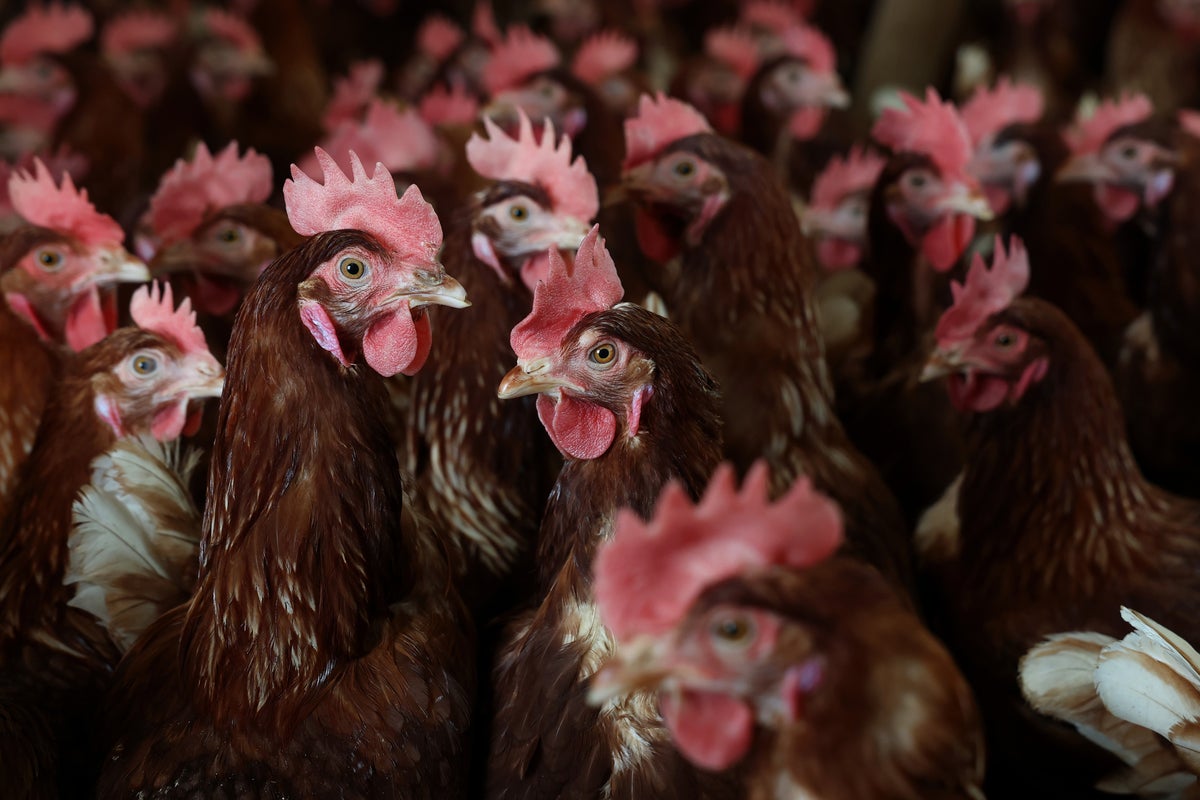
H5N1 bird flu activity is spiking at poultry farms across the U.S., with 1.32 million birds affected over the past month, according to the latest federal data. Illinois’s Clinton County has seen the biggest outbreak of highly contagious virus, with 934,600 chickens reported sick.There are also large outbreaks in Minnesota, Wisconsin and North Dakota. A turkey farm in Minnesota’s Roseau County has seen 57,000 birds affected, another in North Dakota has had 60,600 birds fall ill and one in Wisconsin has seen 41,400 infections, the Department of Agriculture’s tracker shows.Past outbreaks at egg-laying farms have resulted in major surge in egg prices for Americans after sick birds were killed. Bird flu has also led to the deaths of farm workers and people exposed to sick animals.Bird flu has sickened more than 1.3 million birds over the past month across the US, as well as cattle and mink. The spread could soon impact egg prices at the grocery store (Getty Images)Smaller bird flu outbreaks have been reported in California, Montana, South Dakota, Utah, Ohio, Idaho, Wyoming, Kansas, Kentucky and Washington state since October 5. These outbreaks came from both backyard flocks and commercial farms. But bird flu is spreading in wild birds, as well. There have been reports of bird flu in Canadian geese, mallards, an American white pelican, a turkey vulture and an American black duck this month. Jackie, the famous California bald eagle, died of bird flu in August, a recent necropsy found.Birds aren’t the only animals that have been impacted, either. There’s reportedly been concern about bird flu spreading at a mink farm in Utah and Washington just confirmed its first-ever case of bird flu in cattle at two farms a couple of weeks ago.One unidentified resident exposed to the cattle tested positive for the flu, but has not experienced severe illness and is isolating at home, KING 5 reported.The two farms are under quarantine.The largest bird flu outbreak in the US so far this year is in a turkey farm in Illinois (AFP via Getty Images)Between September 2025 and last month, at least 5,000 people have been monitored and more than 150 were tested for bird flu. There have been two deaths tied to bird flu and 72 cases since the outbreak began in 2024, according to the Centers for Disease Control and Prevention.The Independent has reached out to the Trump administration for further comment on the bird flu spread.Bird flu typically spreads through the infected saliva, and feces of infected birds or other animals. Humans are infected when the virus enters the eyes, nose, mouth or is inhaled. Infections range in severity, but can lead to acute disease that results in death. Symptoms include pneumonia fever, cough, sore throat, runny nose, muscle or body aches, fatigue, trouble breathing and headaches.Bird flu has yet to spread from human to human - but experts fear it’s only a matter of time. Spreading cases in mink could help the virus mutate enough to make that transition. Mink have similar lungs and airways to people and past research has shown they are susceptible to spreading human viruses, including bird flu.“As long as it continues to go mink to mink, then it becomes more and more likely that it could jump to a human,” Gail Hansen, a former Kansas state public health veterinarian and epidemiologist, told ProPublica last week.An outbreak at a Utah mink farm is fueling concern about the bird flu virus mutating (Getty Images)Another big fear? The return of sky-high egg prices. As animals, including chickens, are slaughtered to slow the spread of bird flu, supplies can be affected. Fewer chickens mean fewer eggs are produced. That hurts supply and can drive prices up.That is what happened in 2024 when egg prices rose to $8-$10 per dozen. The cost became a major campaign issue with President Donald Trump promising to bring down prices. It also became a symbol of the rising food costs Americans have faced in post-Covid inflation. Prices have dropped since their high and currently sit at $1.32 per dozen, the USDA says.
Bird flu cases are spiking again in the US. Here is what you need to know about the spread
Full Article
Original Source
Read the full article at Independent →KhanList aggregates and links to publicly available news content. We do not host full articles from third-party sources. Always verify important information with original sources.