
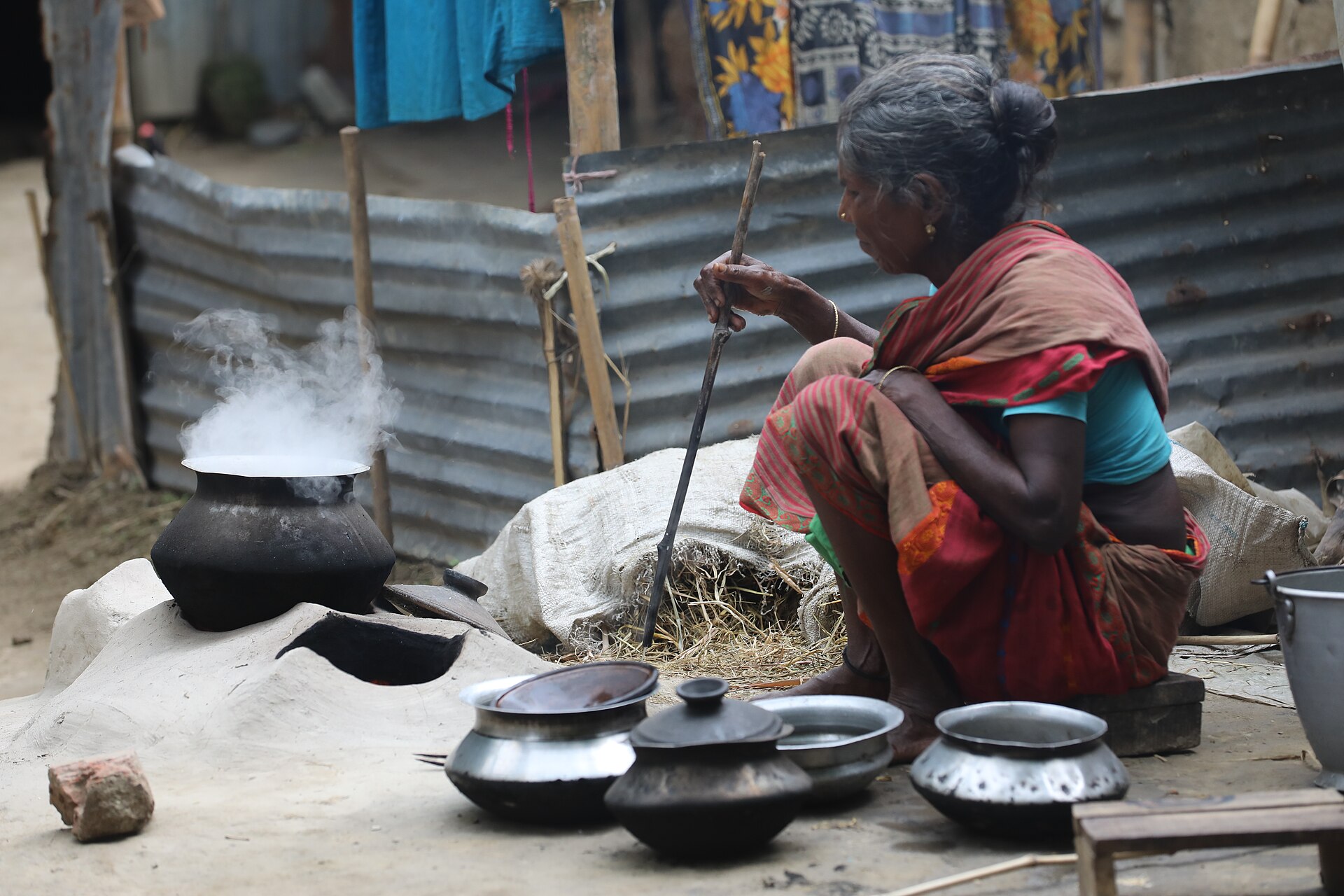
Burning biomass fuels like dry wood and rice husk for cooking can produce air pollution and contribute to toxic heavy metals buildup inside rural kitchens in Bangladesh, a new study finds. Md. Badiuzzaman Khan, an environmental science professor at Bangladesh Agricultural University and the study’s lead author, said the research addresses a gap in understanding indoor pollution in rural communities. “Local people use various kinds of fuels like cowdung, or branches of wood or agricultural byproducts like rice straw or jute sticks,” Khan said in an email to Mongabay. “Heavy metals may come to rice straw or jute sticks from the fertilizers used in the crop field. Heavy metals may also come from natural sources like soil.” For this study, researchers collected dust samples from the walls and ceilings of 63 households in Bangladesh’s Haor and Charland regions, which both heavily rely on biomass fuel. They also analyzed 11 composite samples of biomass fuels used for cooking and examined their elemental composition. The study ran from November 2022 to March 2023. Many low-income rural households use biomass, potentially exposing people to heavy metals and the health consequences associated with them. However, most pollution research in Bangladesh has largely focused on cities; little is known about rural exposure. The study found that the heavy metals in household dust likely come from both human activities, such as farming and burning fuel, and natural sources such as soil and sediments carried by floods. The types of metals found also differed between the two regions. In Haor, iron, manganese and zinc were particularly abundant, while Charland households had relatively higher levels of cobalt, chromium, copper, selenium and vanadium. The researchers suggest these differences could be related to the types of fuels people burn and how they cook, as well as metals already present in the local environment. In Haor, for example, households commonly burn cow dung cakes mixed with straw, which can release trace metals when burned. The findings raise concerns about long-term exposure to metal-contaminated household dust and potential health impacts. The study found that children faced higher noncancerous health risks from manganese in Haor compared with Charland. They also found levels of nickel, chromium and arsenic that “exceeded negligible levels,” suggest precautionary measures should be taken. Children are particularly vulnerable, as they frequently touch dusty surfaces and put their hands in their mouths. The researchers recommend better kitchen ventilation, reduced reliance on high-emission biomass fuels, long-term monitoring and studies of health effects. “Addressing these high-emission sources through national clean energy initiatives is not just an environmental goal but a critical public health necessity,” Ahmad Kamruzzaman Majumder, a professor of environmental science at Stamford University Bangladesh who was not involved in the study, told Mongabay. Banner image: A woman in Bangladesh cooks rice over a traditional earthen oven using biomass. Image by Zaheed Sarwer Khan via Wikimedia Commons (CC BY 4.0). Credits Topics
Biomass cooking fuels raise toxic metal exposure risks in Bangladesh, study finds
Full Article
Original Source
Read the full article at News →KhanList aggregates and links to publicly available news content. We do not host full articles from third-party sources. Always verify important information with original sources.