
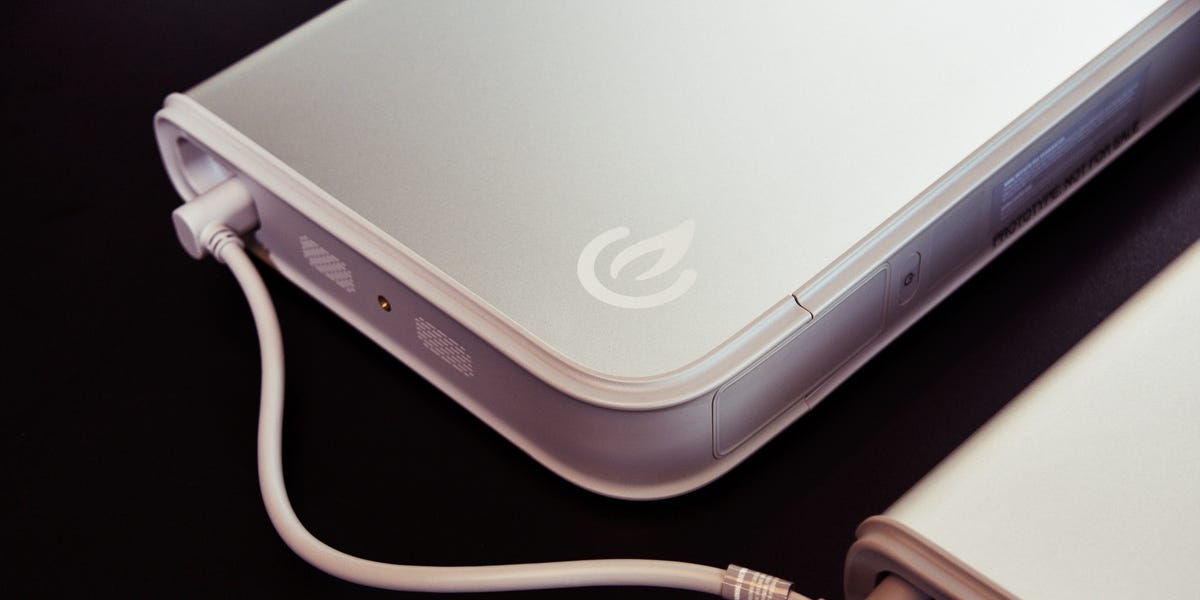
5 min readFor some homeowners, large home backup systems are too much work. Either you're messing around with a loud and messy portable generator or you're installing a complicated transfer switch that’s best left to experienced DIYers or contractors.Sometimes, you just want something simple to set up that runs in the background and automatically powers up during a blackout, keeping a critical appliance like a refrigerator running when nothing else is. That’s where a system like Backup by BioLite shines.This isn’t the first time I’ve tested a system like this. Dedicated appliance backup is a relatively new and niche category in emergency backup power, but this type of device makes a lot of sense, combining the power of a battery-based power station with the convenience of an always-on uninterruptible power supply (UPS).Unlike a more boxy power station, the Backup by BioLite is slender and designed to sit discreetly on top of a refrigerator or be mounted on a wall behind or near it. And unlike a UPS that lasts only an hour or so, the main unit can automatically power connected devices for up to 13 hours (according to my tests)—even longer if you add expansion batteries.ProsDesigned for wall mounting or slim placement above a refrigeratorComes with a power strip with AC outlets and USB-A and USB-C portsGives a more accurate representation of runtime than the competitionThree UL certifications, including battery safetyConsThe mobile app doesn’t have advanced features like variable input power or local weather monitoringKey SpecsPower1,800 W (3,000 W surge)Capacity1,536 WhOutlets2 x 120 V AC outlets + 3 x 120 V AC; 2 x USB-A; 2 x USB-CDimensions13 W x 29 L x 2.8 H in.Weight40 lbHigh Marks for Good DesignWhat stood out most to me is how well-built the Backup by BioLite is. It’s sturdy, made with a casing of aluminum instead of plastic, and includes an aluminum backplate molded with channels on the bottom that dissipate heat, which cuts down on how often the fan needs to run. I thought this might make the Backup heavier, but it’s actually 13 pounds lighter than Bluetti’s FridgePower (though in fairness that one has a larger-capacity battery, which adds weight).Winston ZhouLong and narrow, this automated power station is designed to sit atop a refrigerator or be mounted to a wall behind or near it.The Backup can output up to 1,800 watts (3,000 watts for surge power) and offers two built-in 120-volt, 15-amp alternating-current outlets for connecting devices to this power. Also included is a Power Hub, which you can plug into one of the outlets to expand your plug-in options with three additional AC outlets and four USB ports (two USB-A and two USB-C). I thought that was a smart move by BioLite, and that makes this rather single-minded device a bit more versatile in an emergency. Bluetti does not include one with its version.BioLite’s device is also one of the first backup systems to carry three UL certifications for its uninterruptible power supply, battery safety, and battery cells (UL1778, UL1973, and UL1642, respectively). The battery certifications are particularly reassuring, as this backup device is meant to be permanently mounted in the home, perhaps tucked behind the fridge or high up on a cabinet.You Can Set It Up in Just a Few MinutesLike other refrigerator backup solutions, the intent with this BioLite option is to make things as simple as possible. If you’re just setting it up on top of a refrigerator—or atop a cabinet as I did—all you need to do is plug it into the wall, plug the appliance into the backup, and turn it on. From there, install the app on your phone, and you’re good to go. Of course, if you plan to wall-mount it (BioLite includes a bracket with your purchase), it’ll take a bit more time to set up and install.Those designed for use with a refrigerator, you can really power whatever you want using the two outlets on the station. The total output is 1,800 watts, which is about the same as you would get from two wall outlets in your home.I used the Backup by BioLite to power my double-door, bottom-freezer JennAir refrigerator, which draws a modest amount of power (about 300 watts on average—typical of most people’s kitchens). I simulated a blackout by cutting power to the kitchen at my electrical panel while the refrigerator compressor was running. The Backup switched over immediately with no noticeable disruption to the refrigerator’s operation, and it powered my refrigerator for a full 13 hours. After I turned the grid power back on, the Backup switched back over and began to recharge itself automatically.Actual runtime will vary for everyone. The Backup by BioLite offers 1,538 watt-hours of capacity, which is enough to run most refrigerators for around 12 hours, but that will decrease if you add more devices, or increase with smaller or more efficient refrigerators.You can also expand that by adding more batteries. BioLite sent me a 1,538-watt-hour expansion unit called the Backup Extend that attaches using one cable. That doubled my runtime, allowing me to back up my refrigerator for just over 26 hours total. Up to six Backup Extends can be added, daisy-chained to each other, so you could ramp up your capacity to 10,752 watt-hours, which in my case would be 3.5 days’ worth of backup power. The Extend units are identical in size to the core unit and are also wall-mountable.An App That Gives You Accurate Runtime EstimatesThe BioLite app is brand-new for this device, so it doesn’t have quite as many features as competing power station brands (e.g., more advanced recharging options, weather alert tracking, and detailed energy usage reporting), but it has all the important ones, including remote monitoring and scheduling options that let you choose cheaper hours for recharging (in regions that offer variable rates). There’s also one feature that I’ve not seen anywhere else—truly accurate estimated runtime.The total runtime estimate on the app considers the variable draw of a refrigerator.That way, the estimate remains consistent, even when the fridge isn’t drawing power.Every power station app will give you an estimate of how much battery life is left in terms of percentage and hours. But the hourly number is often wrong because apps can only estimate that based on the current output. This gets complicated with refrigerators because they have variable draw. Sometimes they are drawing power to run the compressor. Other times they are not.On another app, you might see a large amount of predicted runtime when the appliance isn’t drawing power, which is not accurate. But BioLite’s app analyzes the refrigerator’s draw over time, figures out an average, and estimates a more accurate runtime that doesn’t change as the compressor turns on and off. So when the app told me that I had roughly 12 hours of power left, it rang close to true. It seems like a small thing, but it’s a real game changer I haven’t seen with other products like this.Is Backup by BioLite Worth It?There’s a lot to like about this system. The build quality is the best I have seen, and the fact that it’s UL-certified brings a certain peace of mind that it can safely run in your home (though catastrophic failures of power stations are rare). It’s also easy to set up and use, especially if you’re a novice to backup power systems. The included Power Hub is a great addition, too.Starting at $2,000, it’s more expensive than the competition, but I think BioLite has built a worthy appliance backup system that will do its job well.Preorder the Backup by BioLite Power SystemOther Refrigerator Backups We RecommendDavid is a Reviews Editor for Hearst’s Enthusiast Group, contributing to Popular Mechanics, Runner’s World, Bicycling, Best Products, and Biography. He has over 25 years of experience writing about and reviewing consumer electronics, kitchen appliances, DIY products, outdoor gear, and more. He also spent years covering the ever-changing world of online retail. To relax, he loves experimenting with new recipes, tweaking his smart home setup, and spending time outdoors on his bike or camping.
BioLite's Fridge Backup Power System Kept My Food Cold for 26 Hours in My Test
Full Article
Original Source
Read the full article at Popularmechanics →KhanList aggregates and links to publicly available news content. We do not host full articles from third-party sources. Always verify important information with original sources.