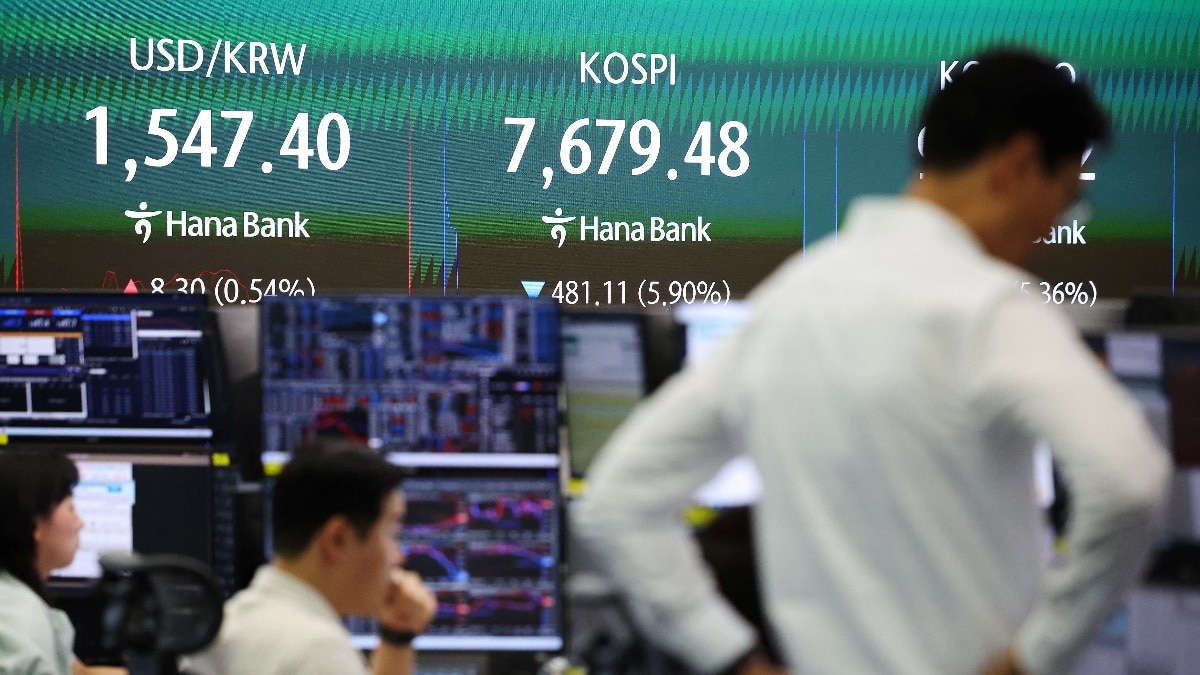
The decision to launch a nationwide debt counselling hotline comes after a dramatic reversal in South Korea's stock market wiped out billions of won in investor wealth, triggered hundreds of thousands of forced liquidations and exposed the risks of investing with borrowed money.Government aims to prevent debt issues becoming social problems. (REUTERS/Kim Hong-Ji)A stock market correction is rarely expected to prompt a government to launch a nationwide debt counselling hotline.But that's exactly what South Korea is preparing to do after a sharp sell-off left thousands of retail investors facing steep losses from leveraged stock market bets. The government has announced that it will roll out the 1375 debt consultation hotline in October to help people struggling with financial distress, saying the aim is to prevent economic problems from snowballing into a broader social crisis.The decision comes after a dramatic reversal in South Korea's stock market wiped out billions of won in investor wealth, triggered hundreds of thousands of forced liquidations and exposed the risks of investing with borrowed money.The episode has become a stark reminder that when leverage meets market volatility, the consequences can extend far beyond Dalal Street-style market swings and into people's homes, savings and future plans. WHEN LIFE SAVINGS DISAPPEARThe scale of the losses becomes clearer through the stories shared by investors themselves.According to social media posts, several South Korean retail investors described losing apartment savings, wedding funds and years of accumulated wealth after the market reversed sharply. While these accounts are personal anecdotes and not independently verified, they illustrate the human impact of the correction. One investor, identified by the username "fintechgirl" on X, wrote that 300 million won meant for an apartment instalment had been wiped out after speculative investments went wrong.The investor said the family had spent 15 years saving enough money for a home in Dongtan and had already paid the down payment. Seeing others make quick profits in Samsung Electronics, the remaining funds earmarked for the next instalment were invested in the stock market. The trades initially generated handsome gains before the rally abruptly reversed."I blew away 300 million KRW of hard-earned money meant for my apartment installment payment. I feel like dying," the investor wrote, describing how the fear of missing out gradually led to bigger bets before the market collapsed.Another investor, posting under the name "Jack & Jong", described the correction as the biggest financial setback of a lifetime."I've experienced the biggest loss of my life. Two-thirds of my assets, including profits and principal, went up in smoke. Years of saved earnings and even loan money vanished," the investor wrote, while urging others not to lose hope despite the losses.A third investor said nearly 60 million won disappeared in a month after failing to set a stop-loss despite years of trading experience. The investor said the experience had erased years of gains and shattered confidence in returning to the market.These accounts help explain why the South Korean government has framed the issue as more than just a market correction.HOW A MARKET RALLY TURNED INTO A DEBT PROBLEMSouth Korea's benchmark KOSPI index had surged strongly over the past year, fuelled by optimism around artificial intelligence and semiconductor companies.As markets rallied, borrowing to invest also climbed rapidly. Outstanding margin loans reached a record 38.63 trillion won in late June, according to market data cited by analysts.However, when stock prices began falling, the leverage that had amplified gains quickly magnified losses.Investors who buy stocks using borrowed money are required to maintain a minimum amount of equity in their trading accounts. When prices fall below the required level, brokerages issue margin calls asking investors to deposit additional funds. If they fail to do so, brokers automatically sell their holdings to recover outstanding loans.That process triggered a wave of forced selling during the recent correction.Market estimates suggest retail investors suffered around 2.15 trillion won in leverage-related losses in just one month. More than 320,000 trading accounts were reportedly liquidated, with investors in their 20s and 30s accounting for roughly 62% of those affected.The forced sales also intensified the market decline. As brokers liquidated positions, additional selling pressure pushed prices lower, triggering fresh margin calls and another round of forced liquidations.Analysts at Goldman Sachs estimated that retail ETF rebalancing accounted for as much as 62% of institutional net selling on certain trading days during the correction, highlighting how leveraged positions can amplify volatility once markets begin to fall.WHY THE GOVERNMENT IS STEPPING INRather than treating the episode as only a financial market issue, South Korean authorities have focused on its impact on households.The government has announced that the nationwide 1375 debt consultation hotline will be launched in October to provide counselling and debt support to people facing financial distress. Officials have said the initiative is intended to stop financial problems from developing into wider social issues.Authorities are also expected to introduce another round of restrictions on leveraged investment products following the recent market turmoil.The move reflects growing concern that excessive borrowing by retail investors can have consequences well beyond stock markets.THE LESSON FOR INVESTORSSouth Korea's experience is a reminder that leverage can dramatically increase both gains and losses.During a bull market, borrowed money can make returns look larger than they otherwise would. But when markets reverse, those same positions can quickly become liabilities, forcing investors to sell at precisely the wrong time.For policymakers, the recent episode has also demonstrated that excessive leverage is no longer just a market risk. When enough households are affected, it can become a financial stability issue requiring government intervention.For investors, the lesson is simpler: market corrections are temporary, but borrowing heavily to chase a rally can leave losses that last much longer.(Disclaimer: The views, opinions, recommendations, and suggestions expressed by experts/brokerages in this article are their own and do not reflect the views of the India Today Group. It is advisable to consult a qualified broker or financial advisor before making any actual investment or trading choices.)- EndsPublished On: Jul 31, 2026 13:35 IST
Billions lost, thousands liquidated: Why South Korea is launching a debt hotline
Full Article
Original Source
Read the full article at Indiatoday →KhanList aggregates and links to publicly available news content. We do not host full articles from third-party sources. Always verify important information with original sources.