
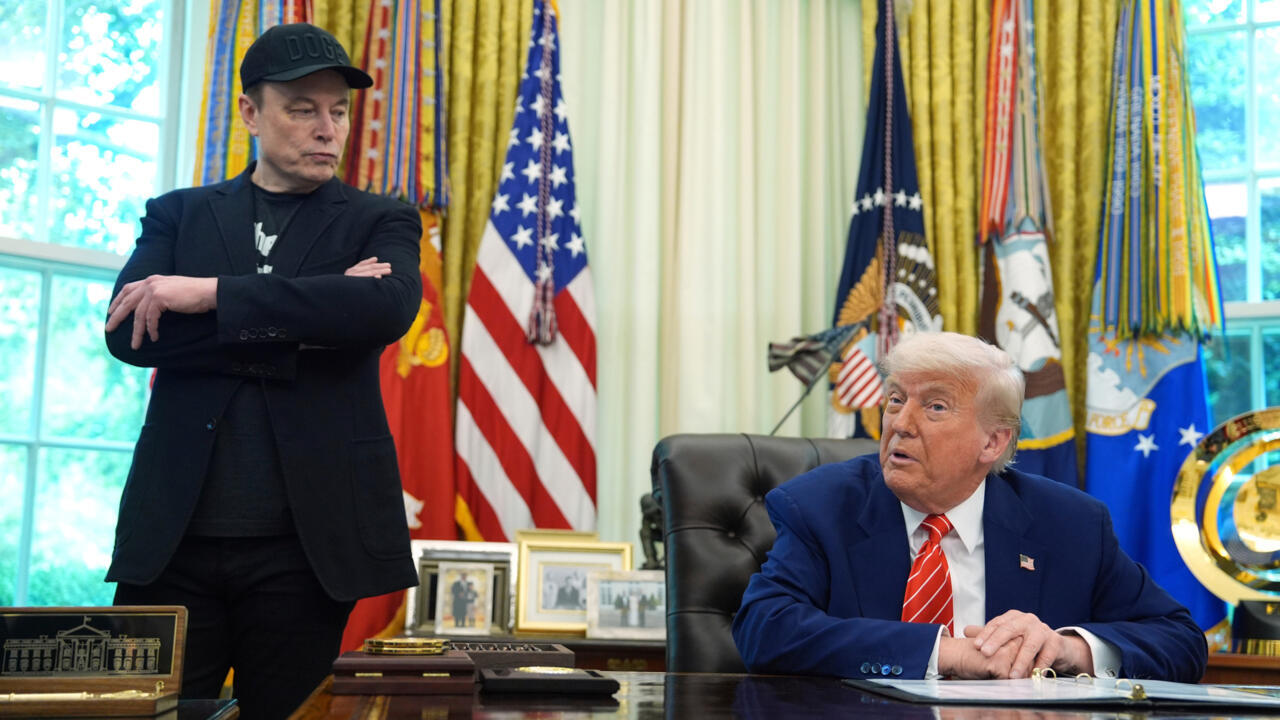
With control of the United States Congress at stake in the country's 3 November elections, candidates and their backers are pouring billions into the campaign. The battle is heading towards a spending record, with political advertising alone expected to reach a cost of $11.6 billion. As the Democrats seek to wrest control of the House of Representatives and the Senate from the Republicans, campaigns are competing for space on television, streaming services and social media. An $11.6bn total would exceed both the $8.9 billion spent during the 2022 midterms and the $11 billion recorded in the 2024 presidential cycle, according to advertising tracker AdImpact. “In a highly uncertain election, much more is spent,” explains Vincent Michelot, a specialist in US political history and professor emeritus at Sciences Po Lyon. Competitive races attract more investment, while attack adverts push opponents to respond quickly – sometimes paying a premium for slots already in high demand. Beyond advertising, candidates must pay staff, travel across their constituencies and organise efforts to get supporters to the polls. Congressional candidates had spent more than $2 billion by the end of June, according to the Federal Election Commission (FEC) – 16 percent more than at the same stage in 2022. They had raised $2.8 billion, up from $2.4 billion four years earlier. The global machinery built to carry out Trump’s mass deportation drive First Amendment Candidates generally rely on private donations, unless they can draw on personal wealth. But there are limits on what supporters can give directly. An individual may contribute up to $3,500 to a candidate per election. Primaries and general elections count separately. Candidates can also receive support from political parties and political action committees, known as PACs. Companies and trade unions can establish PACs financed through voluntary contributions from eligible employees or members. Qualifying PACs can give up to $5,000 to a candidate per election. The much larger sums associated with US politics usually flow through a different route: super-PACs. These organisations emerged following two court rulings in 2010 and can accept unlimited contributions from individuals, companies and trade unions. They cannot donate directly to candidates or coordinate their spending with campaigns. They can, however, spend vast sums independently on advertising that promotes a candidate or attacks an opponent. By the end of June, super-PACs had raised nearly $2.5 billion, according to the FEC – 74 percent more than at the same point in 2022. Their independent expenditure had risen by 79 percent to almost $530 million. The legal framework rests on the protection of political expression under the First Amendment to the US Constitution. Courts have treated spending to promote political views as protected expression, while retaining limits on direct contributions to guard against corruption. The rules were further loosened on 30 June, when the Supreme Court struck down limits on spending which political parties coordinate with their candidates. Republican committees subsequently exceeded the former national caps by more than $48 million, Reuters reported. Trump hosts China's Xi for high-stakes summit ahead of US midterm elections Billionaire backers Wealthy donors have several avenues to influence the campaign – and the biggest contributions are increasingly concentrated among a small group. Analysis by the Washington Post found that the 50 biggest donors had contributed nearly $2.4 billion to federal political committees. Republican-aligned donors accounted for $1.54 billion, compared with $590 million from Democrat supporters. Elon Musk leads the field, having contributed $369 million since the start of the cycle. In September, he gave $158 million to the Republican Senate Leadership Fund, which transferred matching sums to a group supporting Ken Paxton against Democrat James Talarico in Texas. Democrats also have billionaire backers. Former New York mayor Michael Bloomberg has committed around $80 million to support them, with a particular focus on winning back the House. For Michelot, donations on this scale raise questions about what contributors expect in return. “When you donate a few hundred or a few thousand euros to a campaign in France, you have no hope of influencing the outcome, but when you donate several million in one go, there is inevitably an expectation of what comes next." Macron, Starmer join forces to tackle Musk 'interference' in European affairs Industry influence Corporate interests are also helping shape the contest, sometimes backing candidates across party lines. According to an August study by advocacy group Public Citizen, cryptocurrency, technology and artificial intelligence companies had contributed $268 million, notably to super-PACs. That represented more than 40 percent of reported corporate contributions to these organisations. Fairshake, a cryptocurrency-backed super-PAC, announced in early October that it was supporting 32 House candidates – 19 Republicans and 13 Democrats – who favour legislation championed by the industry. The AI-backed group Leading the Future, launched in 2025, has adopted a similar approach. Tracing the original source of political money is not always straightforward, however. A New York Times investigation found that around $1 billion from donors whose identities were not publicly disclosed had already flowed through the electoral system this year. Known as “dark money”, this funding can pass through non-profit organisations that are not required to publicly identify their contributors. Super-PACs must disclose their donors and expenditure. But when a donation comes from one of these non-profits, the declared name may reveal only the intermediary, leaving the original source hidden. The practice spans the political spectrum. In August, Democrat-aligned House Majority Forward transferred $20 million to a super-PAC supporting House candidates. Republican-aligned One Nation has transferred more than $70 million to a group backing Senate contenders during this cycle. Meanwhile, the body responsible for enforcing campaign finance rules has limited ability to act. The FEC has lacked a quorum since April 2025. With only two commissioners serving on its six-member panel, it cannot secure the four votes needed to authorise enforcement investigations or impose civil penalties. Campaigns must still submit financial reports, allowing journalists and watchdogs to scrutinise spending. But as this accelerates closer to polling day, the regulator cannot take key enforcement decisions. “There’s no sheriff in town anymore,” says Michelot. This article has been adapted from the original version in French by Aurore Lartigue.
Billionaires and 'dark money' fuel record spending on US midterms
Full Article
Original Source
Read the full article at Rfi →KhanList aggregates and links to publicly available news content. We do not host full articles from third-party sources. Always verify important information with original sources.