
The stock rout of the past 24 hours may have wiped billions from the net worths of the world’s wealthiest people. Still, the hiccup will do little to dissuade economists from believing that artificial intelligence will be a major driver of wealth gains in the coming years.And while proposals for a billionaire’s tax have proved divisive in states like California, Microsoft co-founder Bill Gates suggests a similar policy is likely the best way forward in the age of AI.Already, the fortunes of individuals who have founded AI or AI-adjacent companies have boomed, and the wealth effects for families invested in those companies promise to be significant. But with massive wealth gains comes the question of inequality, and particularly in the case of AI, whether it might further exacerbate the current K-shaped economy. The K-shaped economy refers to the divergence between higher and lower earners and their economic prospects. Philanthropic initiatives from the wealthy cannot be relied upon to address this gap, Gates said in a recent interview with The Financial Times. Rather, policymakers must move to tax wealth progressively, and then individuals can choose to donate accordingly from their earnings. “The primary responsibility of dealing with inequality will always rest with governments,” Gates said. “We can’t expect philanthropy, which is voluntary in nature, to be the safety net.” Gates, the founder of the Gates Foundation, decided to give “virtually all my wealth”—about $100 billion—to the organization early last year. The only catch was that it all had to be spent within the next 20 years. Yet even these sums won’t go far enough to offset the inequality AI is likely to cause. According to Fed data, the top 1% of the wealthiest people in the U.S. own more than 50% of the nation’s stock market, meaning the gains experienced this year—and in the future—disproportionately flow to them. “So, in a world of AI, there will have to be changes in tax systems, including the ability to tax people with huge wealth, the ability to tax billionaires,” added Gates. “But whatever’s left over after those new taxes are put in place, I do think we’re seeing a very enlightened group that in both areas, here in the United States and for global good, they’re at a very young age already asking the questions about, ‘OK, what’s the most impact I can have?’ and ‘How do we be complementary to whatever government aid there is?'” Gates’s other suggestion Gates’s suggestion to tax the super-rich is—unsurprisingly—not universally popular among his tech-founder peers. Google co-founder Sergey Brin and former CEO Eric Schmidt have both flocked to tax-friendly states amid California’s proposed billionaire tax. Other entrepreneurs, like Nvidia founder Jensen Huang, say they understand why they may need to be taxed more. But where Huang and Gates disagree is on the latter’s suggestion that robots should be taxed. In an essay shared in August, the entrepreneur and philanthropist wrote: “Right now, if you’re an employer and you hire someone, you pay payroll taxes on their earnings. But if you buy a robot, you can usually write it off right away as a business expense. The tax system nudges you toward replacing people with machines.” As a result, Gates suggests taxing AI tokens and robots. Huang disagrees. In an interview with Fox Business’s The Claman Countdown, the chipmaker boss said a few days later: “I love the heck out of Bill … but I don’t see what he sees. I see something very, very different. And so my remedies will be a little different.” Huang added: “I’m in favor of taxes. And I think that … for anybody who is productive, it’s a great way for us to contribute back to society and the economy. But the fact of the matter is, there are probably lots of different ways to approach this.”
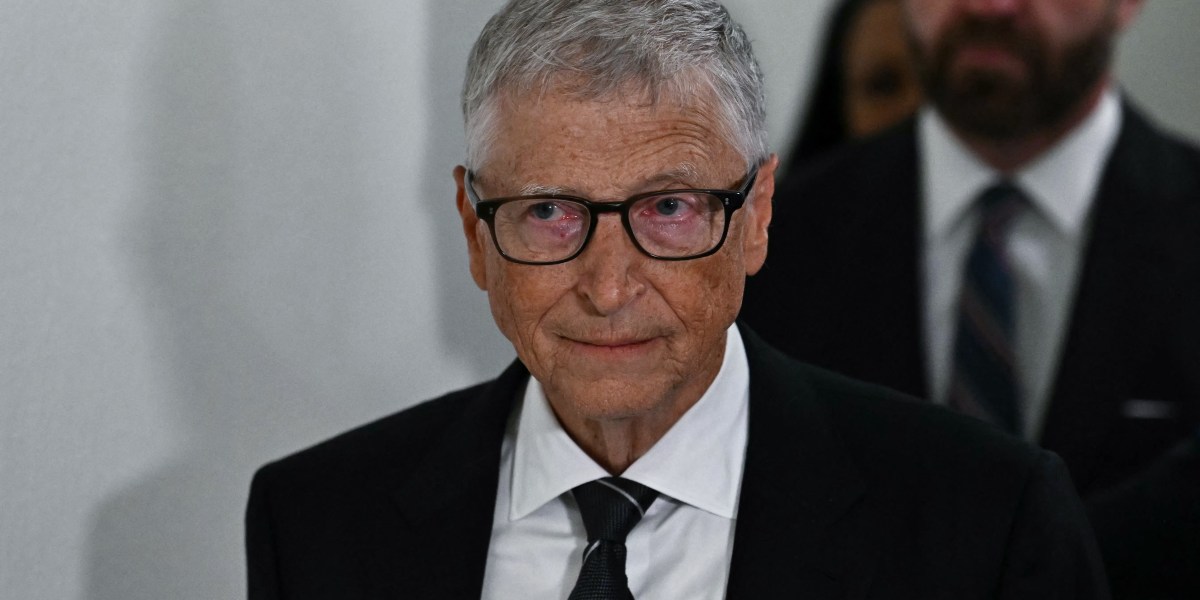
Bill Gates believes a billionaire’s tax is the only option in the age of AI—and ‘whatever’s left over’ can be used as a philanthropic safety net
Full Article
Original Source
Read the full article at Fortune →KhanList aggregates and links to publicly available news content. We do not host full articles from third-party sources. Always verify important information with original sources.